+91 9312966129
 sparc.enquiry01@gmail.com


How We Train Students on Live Client Projects
See how SPARC trains students through live client project training — real campaigns, real clients, and a practical digital marketing internship in Delhi.
Table of Contents
- Why Live Client Project Training Matters
- What Is Live Client Project Training?
- Key Takeaways
- How Sardar Patel Academy & Research Centre Conducts Live Client Project Training
- Client Brief
- Research
- Planning
- Execution
- Weekly Reviews
- Performance Analysis
- Final Presentation
- Real Skills Students Develop
- Case Study: A Student Journey
- Live Projects vs Traditional Classroom
- Tools Students Use
- Challenges Students Face and How Mentors Help
- Challenge 1:
- Challenge 2:
- Challenge 3:
- Challenge 4:
- Conclusion
Most digital marketing courses in Delhi teach theory. Slides, definitions, mock exercises. Students memorize concepts but never touch a real campaign.
SPARC works differently. Every student who joins our digital marketing program gets hands-on live client project training from week one. Not simulations. Not sample data. Real businesses, real budgets, real deadlines.
This blog walks you through exactly how our live client project training works, what students learn, and why this approach builds job-ready digital marketers instead of certificate collectors.
Live client project training at Sardar Patel Academy means students work directly on real business campaigns under trainer supervision. They handle SEO audits, run Google Ads and Meta Ads, build content calendars, and present results to actual clients. This practical digital marketing internship in Delhi model replaces theory-only learning with agency-style execution.
Why Live Client Project Training Matters
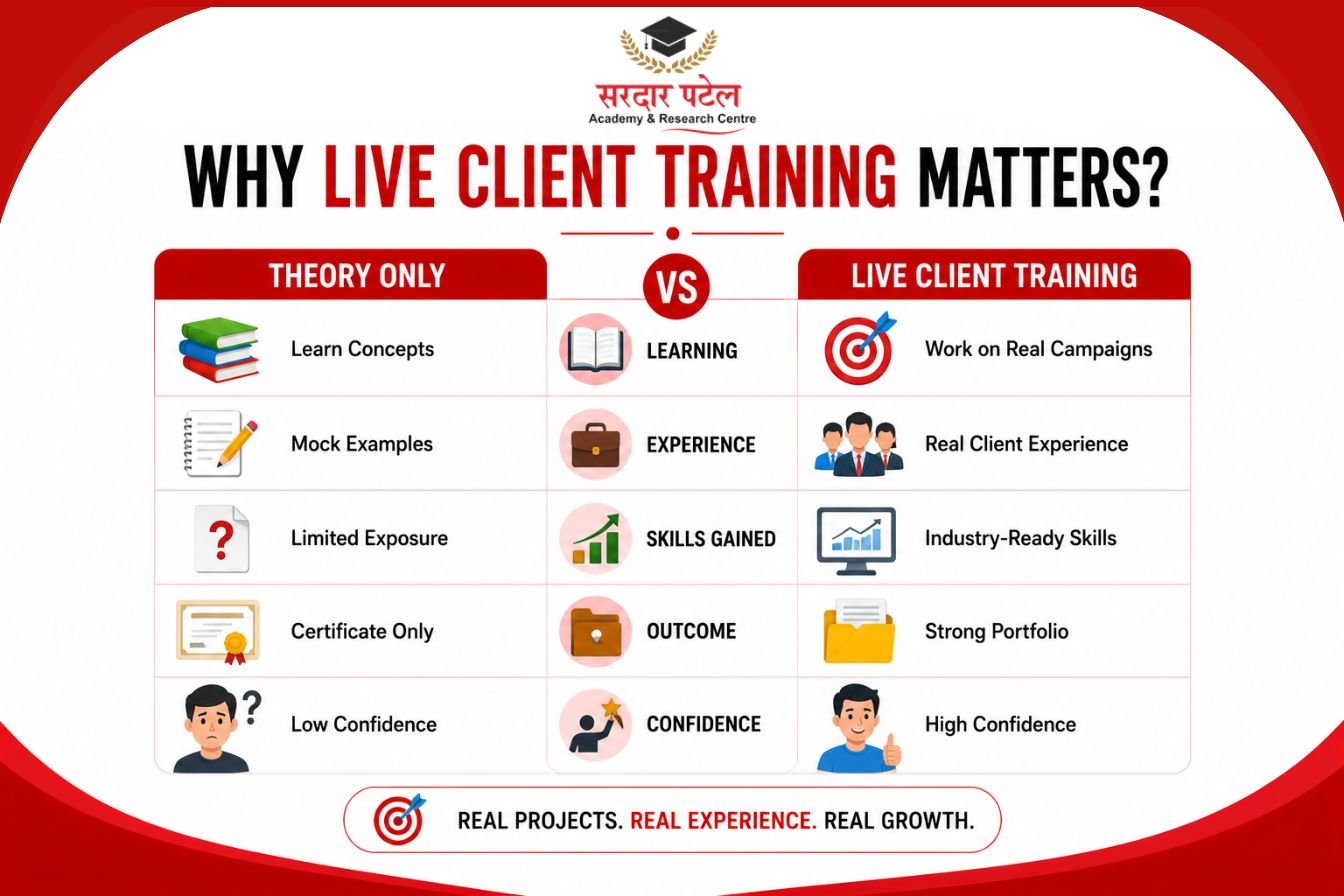
Parents and students researching a practical digital marketing internship Delhi NCR wide often ask the same question: does this course actually prepare you for a job? Recruiters rarely ask for a certificate first. They ask, "What have you actually done?"
A fresher who can show real client campaign experience stands out immediately. This is why live client project training has become the deciding factor between students who get shortlisted and students who get skipped.
Here's what changes when training moves from theory to real projects:
- Students in this practical digital marketing internship Delhi learn to handle client expectations, not just textbook scenarios.
- They build a portfolio of real business campaigns they can show in interviews.
- They understand budgets, timelines, and reporting the way agencies actually work.
- They develop confidence that comes only from solving real problems, not solving quizzes.
Naukri.com and LinkedIn Jobs data shows hiring managers prefer candidates with real project experience over candidates with certifications alone.
Real projects are valuable, but structured internships help students understand agency workflows, client communication, and workplace expectations. Read our guide on why internship is important in digital marketing training to see how internships complement live client projects.
What Is Live Client Project Training?
Live client project training is a learning method where students work on actual marketing campaigns for real businesses, guided by trainers, instead of practicing on dummy data or case studies. Under this model, students are treated like a junior team member inside an agency. They attend briefings, research the market, plan strategy, execute campaigns, and report performance.
At Sardar Patel Academy & research centre –SPARC, this practical digital marketing internship Delhi students receive is structured, supervised, and reviewed at every stage so nothing is left to guesswork.
Key Takeaways
- Live projects mean real clients, real money, real results.
- Students get direct exposure to SEO, Google Ads, Meta Ads, and analytics tools.
- Every project is reviewed by a trainer before it goes live for the client.
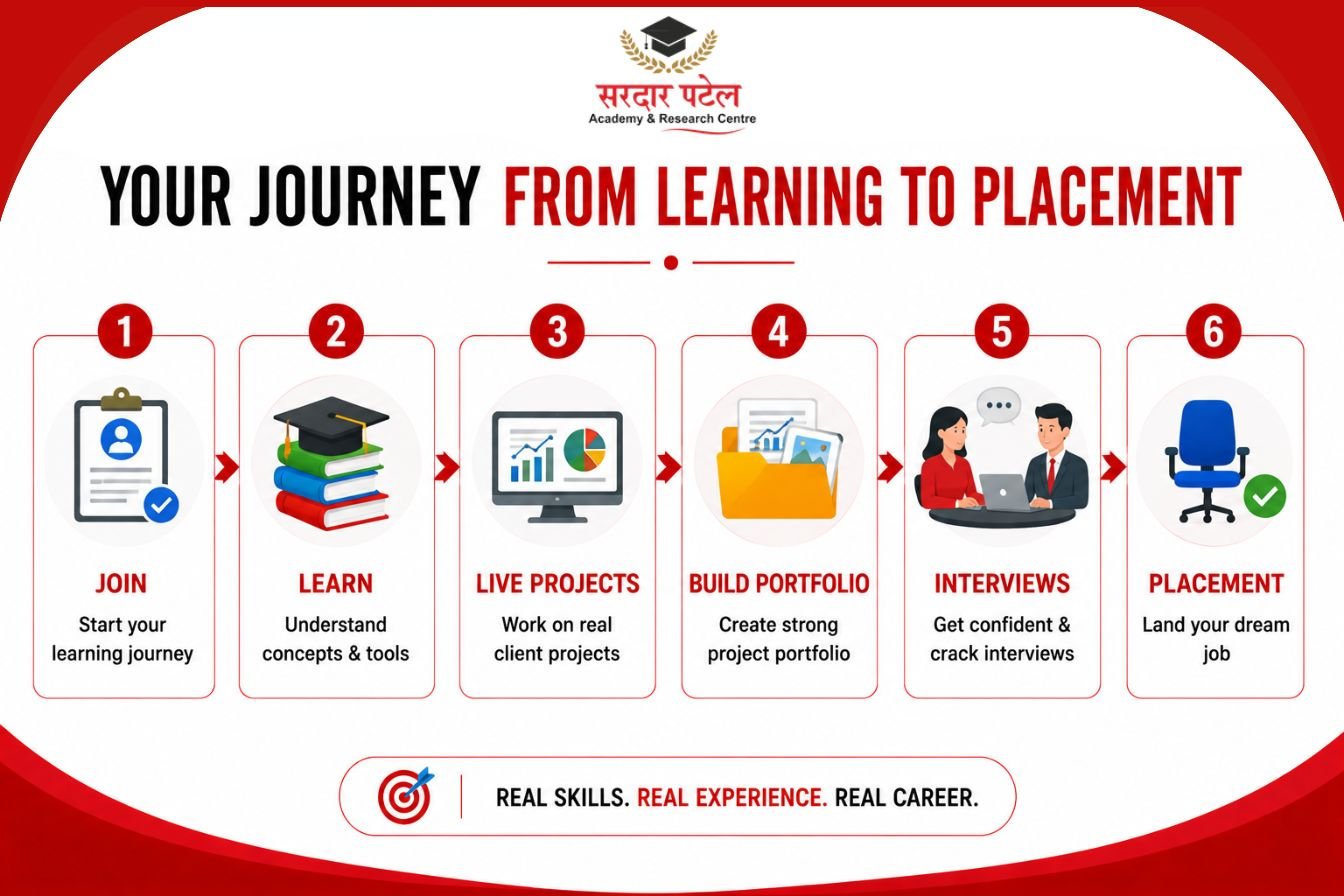
- Students build a portfolio they can show during placement interviews.
Live client projects help students develop practical skills that employers value. Learn what makes a job-oriented digital marketing course in Delhi different from a theory-based program.
How Sardar Patel Academy & Research Centre Conducts Live Client Project Training
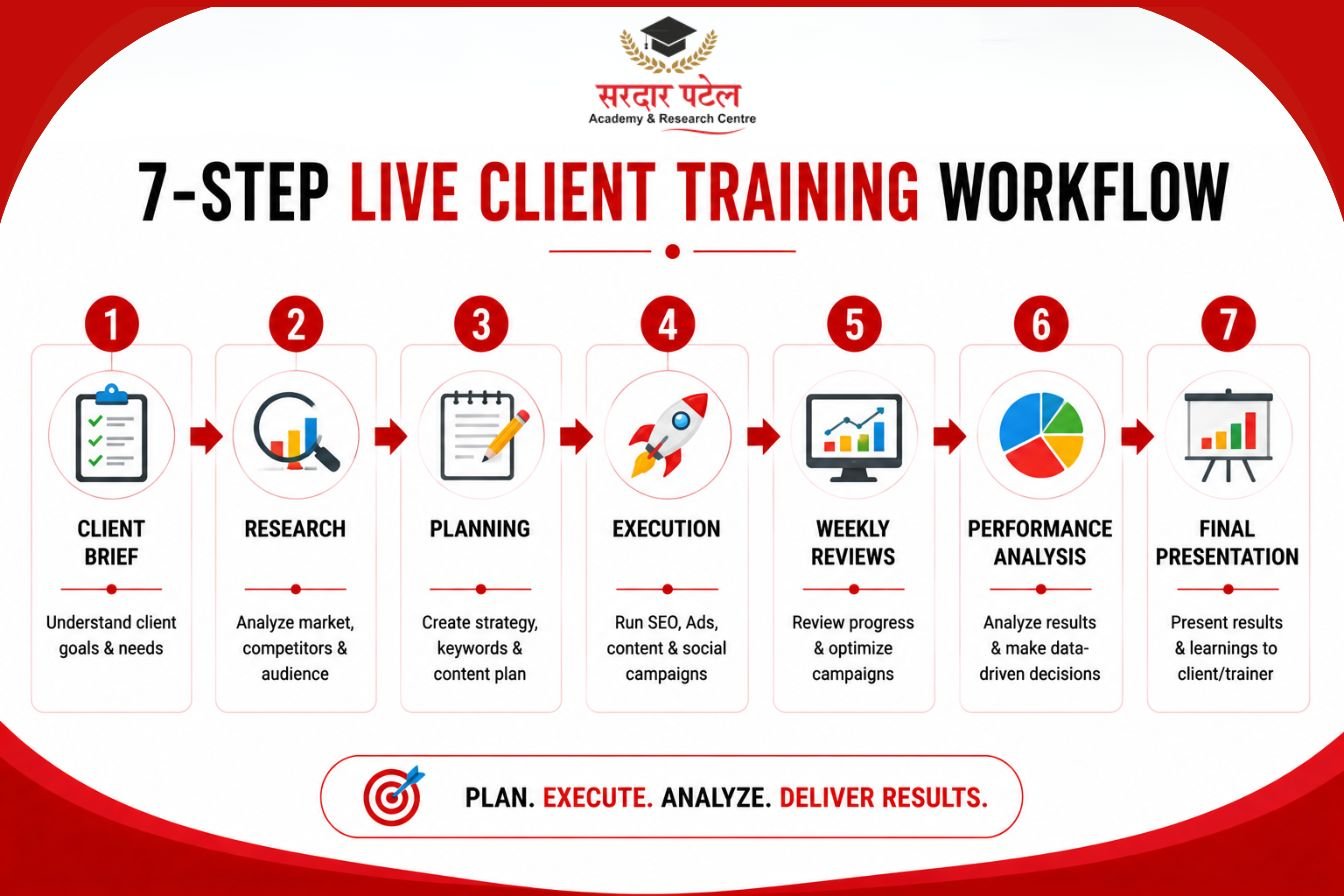
Our live client project training process follows a fixed seven-stage workflow. This structure keeps every batch consistent and every student accountable.
Client Brief
Every project starts with a real client brief. Trainers walk students through the client's business, goals, target audience, and budget, the same way an agency briefs a new team member.
Research
Students research the client's industry, competitors, and digital presence. This includes checking Search Console data, running competitor audits, and studying audience search behavior.
Planning
Based on research, students draft a strategy: content calendar, keyword list, ad targeting, and posting schedule. Trainers review each plan before approval.
Execution
This is where live client project training becomes real. Students publish content, launch Google Ads campaigns, run Meta Ads, and optimize on-page SEO elements on the actual client website or social pages.
Weekly Reviews
Every week, students present campaign progress to their trainer. Metrics are checked against goals, mistakes are flagged early, and corrections are made quickly.
Performance Analysis
Students learn to read Google Analytics and ad dashboards to see what worked and what didn't. This step turns numbers into decisions.
Final Presentation
At the end of each project, students present results and learnings to trainers, and in select cases, to the client. This mirrors real agency reporting.
This hands-on workflow gives students the confidence to perform in real interviews. See how one of our students got his first SEO internship after working on live client projects.
Real Skills Students Develop
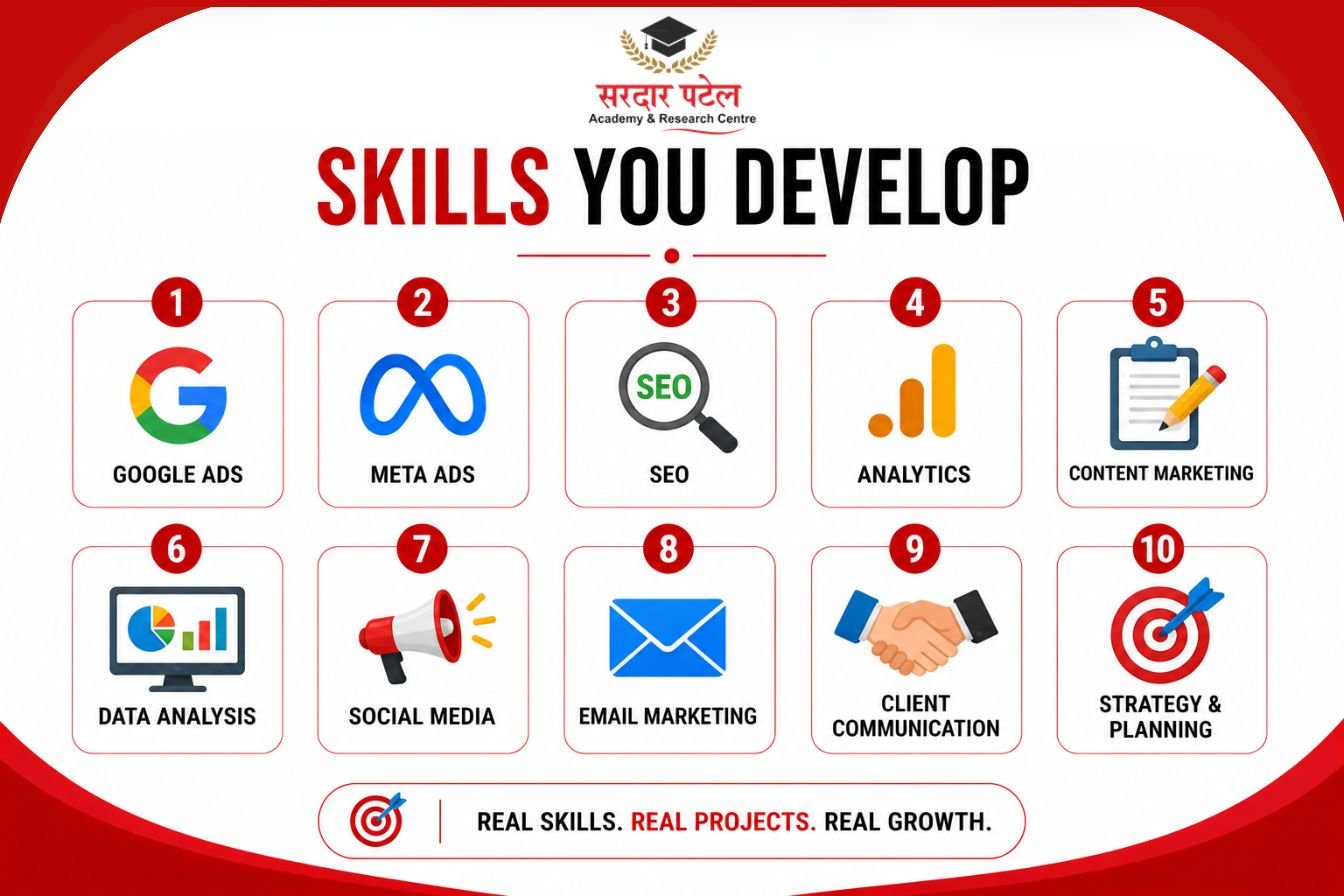
Live client project training builds skills that theory-only courses simply cannot teach.
| Source: Naukri.com, LinkedIn Jobs, AmbitionBox |
Case Study: A Student Journey
Aakash joined Sardar Patel Academy after graduating with a commerce degree. He had no marketing experience and wasn't sure digital marketing was the right career switch. In his first month, Aakash was assigned to a real client project for a local furniture brand. His task was simple on paper: improve the brand's Google visibility through basic SEO practical training tasks.
It wasn't simple in practice. The client's website had technical errors, weak content, and almost no local search presence. Aakash learned to run a Search Console audit, fix indexing issues, and rewrite product pages. By week six, the client's organic traffic had grown, and Aakash had prepared his first ever client performance report. That single project became the centerpiece of his portfolio during placement interviews.
Aakash now works as an SEO executive for a Delhi-based marketing agency. He credits this internship for teaching him more in three months than any classroom lecture could. Along with hands-on project experience, we also focus on interview preparation. Learn how we help students build confidence for interviews before they start applying for digital marketing jobs.
Live Projects vs Traditional Classroom
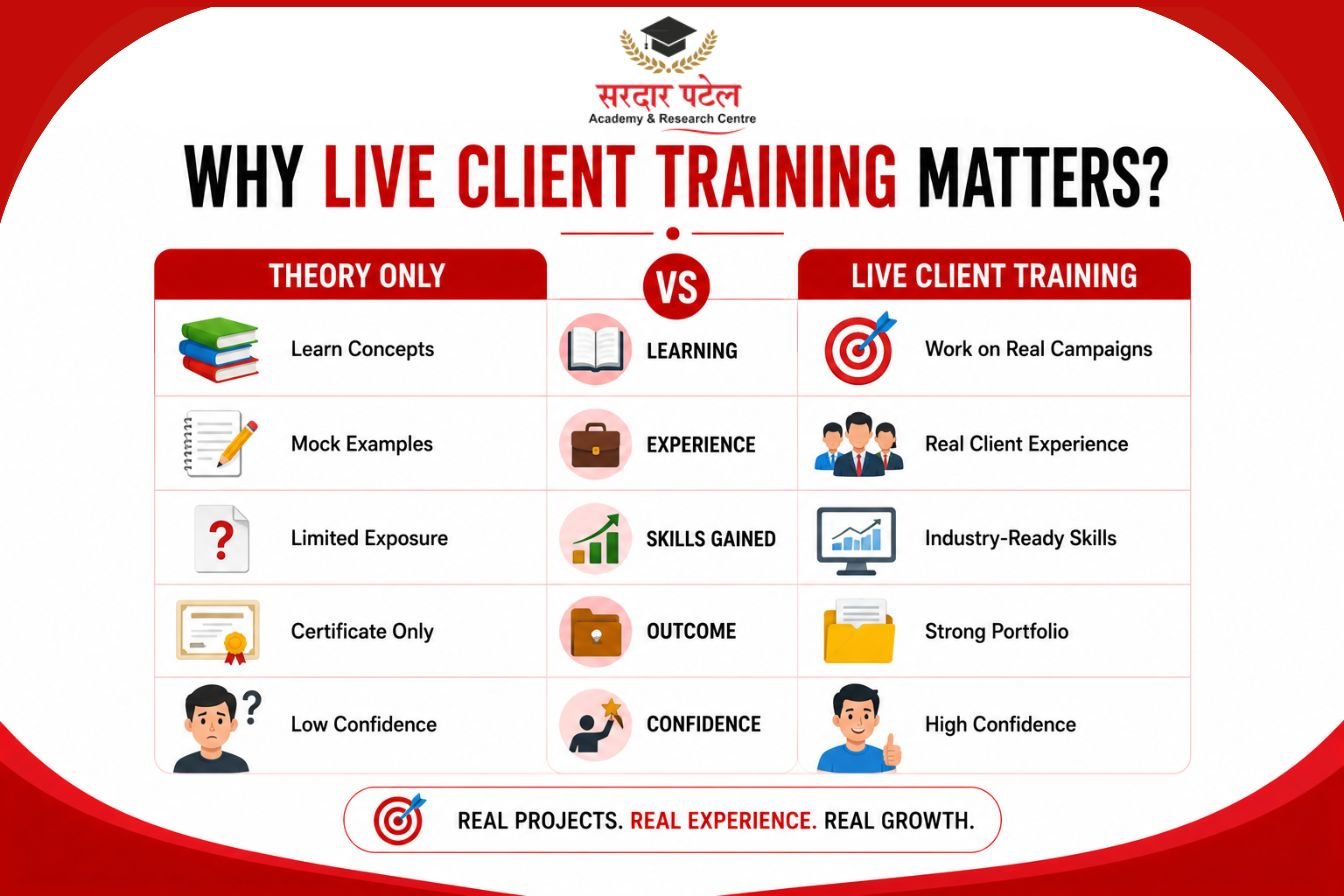
| Source: AmbitionBox, LinkedIn Jobs |
This is exactly why live client project training consistently produces more industry-ready students than lecture-only formats.
Tools Students Use
| Source: Google Skillshop, Meta Blueprint |
Learning these tools is only one part of becoming job-ready. Explore the skills required to become a digital marketing executive to understand what employers expect from freshers.
Challenges Students Face and How Mentors Help
Real projects come with real pressure, and that's the point.
Challenge 1:
Fear of making mistakes on a live client account. Mentors review every action before it goes live, so students can learn without risking the client's results.
Challenge 2:
Struggling to explain data to non-technical stakeholders. Trainers run mock client calls before the actual presentation, so students practice simplifying reports.
Challenge 3:
Managing multiple tools at once. Students start with one tool at a time, adding Google Ads, then Meta Ads, then Analytics, so the learning curve stays manageable.
Challenge 4:
Time management under real deadlines. Weekly reviews break large projects into smaller, trackable milestones, so deadlines feel achievable instead of overwhelming.
| Expert Tip: Students who take detailed notes during weekly reviews tend to grow fastest. Written feedback becomes a personal checklist for the next live client project training cycle |
Conclusion
Certificates alone don't get interviews shortlisted anymore. Real work does. That's the entire philosophy behind live client project training at SPARC. Students don't just learn digital marketing, they practice it, on real businesses, under real deadlines, with real feedback.
By graduation, students already have a portfolio of real client campaign experience, a habit of data-driven decision making, and the confidence that comes from doing the job before being hired for it.
If you're searching for a practical digital marketing internship in Delhi that goes beyond slides and theory, this is what job-ready training actually looks like.
Ready to learn digital marketing the way agencies actually work? Join Sardar Patel Academy & research centre–SPARC's Digital Marketing Course and live client project training program and start building your real-world portfolio today.
Sardar Patel Academy & Research Centre- SPARC GTB Nagar, Delhi
Contact us: 📞 +91 93129-66129 | 🌐sparc.org.in
FAQs
It is a training method where students work on real business marketing campaigns, guided by trainers, instead of practicing only on mock data or slides.
It builds real skills, real portfolios, and real confidence, which recruiters value far more than certificates alone.
Through a structured seven-stage process: client brief, research, planning, execution, weekly reviews, performance analysis, and final presentation.
Yes. Students with a real client campaign portfolio consistently perform better in placement interviews than students with theory-only training.
SEO, Google Ads, Meta Ads, content marketing, analytics reporting, and client communication all improve through direct, supervised practice.
Yes. Every student starts with guided tasks and moves to independent execution only after trainers confirm readiness.