+91 9312966129
 sparc.enquiry01@gmail.com


Lead Generation Funnel Tutorial for Beginners
Master lead generation funnels with this complete beginner's guide. Learn funnel stages, lead magnets, email sequences, tools, and optimization techniques for 2026.
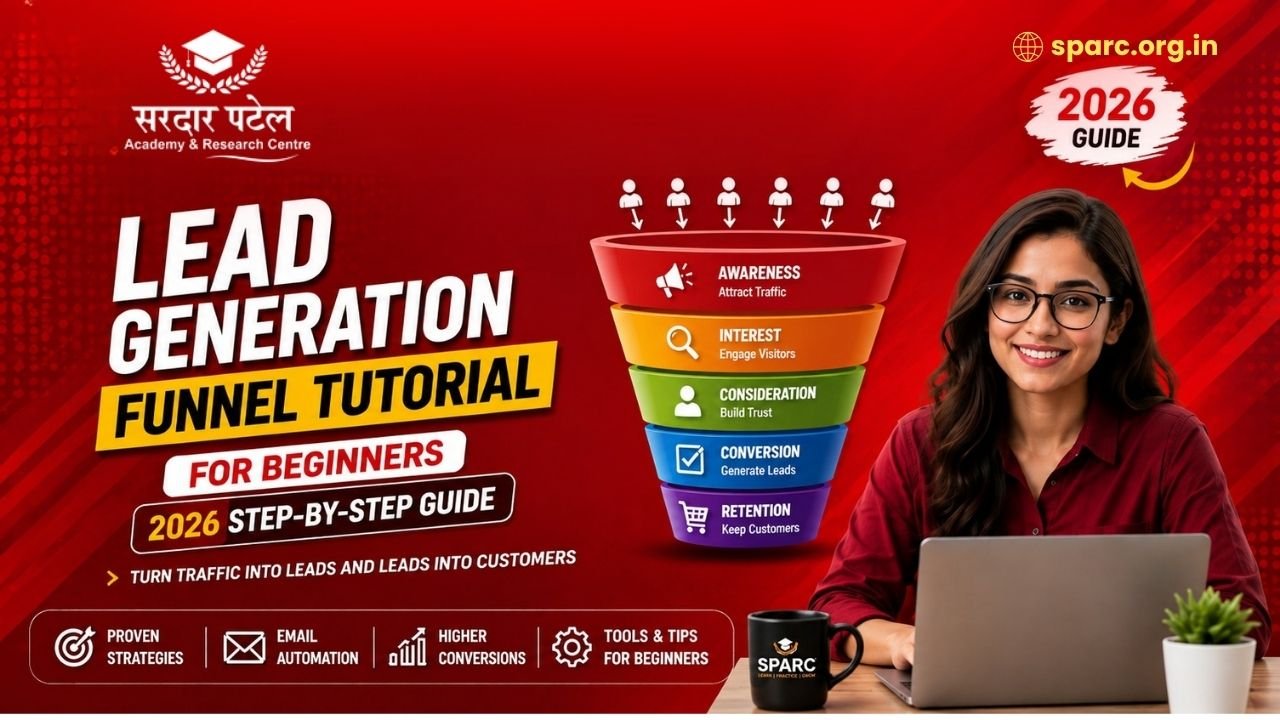
If you have run an ad and got zero real customers, you know the problem. Traffic without direction goes nowhere. This lead generation funnel tutorial shows you, step by step, how strangers online become paying customers.
Most beginners think marketing means getting more views. It means guiding the right person through the right steps at the right time — quietly, while you sleep.
This tutorial is written for people starting from zero — including a sales funnel for digital marketing students who need a portfolio project. Freelancers, interns, and business owners find it useful too.
By the end, you will understand how a visitor becomes a lead, a lead becomes a customer, and how to build this with free tools. Grab a notebook.
At Sardar Patel Academy & Research Centre– SPARC, students don't just learn funnel theory—they build complete lead generation funnels through live client projects, helping them understand how real businesses generate enquiries and sales.
What is a Lead Generation Funnel?
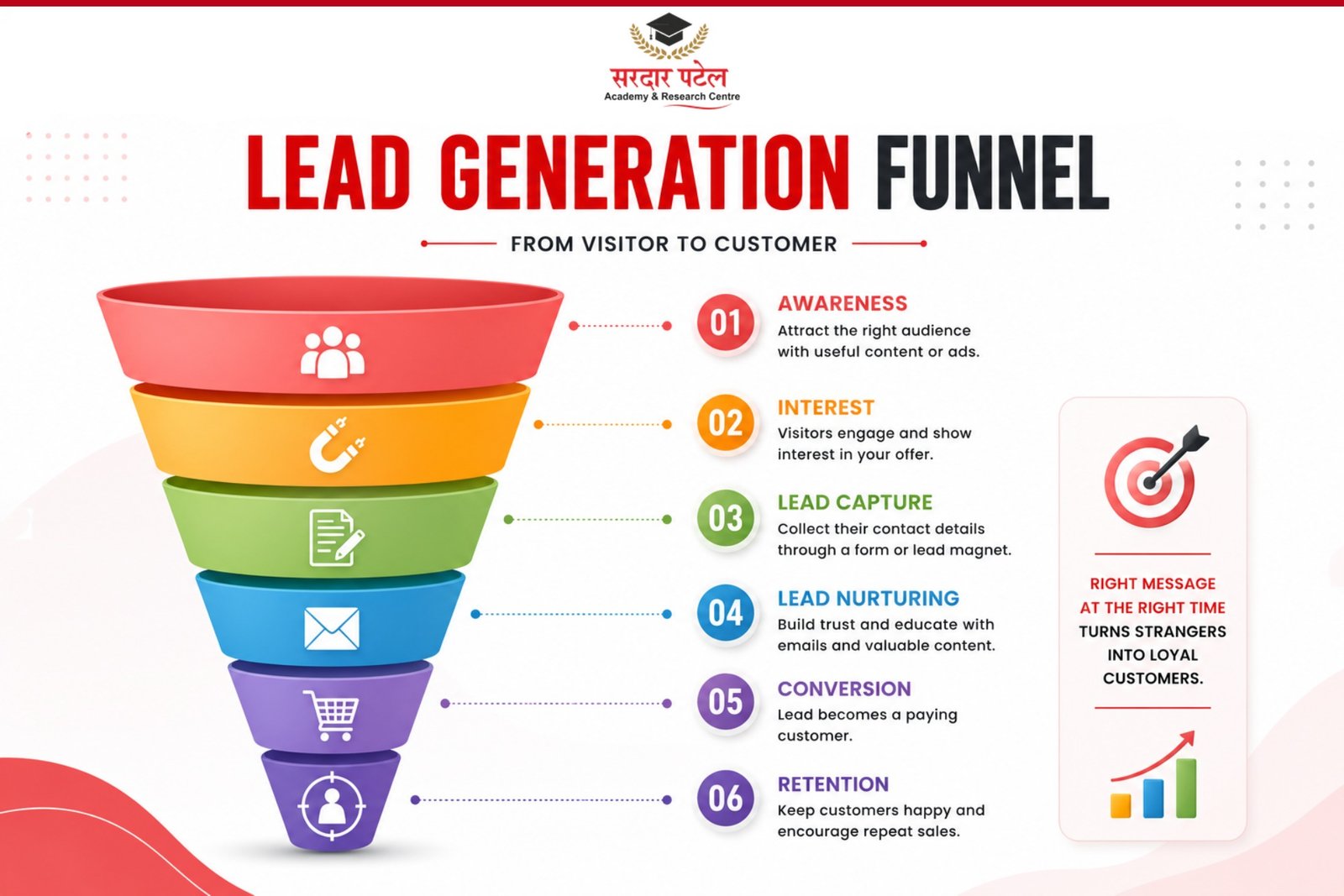
A lead generation funnel is a structured marketing path guiding a stranger from first contact to becoming a paying customer, using awareness, interest, consideration, and conversion stages built through content, landing pages, and email follow-up.
A visitor lands on your page out of curiosity. A lead has shared contact details because they trust you enough to hear more. That difference is what a lead generation funnel tutorial is really about.
Think of a shopping mall. Thousands walk past a store window daily. Only a few walk in, fewer try something on, and only a small percentage buy — that shrinking path, rebuilt online.
Picture a real kitchen funnel: you pour liquid in at the top, and a smaller, refined amount comes out cleanly at the bottom. That shrinking-path idea is the core of every lead generation funnel tutorial — wide traffic in, qualified customers out.
Why Every Business Needs a Lead Generation Funnel
Businesses relying only on random posts struggle with unpredictability. Some months are great, some are dry, and nobody knows why. This is exactly the gap a lead generation funnel tutorial fills — turning marketing into a repeatable system, not a guessing game.
- Better lead quality — genuinely interested people, not browsers
- Predictable sales — forecast revenue from this month's leads
- Stronger ROI — every rupee tracked against conversions
- Automation — CRM and email tools follow up for you
- Smoother journey — people feel guided, not pushed
According to HubSpot, companies that nurture leads generate around 50% more sales-ready leads while spending significantly less than businesses that don't have a structured lead nurturing process.
Did You Know?
Most buyers need several touchpoints before trusting a brand — why one ad rarely converts alone
How a Lead Generation Funnel Works
Every lead generation funnel tutorial follows a similar backbone, even when tools change:
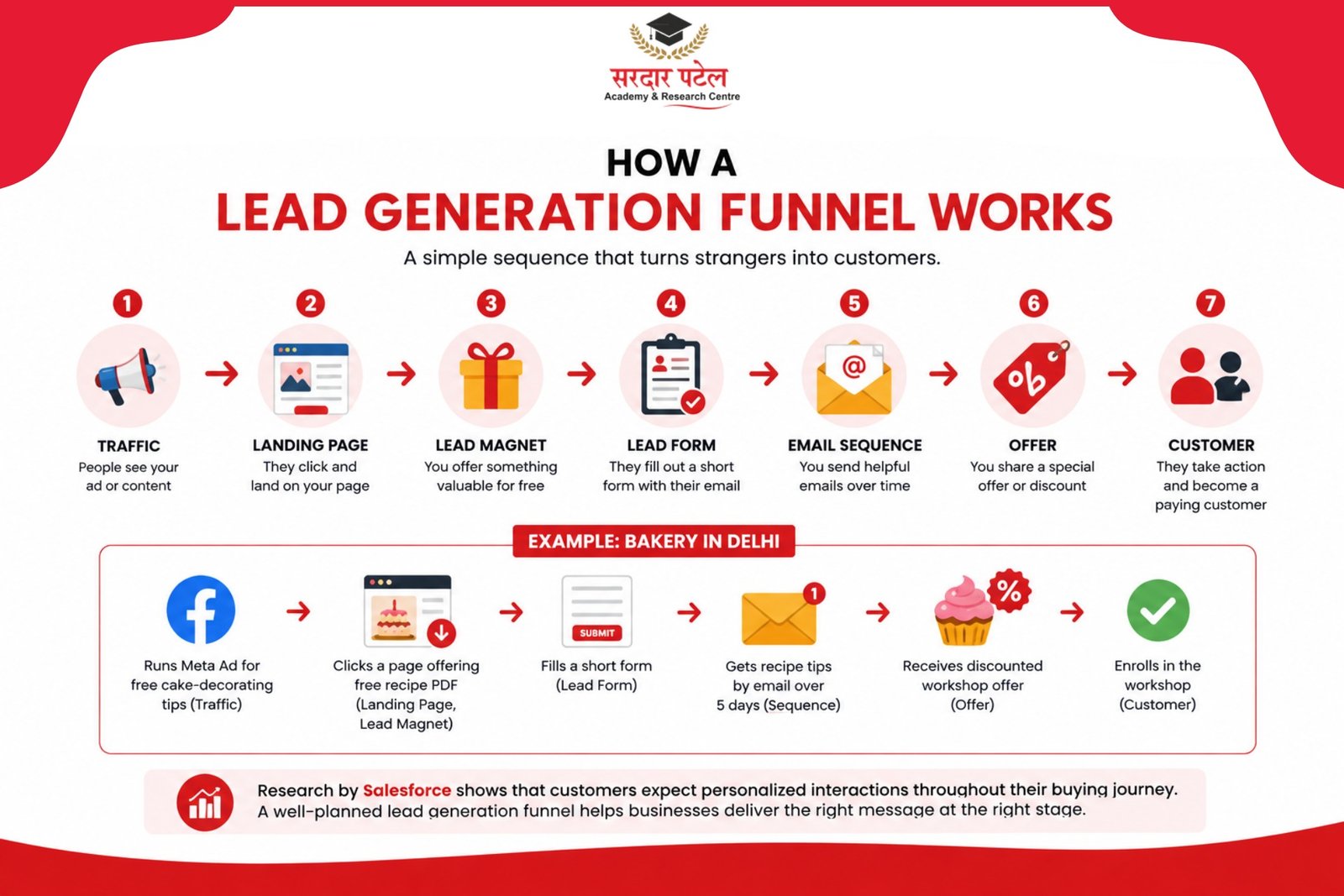
| Traffic → Landing Page → Lead Magnet → Lead Form → Email Sequence → Offer → Customer |
Imagine a small bakery in Delhi running a Meta Ad for free cake-decorating tips (traffic). People click a page offering a free recipe PDF for their email (landing page, lead magnet). They fill a short form (lead form). Over five days, they get recipe tips by email (sequence), then a discounted workshop offer. Some enroll (customers).
That entire chain, from ad to enrolment, is a lead generation funnel tutorial in action — nothing complicated, just a sequence done consistently.
Research by Salesforce shows that customers expect personalized interactions throughout their buying journey. A well-planned lead generation funnel helps businesses deliver the right message at the right stage instead of sending the same offer to everyone.
Understanding the Five Stages of a Lead Generation Funnel
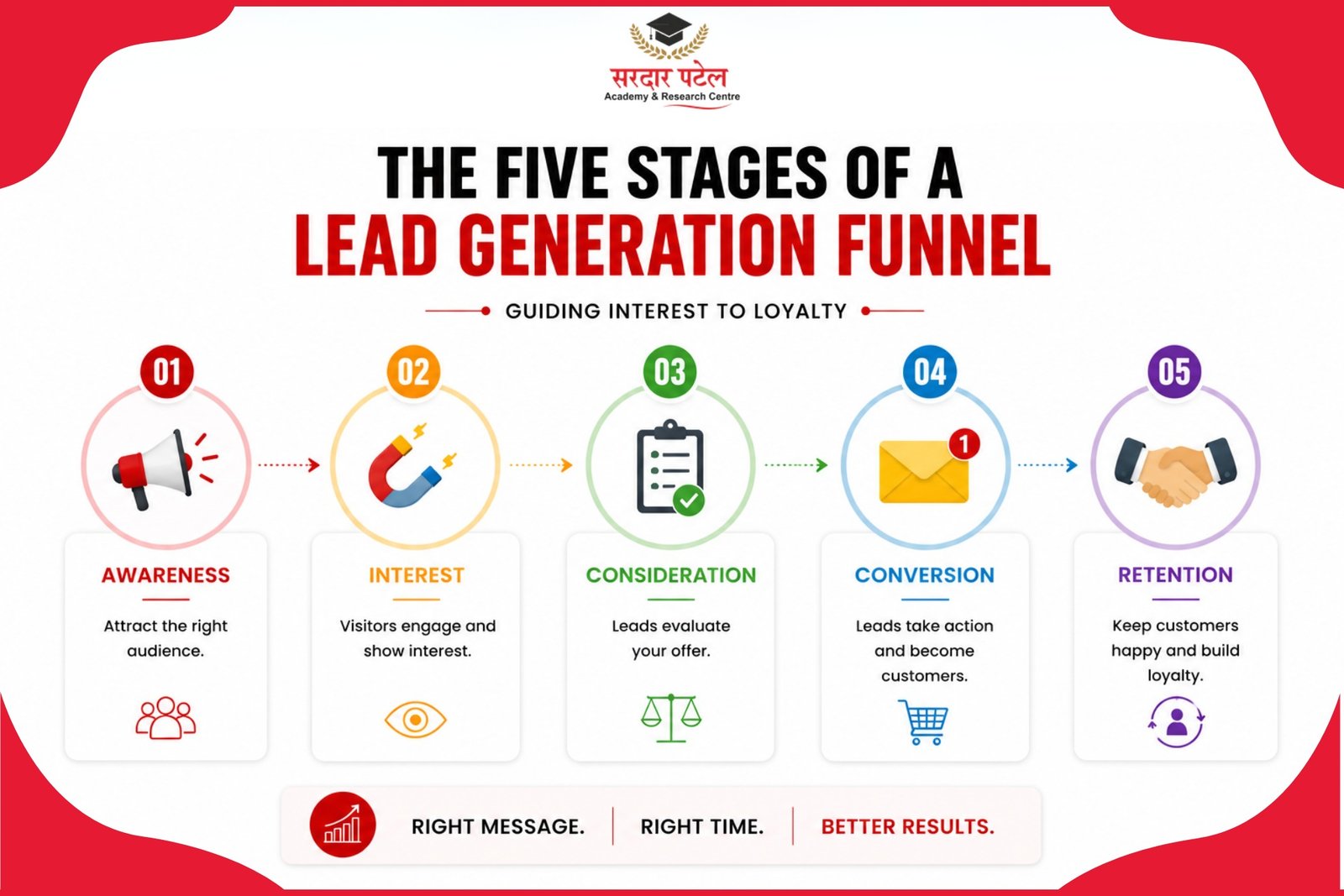
The five stages of a lead generation funnel are Awareness, Interest, Consideration, Conversion, and Retention — moving a prospect from a cold stranger toward a loyal, repeat customer.
Every stage in a lead generation funnel tutorial needs a different tone. Rushing a cold visitor straight to "buy now" almost always fails.
Awareness
Prospect discovers your brand via a blog, ad, or post. Example: a student finds your reel on free SEO tips. Mistake: pitching too early. Pro tip: focus purely on value.
Interest
The visitor engages further, reading content or following your page. Example: they read three blog posts in one sitting. Mistake: inconsistent posting kills momentum. Pro tip: retarget without being pushy.
Consideration
Prospect compares you against competitors. Example: they download your brochure and compare fees. Mistake: vague pricing causes drop-off. Pro tip: answer objections on your landing page.
Conversion
Prospect signs up, pays, or books a call. Example: they enroll after a demo class. Mistake: long, confusing forms cause abandonment. Pro tip: keep your CTA short and above the fold.
Retention
The customer stays engaged after purchase. Example: a past student refers to two friends. Mistake: ignoring post-sale contact wastes revenue. Pro tip: send periodic value emails, not just promos.
Lead Generation Funnel Example for Beginners
| Google Search → Blog → Free SEO Checklist → Email Signup → Email Series → Demo Class → Course Enrollment |
A student searches "how to learn SEO for free," lands on your blog, and downloads a free checklist for their email. An email series covers SEO basics and success stories, then invites them to a demo class. If it delivers value, they enroll.
Nothing here feels forced — each step earns the right to the next, which is the whole point of a lead generation funnel tutorial done well.
This is the same practical approach followed during Sardar Patel Academy & Research Centre 's live digital marketing training, where students create landing pages, lead magnets, and email sequences for real campaign scenarios instead of learning only from slides.
Best Funnel Tools Beginners Should Learn
No lead generation funnel tutorial is complete without tools to build one. You do not need an expensive stack to start.
Google Analytics remains one of the most widely used analytics platforms for understanding visitor behaviour and identifying where users leave a website. Tracking these insights helps businesses improve conversions instead of relying on assumptions. Beginners who enjoy paid campaigns can also explore a career as a Google Ads Specialist.
| Quick Summary: A good lead generation funnel tutorial starts with Canva and Google Analytics before paid ads. Master free tools first, then scale once your funnel converts. |
Common Lead Generation Funnel Mistakes
Even after a solid lead generation funnel tutorial, beginners repeat a few errors:
- No clear CTA — visitors don't know the next action
- Ignoring mobile users — Indian traffic is mostly mobile
- Overcomplicated forms — ten fields kill conversions
- No follow-up sequence — one email is a formality
- Weak lead magnets — generic PDFs nobody wants
- Skipping A/B testing — guessing instead of testing
- Pitching too soon — no warm-up, no trust built
- Not tracking data — running ads blind
Warning: Never buy email lists. Cold, unconsented contacts hurt deliverability.
Mailchimp reports that targeted and segmented email campaigns consistently achieve higher engagement than generic mass emails. This is why sending the same message to every lead often reduces the effectiveness of a marketing funnel.
How to Optimize Your Funnel
Optimization separates a decent lead generation funnel tutorial exercise from a funnel that pays for itself.
According to Demand Metric, businesses that invest in lead nurturing often see better-qualified leads and improved customer relationships over time. Small improvements in each stage of the funnel can have a meaningful impact on overall conversions.
Skills Digital Marketing Students Should Learn
Following a lead generation funnel tutorial is also how you build a sales funnel for digital marketing students as coursework. These skills matter most:
- Landing Pages — designing pages that convert
- Google Ads — running campaigns with a real budget mindset
- Meta Ads — targeting audiences on Instagram and Facebook
- Email Marketing — nurturing without sounding pushy
- CRM — tracking every lead's stage
- Copywriting — words that persuade someone to click or buy
- Analytics — reading data to know what's working
- Automation — workflows that run without manual effort
- CRO — improving results from the same traffic
Really, a sales funnel for digital marketing students is just a practice ground. Build one small funnel, even for a fictional product — a working sales funnel for digital marketing students on your resume beats a certificate with no project behind it.
If you want to build a strong foundation before creating funnels, explore the Top Skills You Learn in a Digital Marketing Course to understand which practical abilities employers value most.
At Sardar Patel Academy, students practice these skills on live client projects under trainer guidance. This hands-on approach helps them build a portfolio that strengthens internship and placement opportunities.
Beginner Funnel Blueprint
Save this as your go-to lead generation funnel tutorial reference whenever you start a new project:
TRAFFIC SOURCES (Google, Instagram, Blog, Ads)
↓
LANDING PAGE + OFFER (Checklist / Guide / Webinar)
↓
LEAD FORM (Name, Email, Phone)
↓
EMAIL NURTURE SEQUENCE (Value → Story → Offer)
↓
CONVERSION (Enrolment / Purchase / Booking)
↓
RETENTION (Follow-up / Referral / Upsell)
Pin this above your desk. Every funnel follows some version of this shape.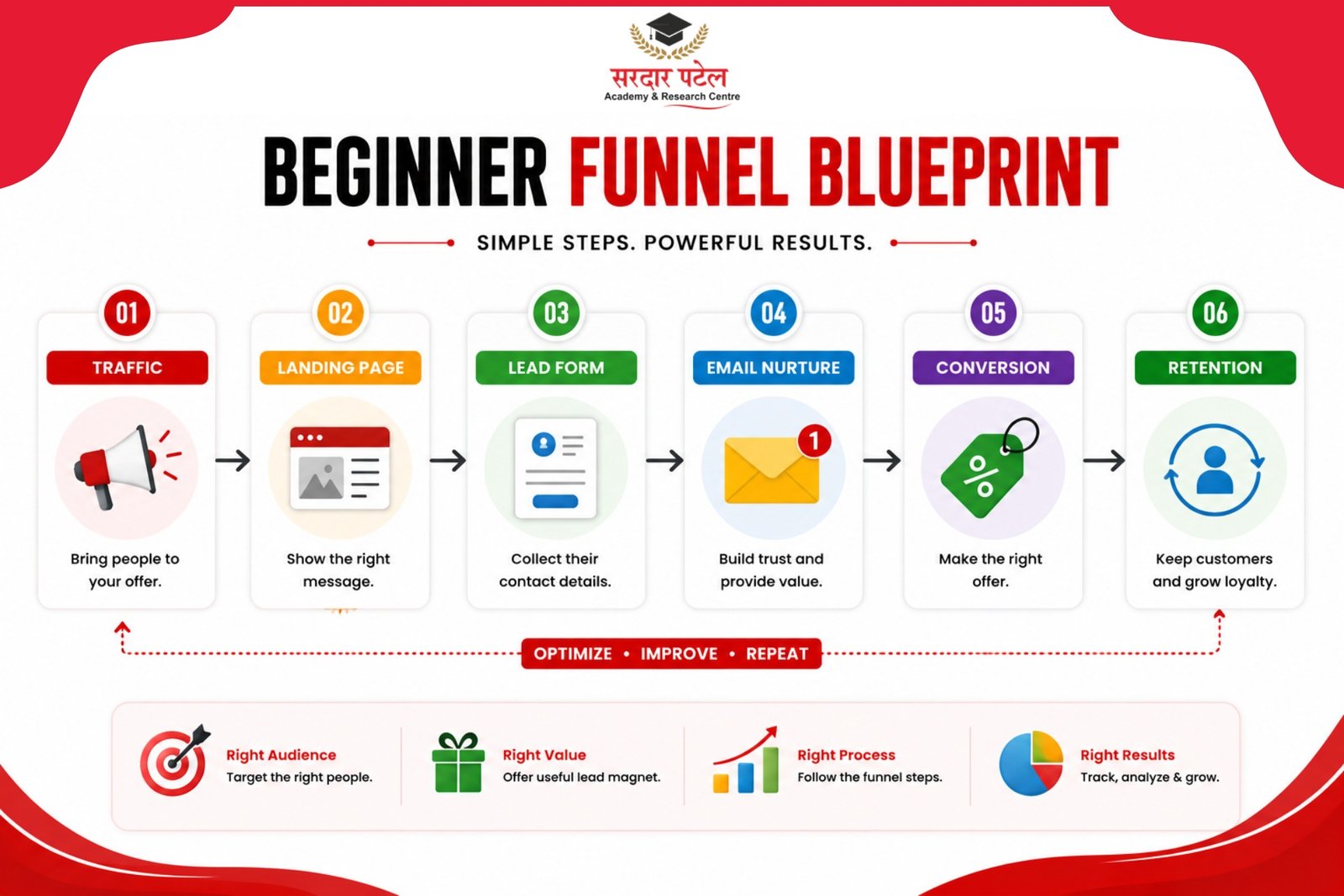
Conclusion
Building your first funnel comes down to one idea: guide people gently instead of chasing them. Every stage in this lead generation funnel tutorial exists to build trust before asking for anything bigger.
Start small — one traffic source, one lead magnet, one email sequence. Test it, track numbers, and improve one piece at a time. You need a working system, not a perfect one.
Whether practicing a sales funnel for digital marketing students or fixing wasted ad spend, this guide gives you the structure to start today.
Want to learn how to build real lead generation funnels instead of just reading about them?
Join Sardar Patel Academy & Research Centre–SPARC's Digital Marketing Course where students create landing pages, run ads, build email automation, and work on live client projects.
FAQs
A lead generation funnel collects contact details from interested visitors, while a sales funnel covers the entire path to payment. Lead generation is the earlier half, feeding qualified prospects into the sales funnel.
A basic funnel with a landing page, lead magnet, and three-email sequence can be built in a weekend. Converting consistently takes a few weeks of testing headlines and offers.
No. Many funnels in this lead generation funnel tutorial start with organic traffic from blogs or social media. Paid ads speed things up once your funnel already converts, saving money on early testing.
A free resource — checklist, ebook, or short course — offered for contact information. The best lead magnets solve one specific problem instantly.
Free tools with simple visual pipelines work best, showing exactly where every lead sits. Increase complexity only once lead volume justifies it.
Traffic without a clear next step leads nowhere. Most fail from weak CTAs, generic offers, slow pages, or no follow-up after first contact.
Most beginner sequences work well with four to six emails across one to two weeks, each delivering standalone value while building toward the offer.
Yes. Students can build a practice funnel around a fictional product, which is how many internship projects begin in digital marketing training.