+91 9312966129
 sparc.enquiry01@gmail.com


Data Analytics Course Duration: How Long Does It Really Take?
Wondering about data analytics course duration? See what affects analytics learning time and how long a beginner course really takes in practice.

Table of Contents
- Quick Answer: What Is a Typical Data Analytics Course Duration?
- What Decides Your Analytics Learning Time?
- Basic Versus Advanced Depth
- Where You Are Starting From
- Why Even the Excel Stage Takes Weeks
- SPARC's Data Analytics Course Duration at a Glance
- How SPARC Supports You Across the Eight Months
- Placement and Career Support After the Course
- Practical Tips to Plan Your Learning Time
- Mistakes to Avoid When Comparing Durations
- Questions to Ask Before You Enrol
- Conclusion
Ask five institutes about data analytics course duration, and you may hear five different answers. One promises results in weeks; another says a year. Neither is automatically right, because duration depends on what the course teaches and how deeply.
This guide explains what shapes analytics learning time, how to read a course's duration realistically, and what to ask before you enrol. It also shows how SPARC's eight-month programme, with 40+ projects and placement support, fits into the picture.
Quick Answer: What Is a Typical Data Analytics Course Duration?
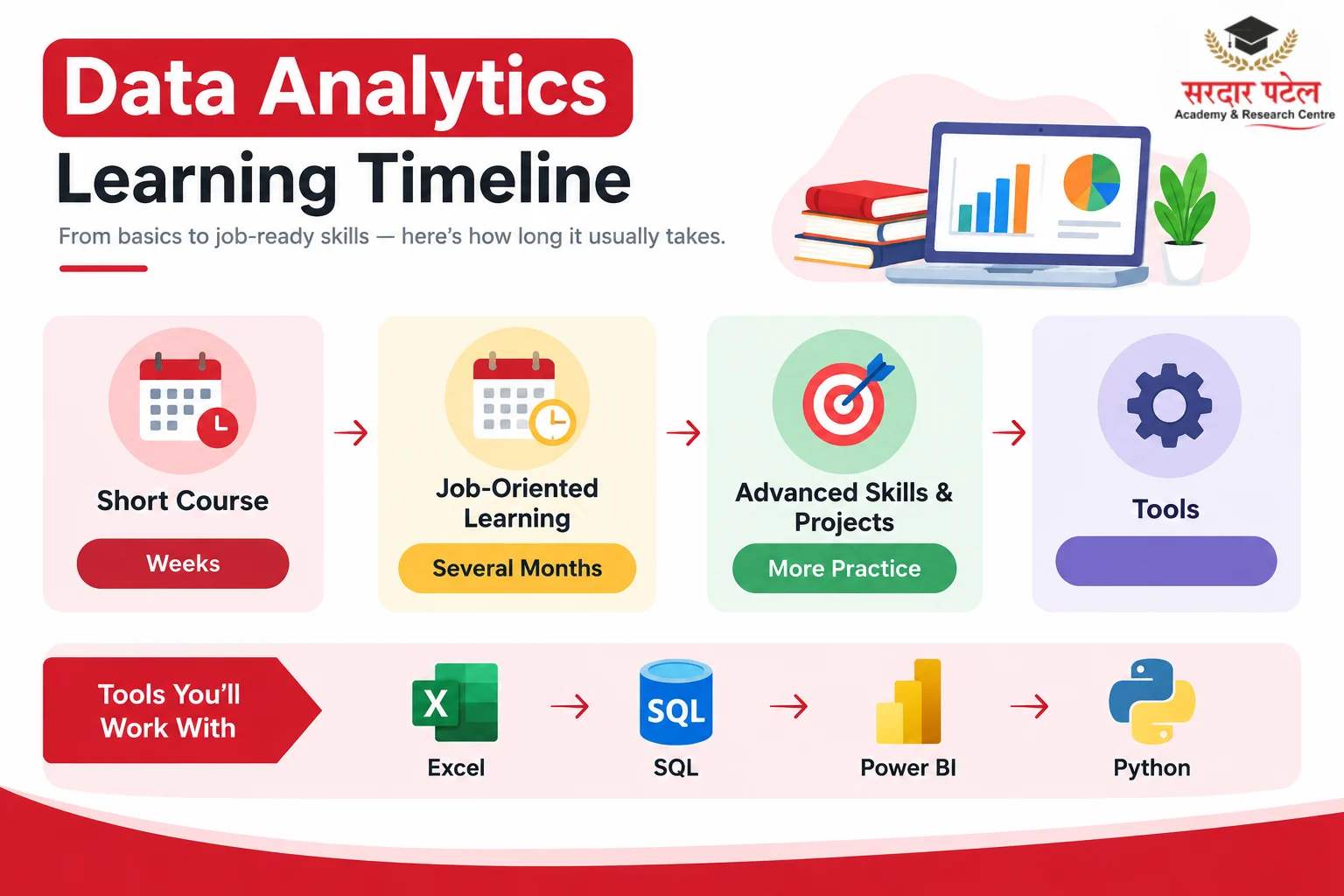
There is no universal standard for data analytics course duration. Short introductory programmes can cover spreadsheets and basic charts in a few weeks. Job-oriented courses that add SQL, Python, and dashboard tools generally run for several months, because each tool is a skill in itself.
A simple rule works well: the more tools and projects a course includes, the longer it needs. A shorter course is not worse. It is simply narrower.
What Decides Your Analytics Learning Time?
Learners may complete the same course, yet their confidence and practical skills can vary significantly.These factors explain why.
| Factor |
How it affects duration |
| Number of tools |
Excel, SQL, Python, Power BI and Tableau each need separate practice |
| Depth of syllabus |
Basic courses teach tools; advanced ones add automation and larger projects |
| Starting point |
Existing spreadsheet skills save time; starting from zero needs more |
| Practice outside class |
Daily practice moves you faster than attending sessions alone |
| Project work |
Real projects take time but build a portfolio |
Basic Versus Advanced Depth
Basic courses focus on understanding data and building simple reports. Advanced ones go further into automation, dashboards, and bigger datasets. This basic and advanced data analytics course comparison shows how the two differ, and why the longer option is not always the right one for you.
Where You Are Starting From
Freshers, graduates, and people returning to work after a break all begin at different points. If that sounds like you, this guide to a data analytics course for housewives and freshers explains how beginners can approach the subject.
Why Even the Excel Stage Takes Weeks
Spreadsheets look simple until you list what a proper course covers. SPARC's Advanced Excel module alone includes data cleaning and formatting, conditional formatting and data validation, advanced formulas such as XLOOKUP and HLOOKUP, pivot tables and pivot charts, charts for visualisation, macros and automation, What-If Analysis, file protection, and a dashboard-building final project.
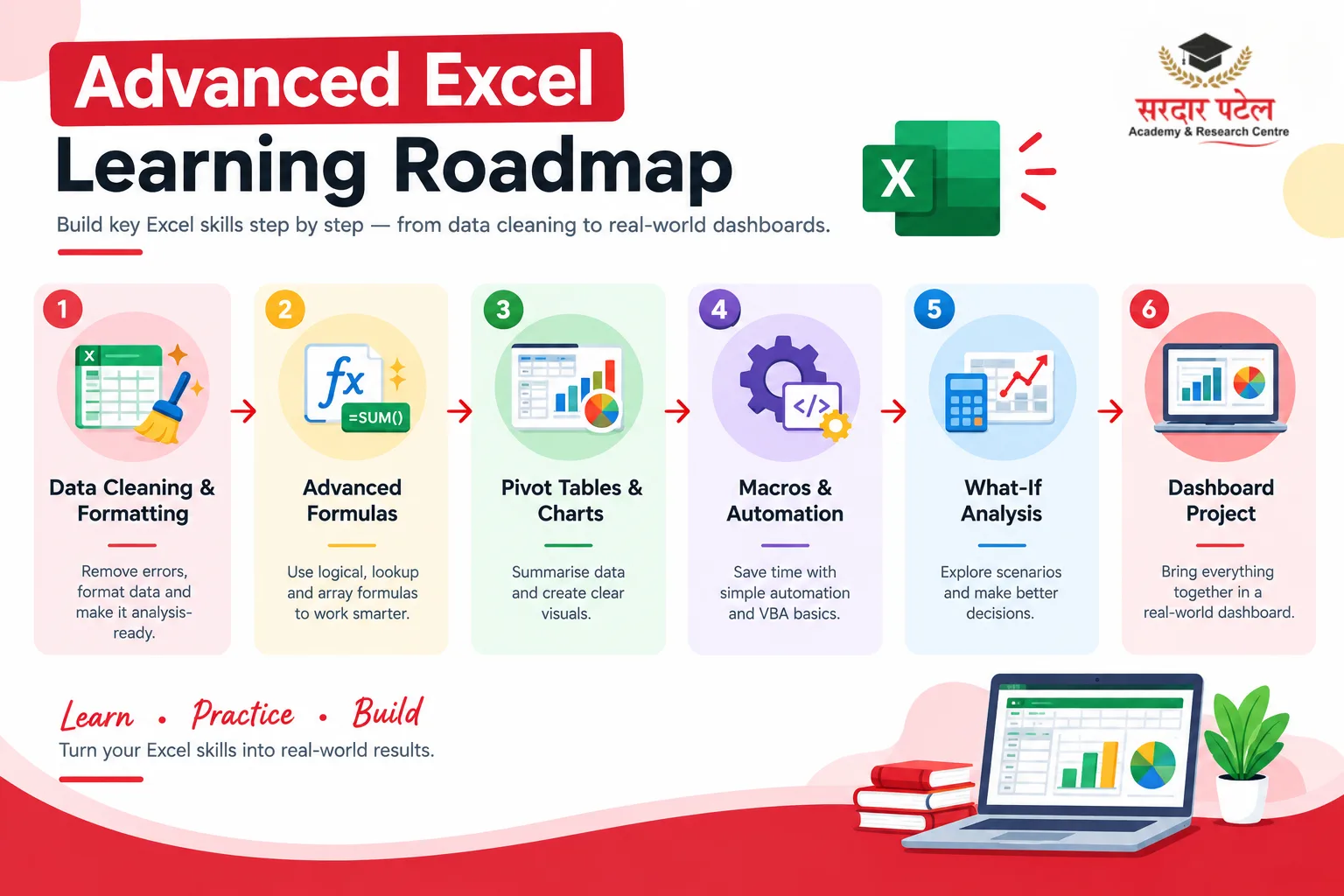
The month split below is only an illustration of how a course covering these tools may be paced. It is not an official SPARC timetable, so ask the team for the exact plan.
| Stage |
Focus |
Why it takes time |
| Early |
Advanced Excel and data cleaning |
Everything later depends on clean data and spreadsheet logic |
| Middle |
Power BI and SQL |
New interfaces and query syntax need repetition |
| Later |
Python |
Programming logic is usually the slowest part for beginners |
| Final |
Tableau, AI tools, final projects |
You apply everything together on realistic datasets |
Dashboards built in Power BI or Tableau belong to the wider field of business intelligence. If you want a taste of the early stage first, try practising with Google Sheets for data analysis.
SPARC's Data Analytics Course Duration at a Glance
The Data Analytics Course with AI at Sardar Patel Academy & Research Centre is built around these details:
- Duration: 8 months, moving from basic to advanced
- levelTools: Advanced Excel, SQL, Python, Power BI, Tableau, and AI tools
- Projects: 40+, using practical assignments, live projects, and real-world datasets
- Eligibility: no strict educational requirement; Class 12 students, graduates, working professionals, and people returning to work can join
- Location: Kingsway Camp, near GTB Nagar Metro Station (Gate No. 4), Delhi, easy to reach from North Campus
- Fees: ask the team for the current fee structure. SPARC is a non-profit NGO working in education since 2003.
If you prefer classroom learning, this is one option to compare when exploring a data analytics course in Delhi. Class 12 students can also look at SPARC's ADCA with Data Analytics course, so check its page for details. To see the full curriculum, visit the course page.
How SPARC Supports You Across the Eight Months
A long course only works if you can stay on track. These are the support features SPARC lists:
- Class status system: track daily progress, completed topics, assignments, and upcoming lessons
- Mobile App: Learn on the go with easy access to learning materials, tasks, recorded lessons, and the latest announcements.
- In-house study material: written by SPARC's own publication team for each module
- Project-based modules: every module includes assignments and live projects, building a portfolio
- Certificate: the SPARC Data Analytics with AI Certificate validates your practical knowledge and project experience
Placement and Career Support After the Course
SPARC provides placement support, including resume building, interview preparation, mock interviews, communication skills sessions, and connecting students with hiring companies and recruiters. A placement report is available for download on the course page.
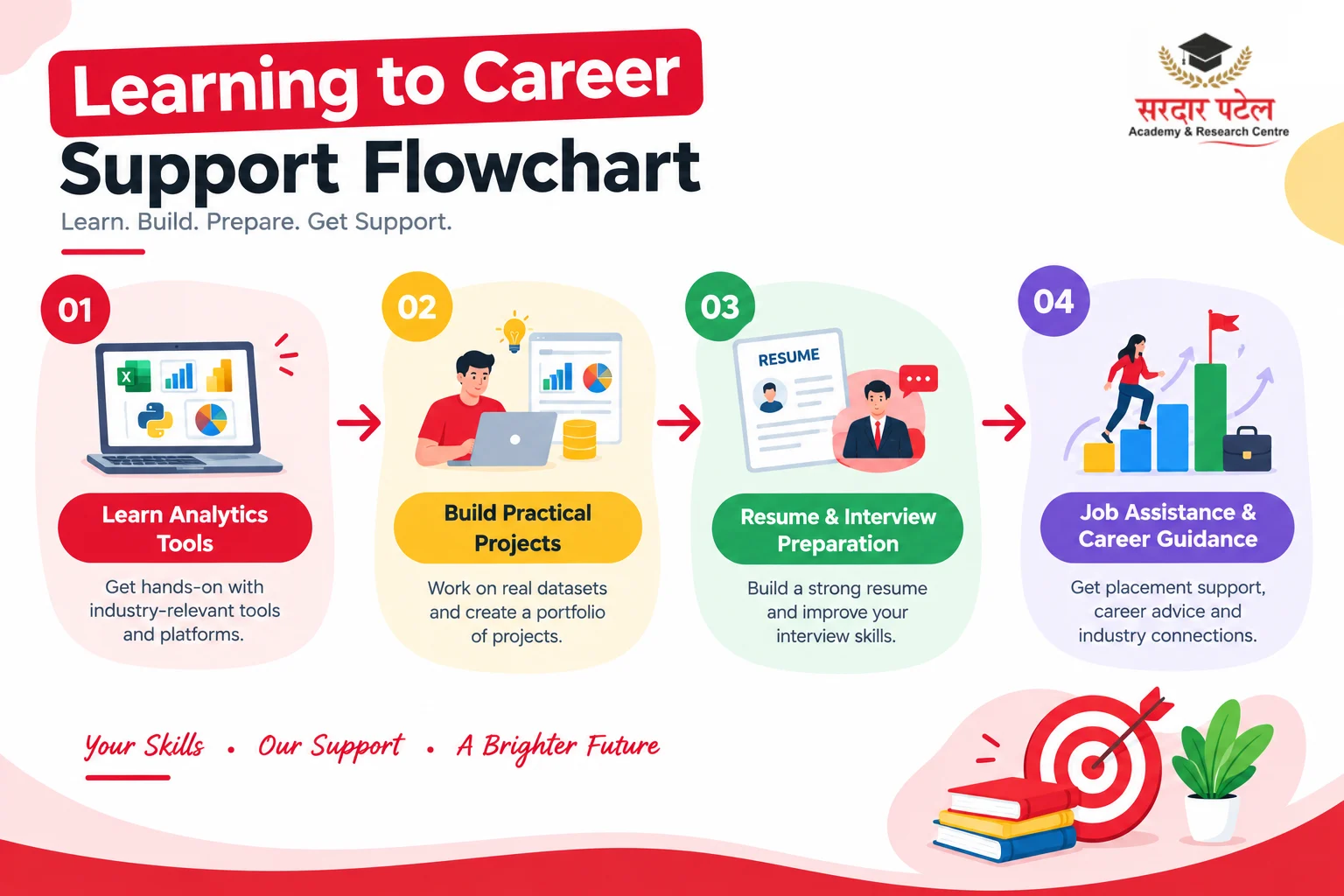
The listed career paths include data analytics, business intelligence, MIS reporting and MIS executive roles. The course page also shows recent Delhi-NCR job postings, such as MIS Executive and MIS cum Data Analyst Trainee openings. Placement support means guidance and connections, so results still depend on your skills and effort.
Practical Tips to Plan Your Learning Time
Whichever data analytics course duration you choose, these habits help:
- Fix a daily practice slot, even 45 minutes, and protect it
- Revise last week's topics before starting new ones
- Build a small project after every tool instead of waiting for the end
- Keep a simple log of what you finished and what confused you
Mistakes to Avoid When Comparing Durations
Most confusion about data analytics course duration comes from comparing the wrong things:
- Choosing the shortest option automatically. Speed is useless if SQL or projects are missing.
- Assuming longer means better. Check the syllabus, not just the calendar.
- Not asking what is included. Confirm whether projects, assignments, and placement support sit inside the stated duration.
- Forgetting your own schedule. A realistic plan beats an ambitious one you abandon.
Questions to Ask Before You Enrol
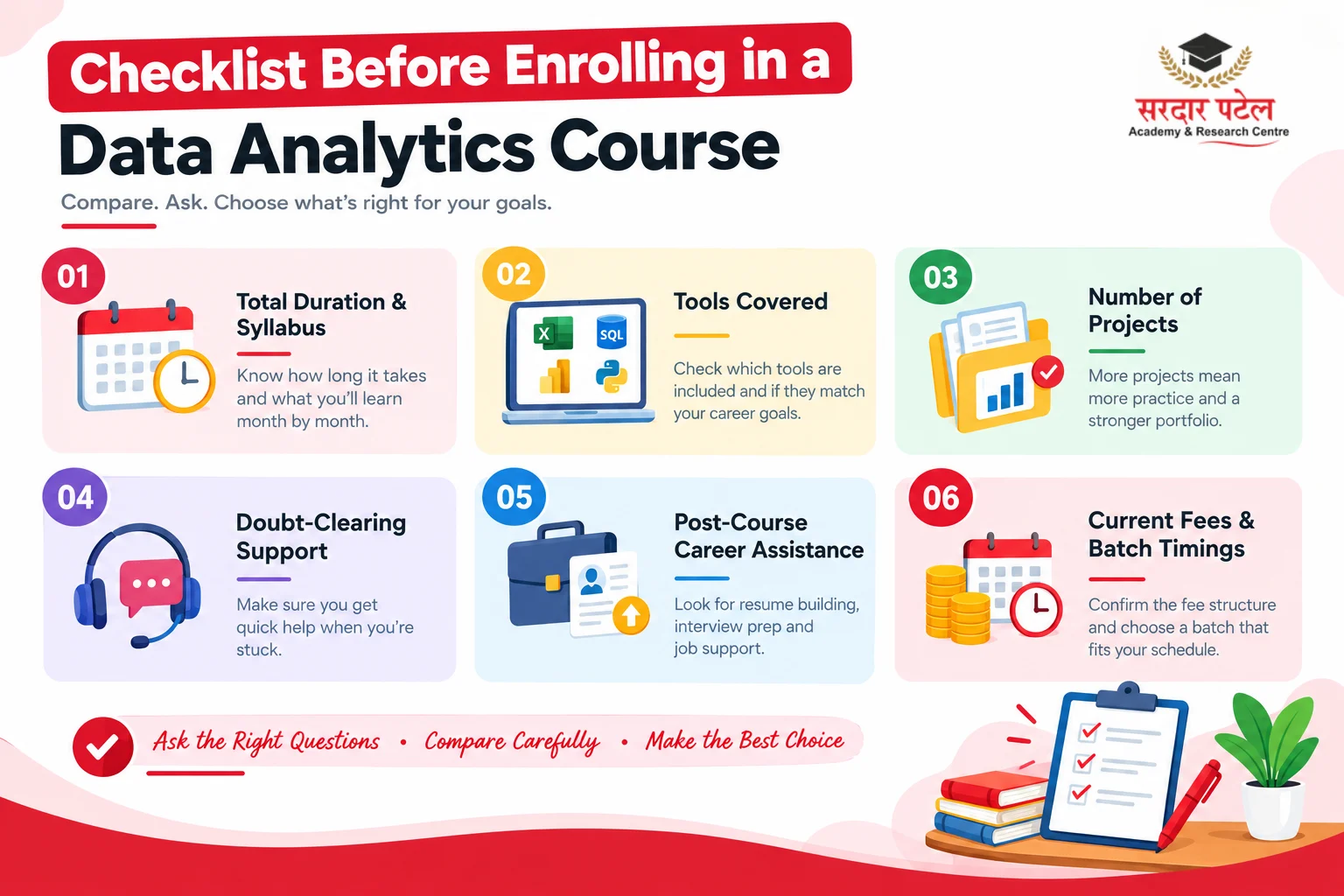
Before committing, ask any institute, including Sardar Patel Academy & Research Centre, these questions:
- What is the total data analytics course duration, and what does it cover month by month?
- Which tools are taught, and how many projects are included?
- How is progress tracked, and who clears doubts?
- What support is offered after the course ends?
Clear answers matter more than a promise of speed. Dashboard tools such as Microsoft Power BI are also worth exploring on your own to see what you will be working with.
Conclusion
The right data analytics course duration is the one that matches your goal, your starting point, and the time you can realistically give. Do not chase the shortest course or assume the longest is best. Compare syllabus, projects, and support.
If SPARC's eight-month structure sounds like a fit, check the course page for curriculum details, or fill in the free counselling form. You can also call +91 93129 66129 or +91 93129 77129, or write to sparc.enquiry01@gmail.com.
FAQs
It varies. Short introductory courses take weeks, while courses covering several tools and projects usually take several months.
You can learn the basics, such as spreadsheets and simple reports. Covering SQL, Python and dashboards with real projects generally needs longer.
Not necessarily. A longer course can be thorough or just slow. Judge it by syllabus, projects and feedback.
SPARC's Data Analytics Course with AI runs for eight months, moving from basic to advanced level across Excel, SQL, Python, Power BI, Tableau and AI tools.
Yes. Assignments and live projects are part of the modules, with 40+ projects listed on the course page.
Working professionals are among those eligible to join. Confirm batch timings with the counselling team before enrolling.
Yes. Support includes resume building, interview preparation, mock interviews, and job assistance. It is guidance, not a job guarantee.
There is no strict educational eligibility at SPARC, so you can start from the basics.