+91 9312966129
 sparc.enquiry01@gmail.com


What is Content Marketing? and Why It Matters?
Learn content marketing basics from scratch — what it is, why it matters, content types, SEO connection, and a beginner strategy roadmap.
Table of Contents
- What is Content Marketing?
- Why Content Marketing Matters
- Traditional Marketing vs Content Marketing
- Traditional Marketing vs Content Marketing
- Types of Content Marketing
- Blogs
- Videos
- Social Media
- Infographics
- Email Marketing
- Case Studies
- Podcasts
- eBooks
- Webinars
- Types of Content
- How Content Marketing Works
- Content Marketing and SEO
- Search Intent
- Keyword Research
- Internal Linking
- EEAT
- Helpful Content
- Role of Blog Writing for SEO
- SEO & Content Relationship
What is Content Marketing and Why It Matters
If you keep hearing the term "content marketing" and still aren't sure what it actually means, you're exactly who this guide is for. Whether you're a student, a business owner, or someone learning digital marketing from scratch, understanding this one skill changes how you think about every blog, video, or post you create.
Getting content marketing basics right early saves you months of publishing content that nobody reads. This guide breaks down what it is, why it works, and how to build your first content strategy — step by step.
Quick Answer: Content marketing is the practice of creating and sharing valuable, relevant content — blogs, videos, social posts — to attract and retain a clearly defined audience. Instead of directly advertising, it builds trust first. Companies with a documented content strategy are 3.5x more successful than those without one, according to Content Marketing Institute (CMI) research.
Whether you're new to content marketing or exploring the wider field, this beginner digital marketing guide can help you understand how content fits into the broader digital marketing ecosystem
What is Content Marketing?
Content marketing basics start with one idea: give value before you ask for a sale. It means publishing helpful blogs, videos, or guides that answer real questions your audience already has, so they trust you by the time they're ready to buy.
Think of it like a shopkeeper who answers your questions patiently for twenty minutes, even if you don't buy anything that day. You remember that shop. That's content marketing — except it happens through a blog post, a YouTube video, or an Instagram carousel instead of a conversation.
Did You Know?
Content marketing generates roughly 3x more leads than outbound marketing while costing about 62% less per lead, according to Demand Metric and CMI benchmarking data.
Why Content Marketing Matters
Content marketing matters because it builds trust before a sale happens, and trust is what actually drives conversions in a crowded market. Understanding content marketing basics early helps you see why buyers now research extensively online before contacting a business, so the brand that answers their questions first usually wins the sale.
A few real reasons this approach keeps winning:
- It's cheaper than ads long-term. Content keeps generating traffic months after publishing, unlike paid ads that stop the moment the budget runs out.
- It builds authority. Consistently helpful content signals expertise to both readers and Google.
- It supports every other channel. Social media, email, and SEO all perform better when they're built on solid content.
| Expert Tip: Don't chase virality. Chase usefulness. A practical, well-researched blog post outperforms a flashy one that doesn't actually help the reade |
Traditional Marketing vs Content Marketing
Traditional marketing interrupts people with ads; content marketing earns attention by being genuinely useful. The core difference is direction — traditional marketing pushes a message outward, while content marketing pulls interested people inward through search and shares.
Traditional Marketing vs Content Marketing
| Source: HubSpot, Content Marketing Institute |
Types of Content Marketing
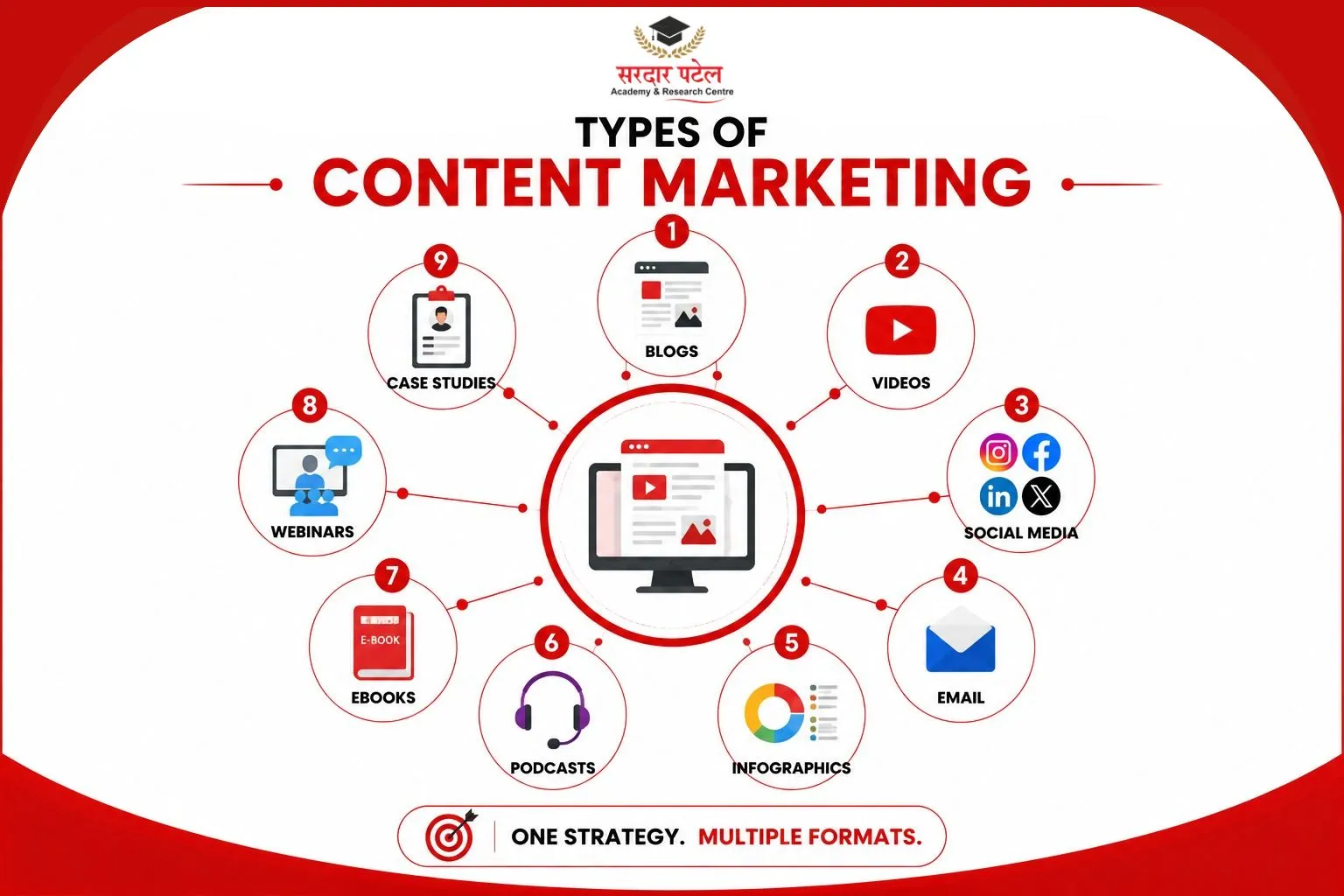
There isn't one format that works for every business — content marketing basics cover at least nine distinct formats, and most successful brands mix two or three rather than trying to do all of them at once.
Blogs
Blogs are written articles published on a website that target specific search queries. They remain the foundation of most content strategies because they're the easiest format to optimise for Google.
Videos
Videos explain concepts visually and perform well on YouTube, Instagram Reels, and landing pages. Adding video to a landing page alone can lift conversions significantly, per HubSpot's 2026 marketing data.
Social Media
Social posts distribute ideas quickly and build community around a brand. They work best when they point back to deeper content like a blog or video.
Infographics
Infographics turn data or steps into a visual format that's easy to scan and share. They're especially useful for explaining processes or statistics quickly.
Email Marketing
Email nurtures people who already showed interest, using automated sequences to guide them toward a decision. It remains one of the highest-ROI formats in the entire content mix.
Case Studies
Case studies show real results from real clients, which makes them one of the most persuasive content types for B2B audiences. They work because they replace claims with proof.
Podcasts
Podcasts let brands build a loyal, long-form audience through consistent, conversational episodes. They're growing fast among professionals who consume content during commutes.
eBooks
eBooks package detailed knowledge into a downloadable resource, often used to collect leads through a sign-up form. They work well for complex topics that need more depth than a blog post.
Webinars
Webinars combine live teaching with real-time audience interaction, making them effective for demonstrating expertise directly. They also convert well because attendees are already engaged.
Types of Content
| Source: HubSpot, Content Marketing Institute |
How Content Marketing Works
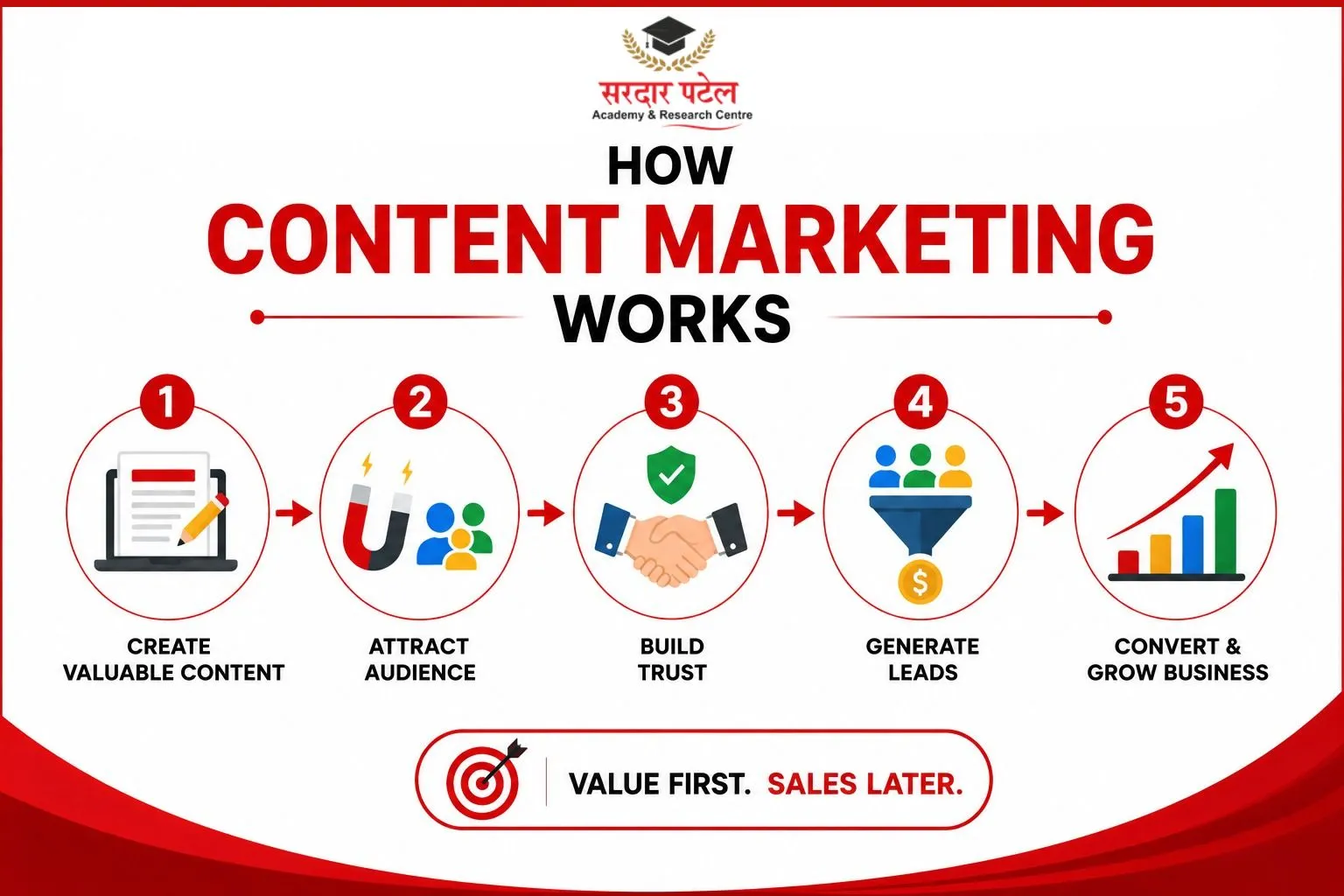 Content marketing works through a funnel — awareness, consideration, and decision — where each stage needs a different type of content to move someone closer to becoming a customer. Skipping stages, like jumping straight to a sales pitch, is why most beginner content underperforms.
- Awareness stage: Blog posts, social content, and videos that answer broad questions.
- Consideration stage: Comparison guides, case studies, and detailed how-tos.
- Decision stage: Testimonials, demos, and product-focused content.
Mini Summary: Match your content format to where the reader actually is in their decision, not to what's easiest for you to create.
Content Marketing and SEO
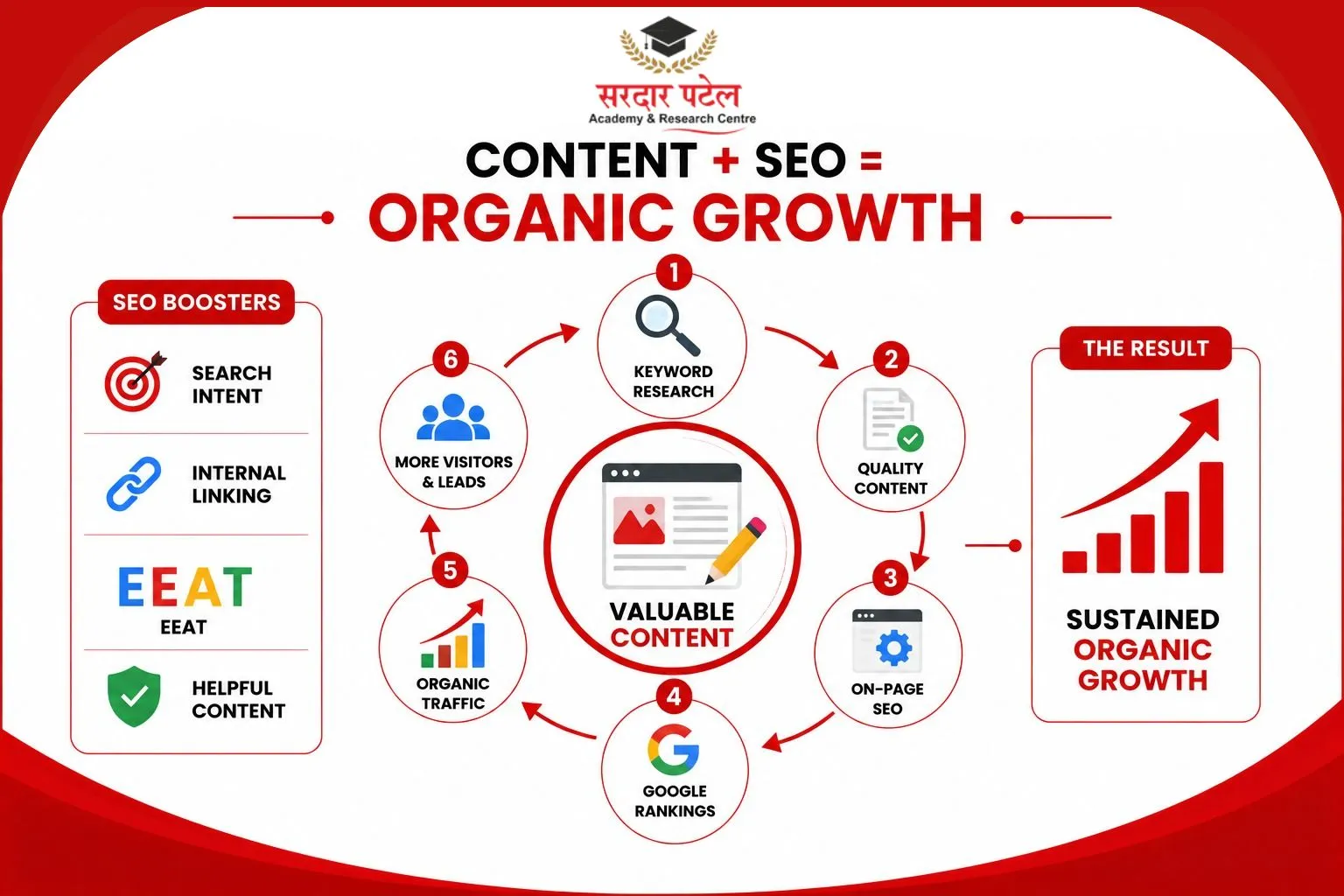
Content marketing and SEO work together because search engines rank content, not products — so the better your content answers a query, the more organic traffic it earns. Blog writing for SEO specifically means writing with both the reader and the search algorithm in mind, without sacrificing one for the other.
Search Intent
Search intent is what the searcher actually wants when they type a query — information, a comparison, or a purchase. Understanding keyword research helps you identify what users are searching for and why.
Keyword Research
Keyword research means finding the exact terms your audience searches for, so your content answers questions people are actually asking. Tools like Google Search Console and Ahrefs make this process data-driven instead of guesswork.
Internal Linking
Internal linking connects related pages on your site, helping both readers and Google understand how your content fits together. It's one of the simplest, most underused SEO tactics available.
EEAT
EEAT stands for Experience, Expertise, Authority, and Trust — the framework Google uses to judge whether content deserves to rank.
Real examples, author credibility, and accurate information all strengthen EEAT, while following on-page SEO best practices helps make the content clearer and more useful for both readers and search engines.
Helpful Content
Helpful content means writing primarily for people, not search engines, which is exactly what Google's Helpful Content guidance rewards. Content built to game rankings without real value tends to lose visibility over time.
Role of Blog Writing for SEO
Blog writing for SEO connects structured keyword targeting with genuinely useful writing, so posts rank without sounding robotic. This is where content marketing basics and technical SEO skills meet directly.
SEO & Content Relationship
| Source: Google Search Central, Moz |
Blog writing for SEO connects structured keyword targeting with genuinely useful writing, so posts rank without sounding robotic. To understand the fundamentals, start with what is SEO before moving into advanced content optimisation techniques.
How Beginners Can Create a Content Strategy
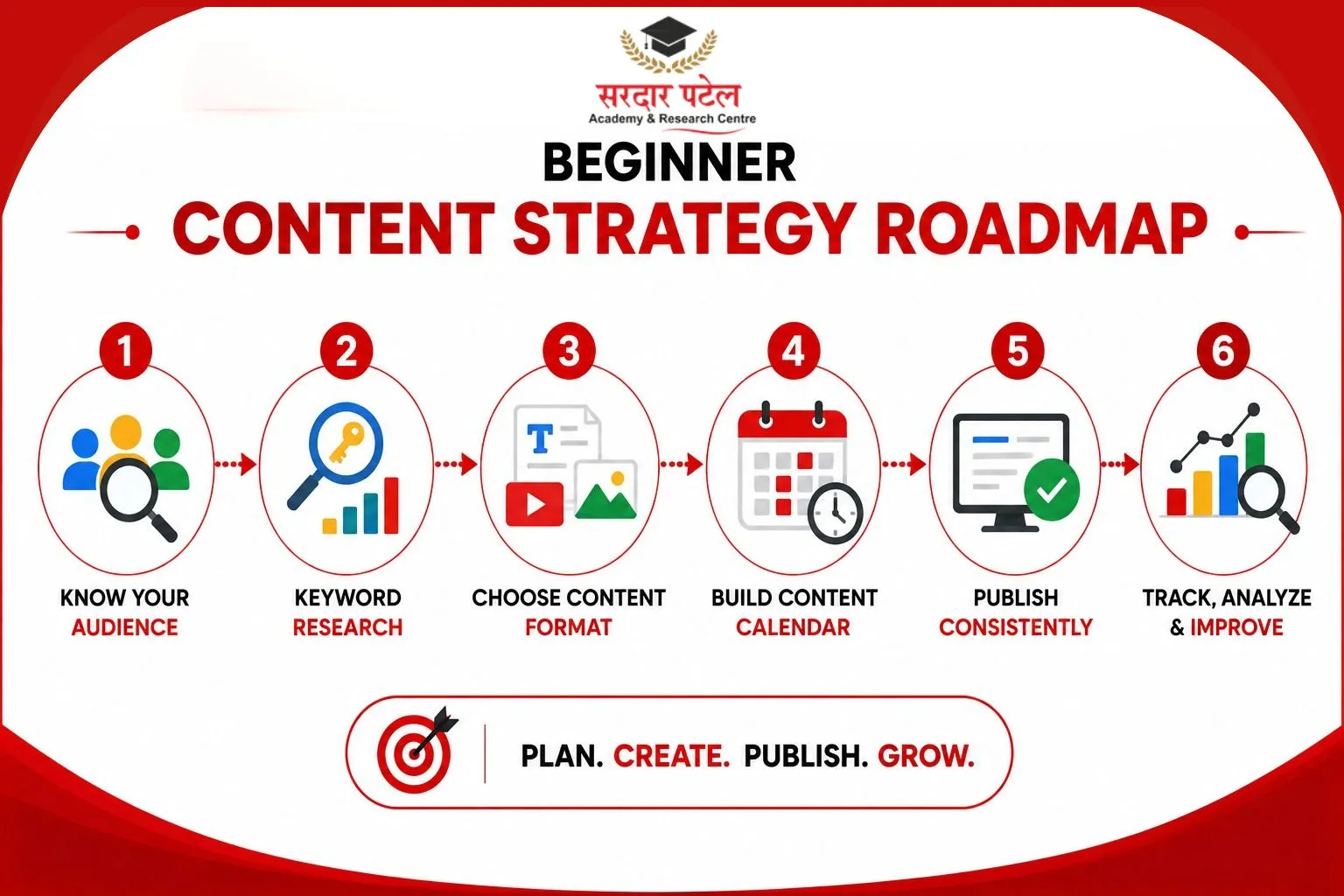
Beginners can create a content strategy by defining their audience, picking one core content format, and publishing consistently for at least three months before judging results. Content strategy for beginners doesn't need to be complicated — it needs to be consistent.
- Define your audience — who exactly are you writing for?
- Pick one primary format (blog, video, or social) instead of spreading thin.
- Do basic keyword research to find what your audience is searching.
- Create a simple content calendar — even 2 posts a week is enough to start.
- Publish consistently for at least 90 days before evaluating results.
- Track performance using Google Analytics and adjust based on data.
Benefits of Content Marketing
The core benefits go beyond traffic — mastering content marketing basics builds long-term trust, lowers customer acquisition cost, and keeps working long after a single post is published. Businesses that publish consistently also tend to rank for many more search terms over time, compounding their organic visibility.
- Builds brand trust and authority
- Lowers cost per lead compared to paid ads
- Supports SEO and organic growth
- Creates reusable, evergreen assets
- Improves customer retention through ongoing value
Common Mistakes Beginners Make
Most beginners fail not because they lack writing skill, but because they publish inconsistently, ignore search intent, or stop right before results start compounding. Understanding content marketing basics means understanding these traps before you fall into them.
Common Mistakes:
- Publishing once and expecting instant traffic
- Writing for search engines instead of real readers
- Ignoring keyword research completely
- Giving up before the 3–6 month SEO timeline plays out
- Copying competitors instead of building an original angle
Myth vs Fact:-
Myth: Content marketing gives quick results.
Fact: Most content takes three to six months to gain real organic traction.
Best Content Marketing Tools
Applying content marketing basics gets far more manageable with the right digital marketing tools, which handle everything from keyword research to performance tracking without needing advanced technical skill.
Popular Content Marketing Tools
| Source: Ahrefs, SEMrush, Google Analytics |
Content Marketing Metrics
| Metric |
What It Shows |
| Organic Traffic |
How many people find content via search |
| Bounce Rate |
Whether content matches search intent |
| Time on Page |
Whether readers actually engage |
| Conversion Rate |
How well content drives action |
| Backlinks |
How much authority content earns |
| Source: Google Analytics, Ahrefs, Statista |
How Sardar Patel Academy & Research Centre - SPARC Helps Students Learn Content Marketing
Learning content marketing basics from videos alone rarely builds real skill — SPARC's approach pairs the theory with live blog projects, so students practise SEO writing, keyword research, and content optimisation on real websites before they apply for jobs.
The program is built around practical, portfolio-ready learning:
- Live blog and content projects with real keyword targets
- Guided content planning and calendar building
- Hands-on keyword research using industry tools
- This is what turns theoretical knowledge into a job-ready content marketing skill set and
improves your chances to get a job after a digital marketing course.
Want to Learn Content Marketing Through Real Projects?
Build practical content marketing skills with Sardar Patel Academy & Research Centre–SPARC through live blog projects, keyword research, content planning, and mentor feedback. Explore Sardar Patel Academy & Research Centre–SPARC’s Digital Marketing Course .
Conclusion
Getting content marketing basics right isn't about mastering every format at once — it's about picking one, staying consistent, and letting search intent guide what you create. Beginners who publish steadily for a few months almost always outperform those chasing shortcuts.
If you want to move from understanding the theory to actually building a working content strategy, structured, project-based learning gets you there faster. Learn Content Strategy with guided mentorship and live projects designed for exactly this stage of your journey.
If you want to move from understanding the theory to actually building a working content strategy, Sardar Patel Academy & Research Centre in GTB Nagar, Delhi offers guided mentorship and live content projects designed for exactly this stage of your journey.
Call +91 93129-66129 to know more.
FAQs
Content marketing is creating and sharing valuable content — blogs, videos, guides — to attract and retain a defined audience. Instead of interrupting people with ads, it earns attention by answering real questions first.
Content marketing is important because it builds trust before a sale, costs less than paid ads over time, and keeps generating traffic long after publishing. It also strengthens every other marketing channel, from SEO to email.
The basics of content marketing include understanding your audience, choosing the right content format, researching keywords, and publishing consistently. Getting content marketing basics right matters more than perfect writing skill.
Content marketing helps SEO by giving search engines relevant, helpful pages to rank for real queries. Well-researched blog writing for SEO, backed by keyword research and internal linking, is what earns organic visibility.
Beginners can create a content strategy by defining their audience, picking one content format, researching keywords, and publishing consistently for at least 90 days. Tracking performance afterward helps refine what's working.