+91 9312966129
 sparc.enquiry01@gmail.com


Freelancing Opportunities in Data Analytics
Learn how freelancing in data analytics works in India — skills, platforms, rates, and how students, freshers and professionals can get started.

Table of Contents
- What Does Freelancing in Data Analytics Actually Mean
- Why Freelance Data Analyst Jobs Are Growing
- Who Can Realistically Get Into Freelance Data Analytics
- Core Skills You Need Before Freelancing in Data Analytics
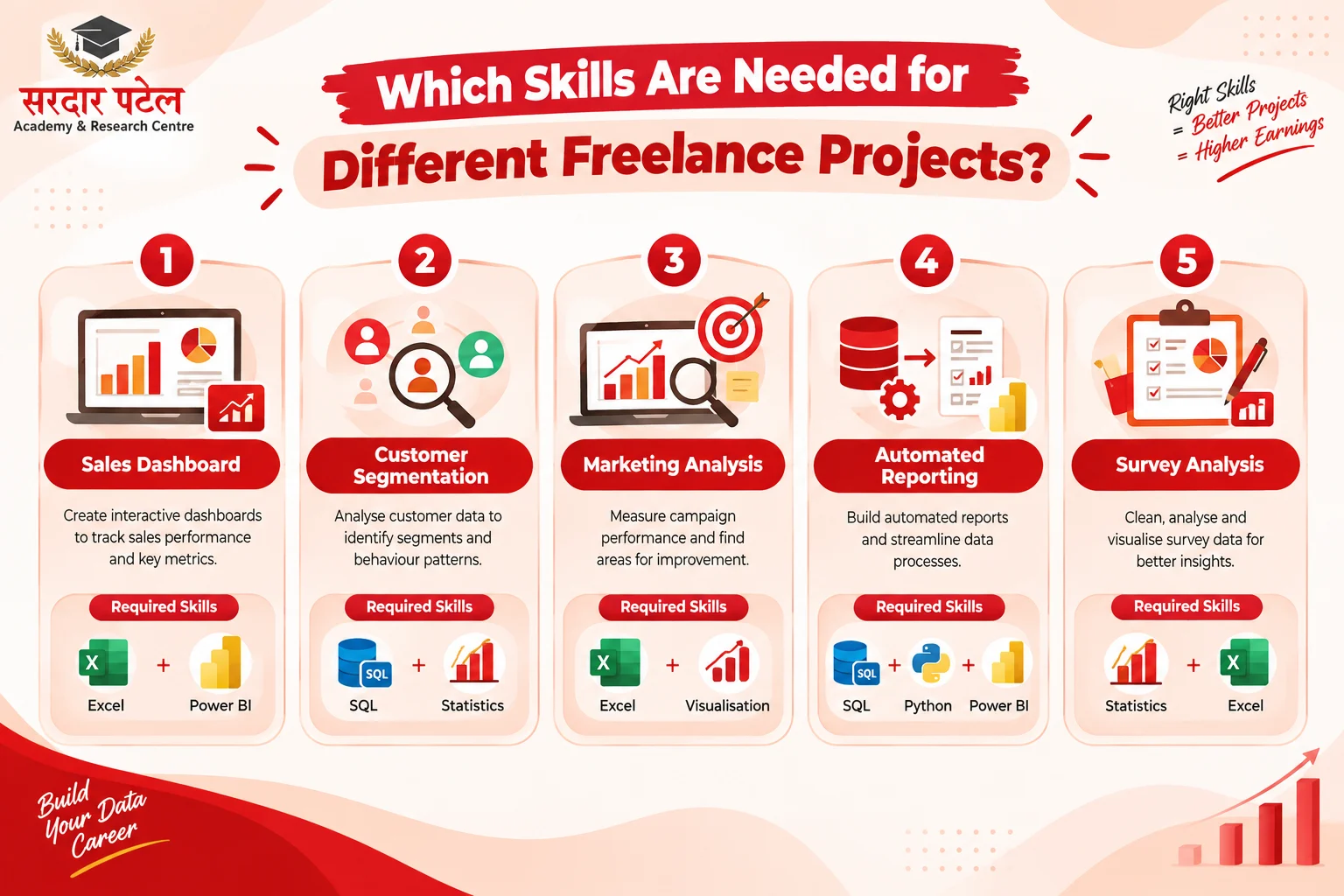
- Skills by Project Type
- Where Skill Gaps Usually Show Up
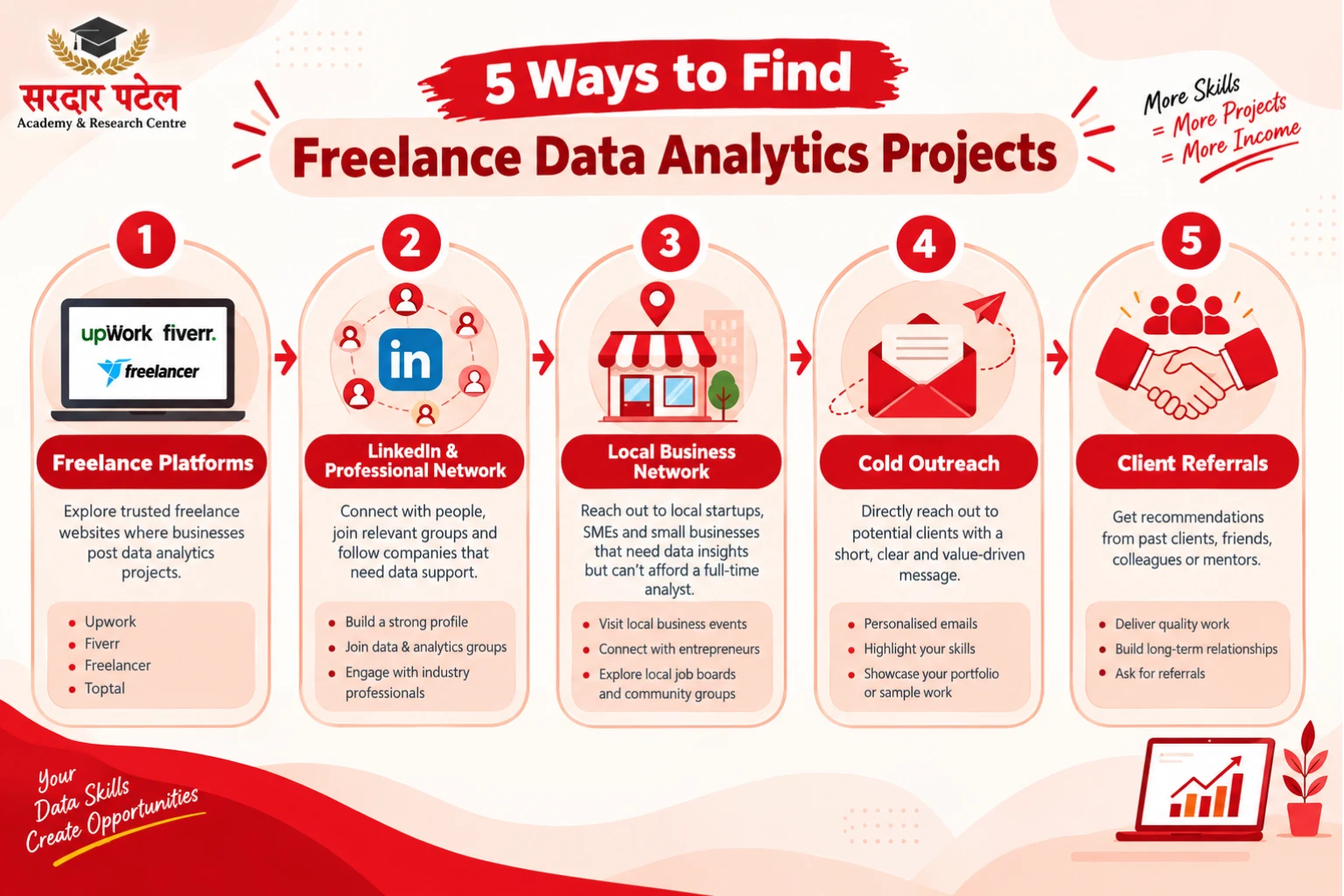
- How to Find Freelance Data Analyst Jobs
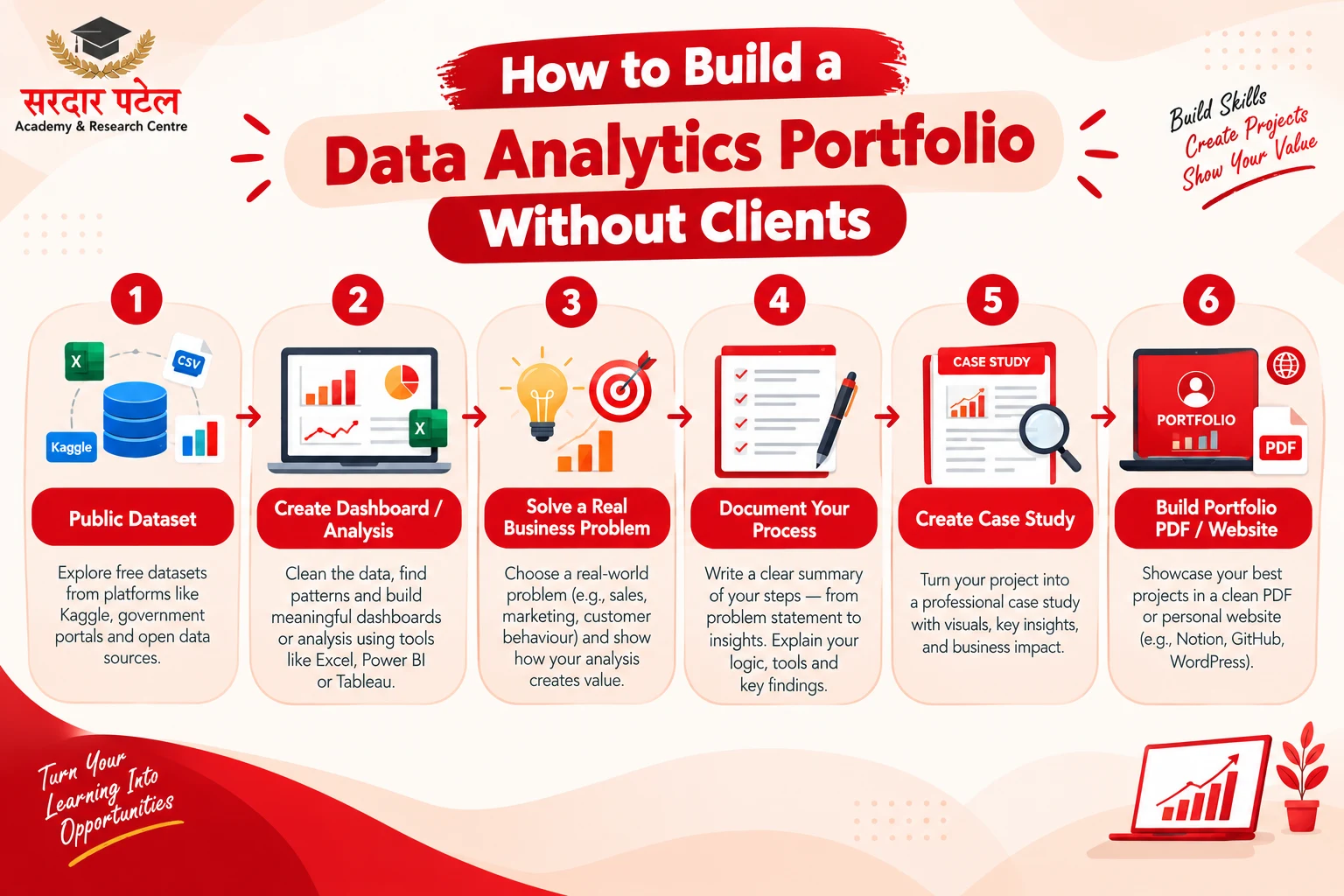
- Building a Portfolio Without Prior Client Work
- Setting Your Rates as a Freelance Data Analyst
- Common Challenges of Freelancing in Data Analytics
- Getting Started: A Simple First-90-Days Plan
- Where to Learn These Skills in Delhi NCR
If you've ever wondered whether you can earn a living analysing data without sitting in one office chair for eight hours a day, you're not alone. Freelancing in data analytics has quietly become one of the most searched career questions among students, working professionals and business owners across India, and especially in Delhi NCR, where the mix of startups, SMEs and consulting firms creates steady demand for project-based analytical work. This guide covers what freelance data analytics actually looks like, how it works in the Indian market, what skills you need, and how to land your first project.
What Does Freelancing in Data Analytics Actually Mean
Freelancing in data analytics means offering your data-related skills — cleaning data, building dashboards, running statistical analysis, writing reports — to clients on a project basis. If you're new to the field, understanding data analytics from the basics can help you build a stronger foundation before starting freelance work.
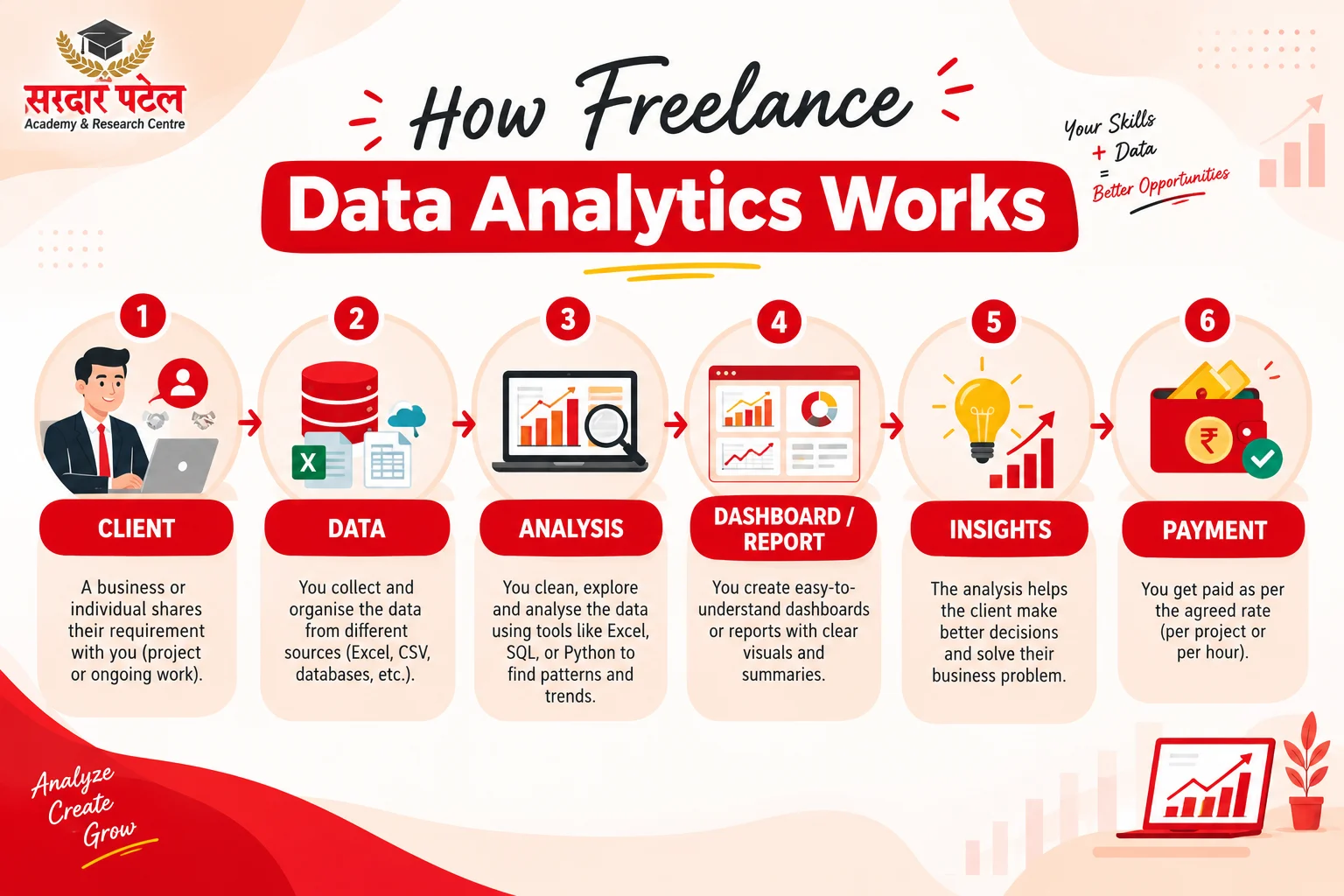
Instead of being employed full-time by one company. You work independently, often for multiple clients at once, and you're paid per project or per hour rather than drawing a fixed monthly salary.
This differs from a regular analyst job in a few important ways. As a freelancer, you choose your projects, negotiate your own rates, manage your own schedule, and handle client communication yourself. There's no manager assigning your daily tasks. You're essentially running a small, one-person service business built around your analytical skills.
According to NITI Aayog's report on India's gig and platform economy, India's gig workforce is projected to grow to about 23.5 million workers by 2029-30, up from roughly 7.7 million currently, with the sector expanding across all skill levels. Data analytics, being a skill-based service that can be delivered remotely, fits squarely into this broader shift toward project-based, independent work.
Why Freelance Data Analyst Jobs Are Growing
A few structural shifts explain the rise in freelance data analyst jobs:
- Businesses generate more data than they can process internally. Even a small e-commerce seller now has sales, ad spend, customer and inventory data scattered across platforms. Someone needs to make sense of it, but a full-time analyst isn't always justified for a smaller operation.
- Remote work normalised outsourced analytical work. Once companies got comfortable with remote collaboration, hiring a freelancer in a different city stopped feeling unusual.
- Freelance marketplaces made discovery easier. Businesses can now find and vet analysts without a formal recruitment process.
- Specialisation pays off. Businesses often need a specific skill for a specific problem — a dashboard rebuild, a churn analysis, a one-time research project — rather than an ongoing full-time role.
This growing demand is closely connected to the importance of data analytics for businesses, as companies increasingly rely on data to improve decisions, understand customers, and manage performance.
None of this makes freelancing easier than a job. It usually demands more discipline and more tolerance for inconsistent income, especially early on. But the opportunities are real, not just theoretical.
Who Can Realistically Get Into Freelance Data Analytics
Students and freshers can use freelancing to build a portfolio while still studying or job-hunting. For students and freshers exploring different career paths, understanding data analytics career opportunities can also help them decide whether freelancing or a full-time role is the better starting point.
Clients care more about whether you can solve their specific problem than about your degree, though without a strong portfolio or referrals, freshers often need to start with smaller projects.
Working professionals who already know Excel, SQL or Power BI can freelance part-time on weekends to earn extra income and test the waters before a full transition. This is common among professionals in Delhi NCR and other metro cities working in finance, operations or marketing.
Business owners are part of this audience too — not as freelancers, but as people trying to understand what a freelance analyst can do for their business and what a reasonable brief looks like. If you're considering hiring a freelance analyst instead of a full-time employee, understanding the skill set below will help you evaluate candidates.
Core Skills You Need Before Freelancing in Data Analytics
Clients don't hire freelancers to learn on the job. You need working competence before pitching for projects: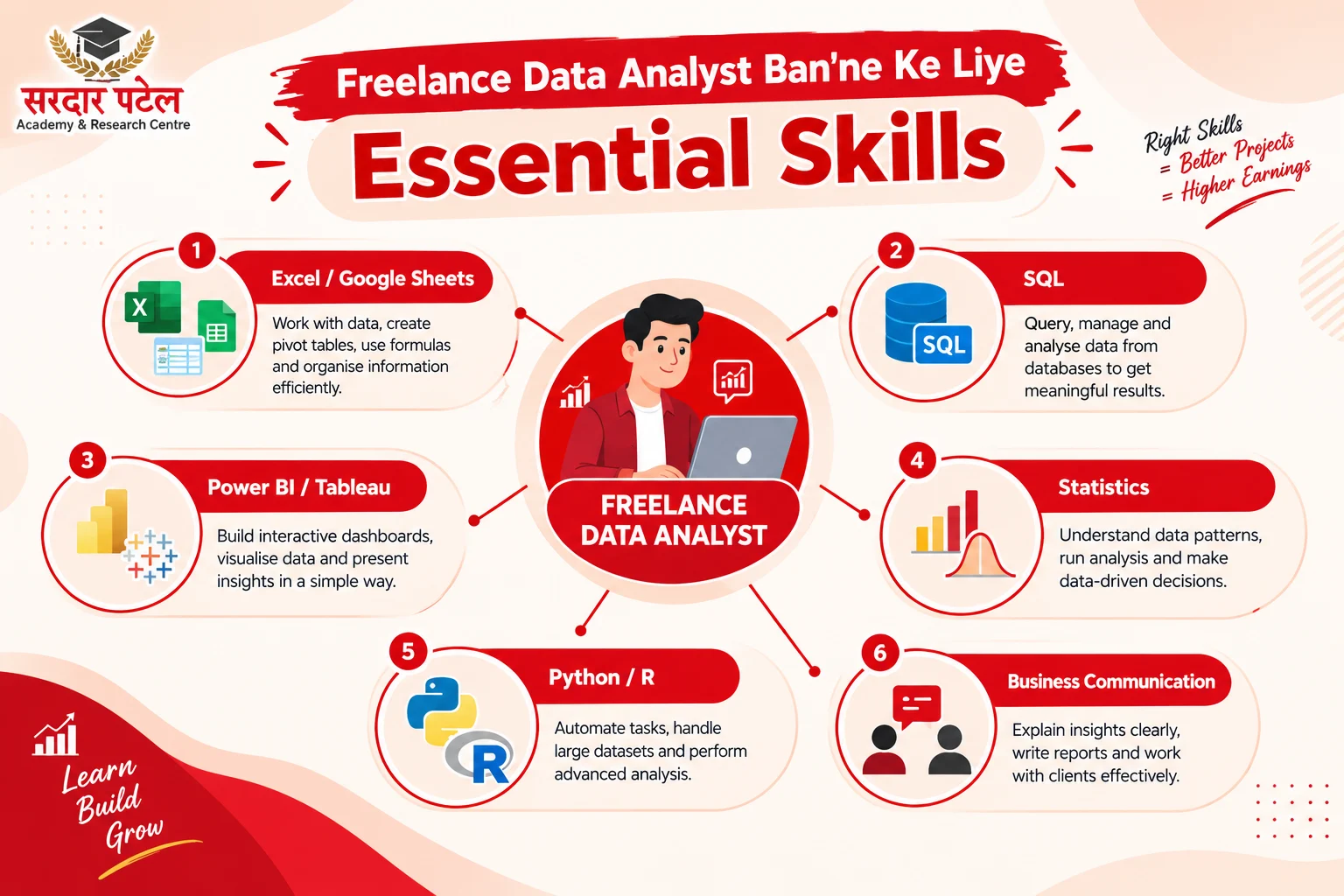
- Spreadsheet proficiency (Excel/Google Sheets) — pivot tables, lookup functions, data cleaning
- SQL — for querying and extracting data from databases, often the actual data source in real projects
- A visualisation tool — Power BI or Tableau are the two most commonly requested in the Indian market
- Basic statistics — understanding averages, trends, correlation and sampling well enough to explain what your numbers mean
- Python or R (optional but valuable) — useful for larger datasets or automation
- Business communication — explaining findings in plain language to non-technical clients
If you want to understand these technologies in more detail, explore our guide to essential data analytics tools and how they are used in real-world analytics work. A freelancer's real value is often the ability to translate numbers into a decision the client can act on, not just the technical analysis itself.
Skills by Project Type
| Project Type |
Primary Skills Needed |
| Sales/revenue dashboard |
Excel or Power BI, basic SQL |
| Customer segmentation |
SQL, statistics, Excel |
| Marketing performance analysis |
Excel, analytics tool familiarity, visualisation tool |
| Automated reporting system |
SQL, Python, Power BI/Tableau |
| Survey or research data analysis |
Statistics, Excel, sometimes SPSS |
Where Skill Gaps Usually Show Up
| Common Gap |
Why It Hurts Freelancers |
| No SQL knowledge |
Can't access data directly from client databases |
| Weak communication |
Insights don't get acted upon by the client |
| No visualisation skills |
Reports feel harder to read and less professional |
| No sense of business context |
Analysis is technically correct but not useful |
How to Find Freelance Data Analyst Jobs
- Freelance marketplaces — general and data-focused platforms list project-based work. A strong profile with a few honest sample projects usually matters more than bidding on many jobs at once.
- LinkedIn and professional networks — many freelance projects come through direct outreach or referrals rather than open marketplaces. Sharing small analyses and being clear that you take freelance work brings inbound enquiries over time.
- Local business networks — in a hub like Delhi NCR, networking through business associations, alumni groups or word of mouth among smaller enterprises can be a genuinely productive, often overlooked channel.
- Cold outreach to small businesses — many small businesses don't know affordable, project-based analytics help is an option. A targeted message about a specific problem you can solve usually works better than a generic pitch.
- Referrals from past clients — once you complete a project well, ask for referrals. This is typically the highest-quality source of future work in any freelance field.
Building a Portfolio Without Prior Client Work
This is the classic chicken-and-egg problem: clients want proof of work, but you can't get proof of work without a client. A few practical ways around it:
- Use public datasets to build sample dashboards or analyses that mimic real client work.
- Offer one small pro bono or discounted project to a local business or non-profit in exchange for a case study and testimonial.
- Document your process, not just the output — clients often want to see how you think through a problem.
- Keep a simple portfolio page or PDF showing three to five sample projects with the problem, your approach, and the outcome.
Setting Your Rates as a Freelance Data Analyst
Rates vary widely based on skill level, project complexity, client type, and negotiation. Rather than quoting fixed numbers that may not hold across the market or over time, it helps to understand what actually drives pricing: project scope, your experience level, whether the client is local or international, and how urgent or technically demanding the work is. New freelancers are generally better off researching current rates on the specific platform or client segment they're targeting, since these figures shift with market conditions. Understanding the broader data analytics career scope, skills, and salary trends can also help you benchmark your freelance pricing as you gain experience.
Common Challenges of Freelancing in Data Analytics
- Inconsistent income, especially in the first several months
- Scope creep, where clients ask for "just one more thing"
- Client education, since some clients don't know how to brief a data project clearly
- Isolation, from losing a workplace's built-in social environment
- Self-discipline, with no manager holding you accountable to deadlines
These aren't reasons to avoid freelancing, but reasons to plan for — keep a savings buffer, write clear project scopes upfront, and set boundaries around revisions.
Getting Started: A Simple First-90-Days Plan
Weeks 1–4: Solidify core skills (Excel, SQL, one visualisation tool). Build two to three sample projects with public data.
Weeks 5–8: Set up profiles on one or two freelance platforms and LinkedIn. Reach out to five to ten people in your network about your availability.
Weeks 9–12: Pitch actively, follow up on leads, and close your first project — even a small one. Deliver it well enough to earn a referral. Once you start applying for freelance and full-time opportunities, knowing how to crack a data analytics interview can also help you present your technical skills and project experience more confidently.
If structured skill-building feels like the missing piece before you start pitching clients, now's the time to learn freelancing skills (link to be added to SPARC's course page) through a proper training program rather than piecing things together from scattered tutorials.
Where to Learn These Skills in Delhi NCR
If you're based in Delhi NCR and want structured, practical training, Sardar Patel Academy & Research Centre (SPARC) offers a job-oriented Data Analytics course in Delhi designed with freelancing and job-readiness in mind — covering Excel, SQL, Power BI and applied statistics, the tools clients and employers actually look for. Before choosing a training program, you can also review what parents have shared about data analytics training to get another perspective on the learning experience and support provided.
For government-backed options across India, the Skill India Digital platform, run by the Ministry of Skill Development and Entrepreneurship, also lists recognised training and certification pathways to compare with private institutes.
If you're still deciding which career path to pursue after graduation, our guide to career-focused courses after graduation in Delhi can help you compare different options based on skills, interests, and career goals.
Have questions about batch timings or the course itself? Call SPARC at +91 93129-66129 or write to enquiry@sparc.org.in.
FAQs
It's possible, but beginners usually need core skills and a small portfolio first. Jumping in without a foundation in Excel, SQL or a visualisation tool tends to frustrate both sides.
Certifications help build credibility early on, but clients generally care more about demonstrated skill and past work than credentials alone.
Yes, many professionals do this on evenings and weekends, provided they manage time well and are upfront with clients about availability.
Excel or Google Sheets and SQL are the best starting point. A visualisation tool like Power BI or Tableau is a natural next step.
This varies with your skills, portfolio and outreach effort — anywhere from a few weeks to a few months. Consistent outreach and a visible portfolio usually speed things up.
Yes, since most work is remote, location matters less than for a traditional job. That said, being in a hub like Delhi NCR still helps with local networking and in-person client relationships.
E-commerce and D2C brands, marketing and consulting agencies, fintech startups, and small manufacturing or trading businesses are among the more active hirers of project-based analytics help in the region.
Both work. Specialising can help you charge more once you have experience. Early on, staying generalist helps you gain varied project exposure.