+91 9312966129
 sparc.enquiry01@gmail.com


Is Internship Important in Data Analytics Training?
Thinking a data analytics course is enough? Here's why an internship closes the gap between theory and real hiring — plus how to pick one that's worth your time.

Table of Contents
- What a Data Analytics Internship Actually Looks Like
- The Real Gap Between Coursework and the Job
- Classroom Training vs Internship: What Each One Is For
- Skills an Internship Builds That a Course Can't
- Is It Actually Necessary, or Just Helpful?
- How to Get an Internship Before You Commit
- Mistakes That Waste an Internship
- How to Get Maximum Value Out of One
- Conclusion
You've finished your data analytics course. You know VLOOKUP and INDEX-MATCH, you can write a JOIN without googling it, and your Power BI dashboard looks clean. So, what makes the job application process feel so difficult even after completing your course?
Here's the honest answer: completing a course proves you can learn. An internship proves you can work. Recruiters look beyond basic SQL knowledge. They want to see whether you can work with untidy real-world data, identify useful insights, and turn those findings into decisions. This practical ability is often missing from fresher resumes.
This guide explains what you can gain from an internship, when it can be useful, and how to choose a program that offers genuine practical experience.
What a Data Analytics Internship Actually Looks Like
Forget the idea of an internship as "extra homework." A good one puts you inside a real business problem, using the same tools you learned in training — Excel, SQL, Python, Power BI, Tableau, Google Sheets — but on data that wasn't cleaned up for a lesson plan.
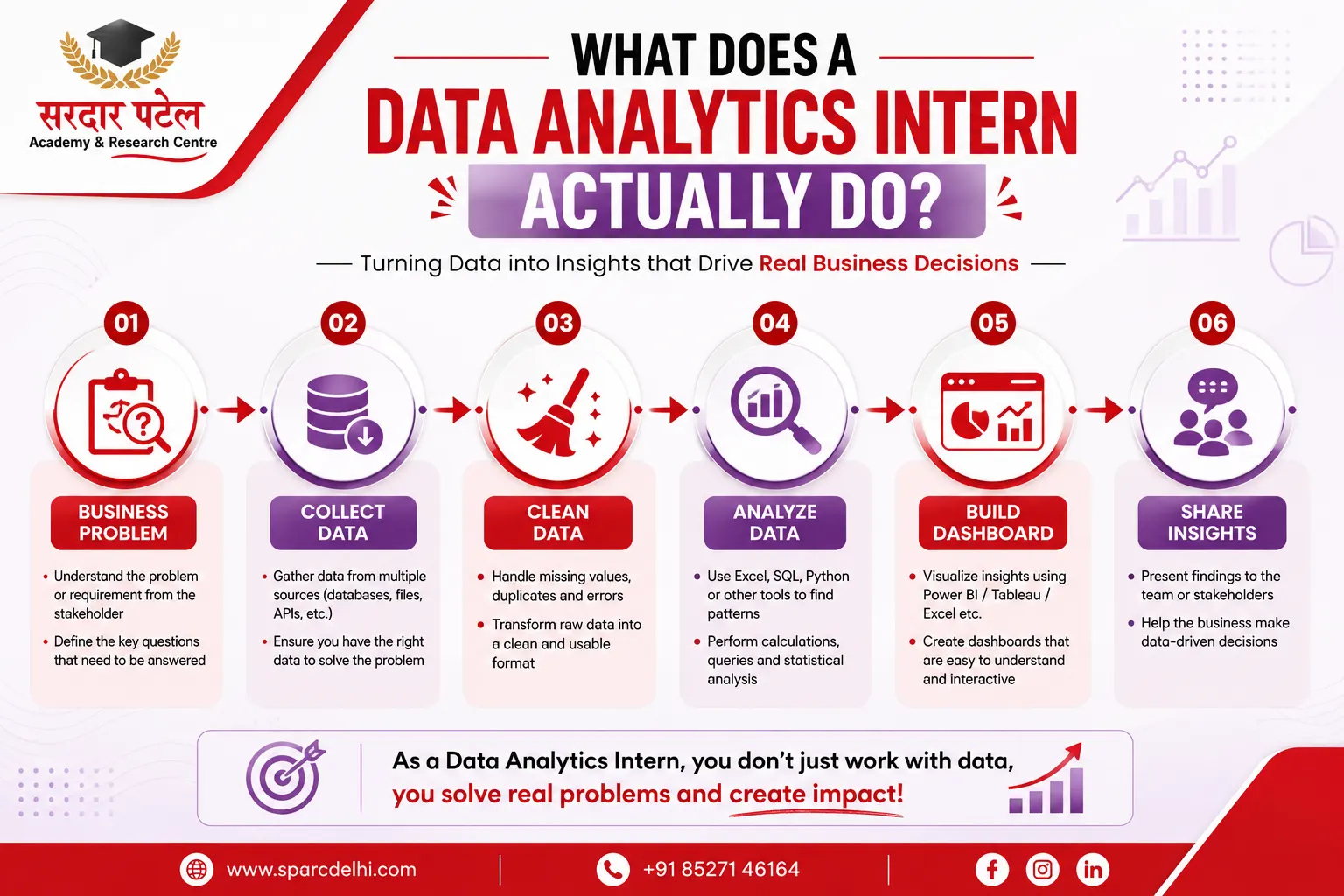
If you're still building your technical foundation, explore our guide on the data analytics tools you'll learn in a professional data analytics course.
Typical work includes:
- Cleaning a dataset that has duplicate entries, missing fields, and three different date formats
- Writing SQL queries against an actual production-style database, not a sample table
- Building a dashboard that a manager will actually open next Monday
- Presenting a finding to someone who will ask "why" three times in a row
The difference isn't the tools. The real difference is that you're dealing with actual challenges, real-world complexity, and outcomes that matter.
A good internship program is structured around this exact model — interns work on live business datasets using tools like Excel, SQL, Python, and Power BI, mentored by experienced analytics professionals rather than working through pre-recorded material alone.
The Real Gap Between Coursework and the Job
Course exercises are designed to teach a concept, so they're clean by design. A pivot table lesson gives you a tidy 200-row table. Real business data doesn't work like that.
Example: In training, you might calculate "monthly revenue" from a spreadsheet with clear columns. On the job, you're told revenue "dropped in Q2" and handed three data sources — a CRM export, a finance sheet, and a marketing report — that don't share a common customer ID. Your first task isn't analysis. It's figuring out how to even join the data.
That kind of ambiguity is exactly what an internship trains you to handle:
- Translating a vague business question ("why did conversions fall?") into a measurable analytical task
- Deciding which data is trustworthy and which needs to be flagged before you use it
- Defending your numbers when someone on the team disagrees with them
These practical skills are often missing from traditional course outlines. It shows up in a Slack message asking, "Can you have this by Thursday?"
Classroom Training vs Internship: What Each One Is For
Each one serves a different purpose and addresses a specific need.
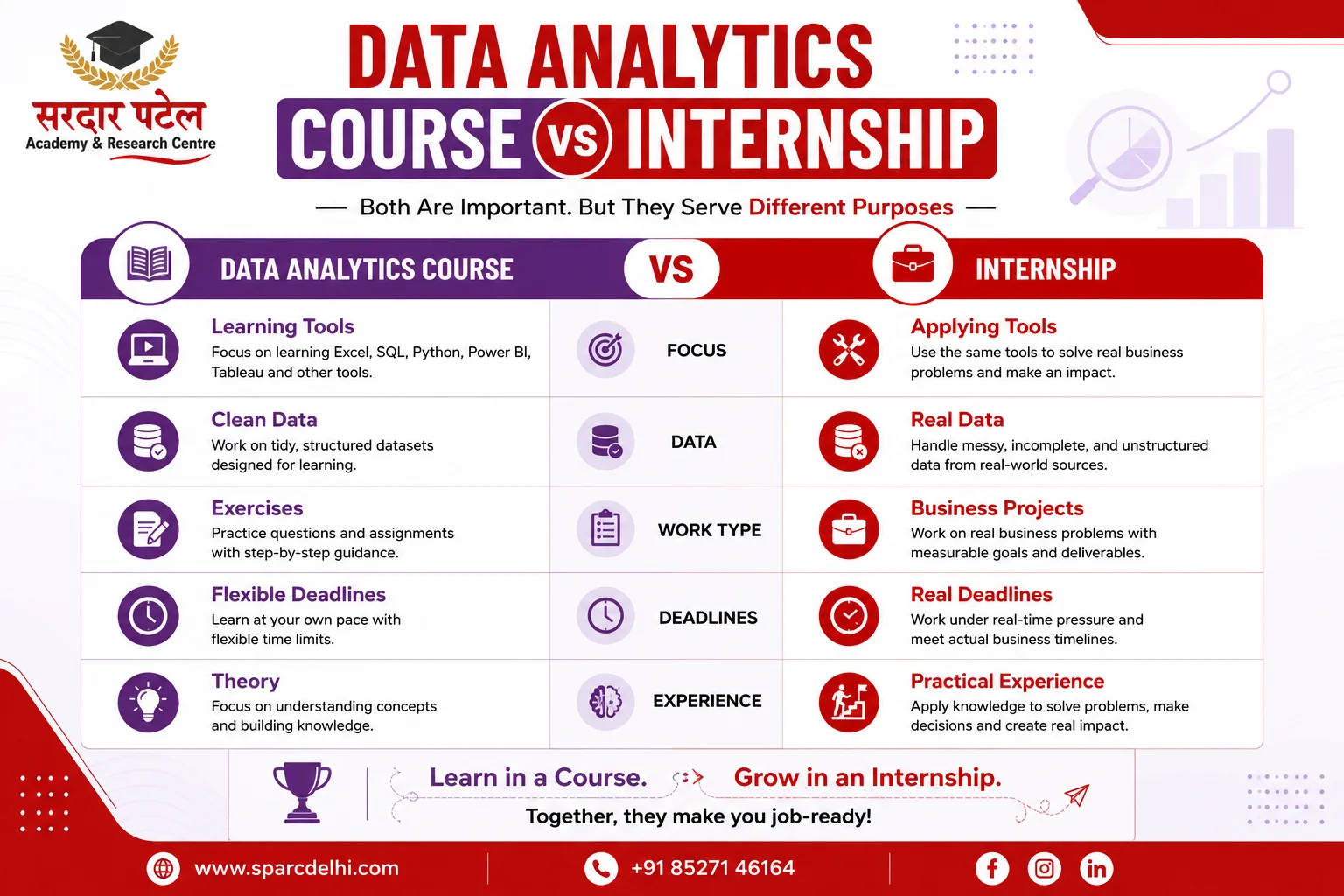
Skip training and you'll struggle with the tools during the internship. Skip the internship and you'll struggle to explain, in an interview, what you'd actually do with those tools. You need both — training first, then application.
Skills an Internship Builds That a Course Can't
Technical, applied at speed: Not "I know Python" but "I wrote a Pandas script to merge three inconsistent CSVs in under an hour because a report was due." Understanding the broader data analytics career skills employers look for can also help you prepare for this transition.
Judgment: Knowing which outlier is a data-entry error and which one is a genuinely important signal — a distinction no course dataset forces you to make, because course datasets are pre-filtered.
Communication under scrutiny: Explaining a dashboard to someone who isn't technical and immediately asks, "So what should we actually do about this?" Many freshers find these situations challenging at first, but an internship gives them valuable practice before facing real interview situations.
Working inside a deadline that isn't yours to move: Course deadlines are flexible. Business deadlines usually aren't.
Is It Actually Necessary, or Just Helpful?
Straight answer: not mandatory, but close to essential if you have zero professional data experience.
If you're considering formal training before gaining practical experience, explore this guide to data analytics courses and career opportunities. But if you're a fresh graduate whose only exposure to data is coursework, an internship is currently the fastest way to close that gap, because self-directed practice projects (however good) rarely come with real deadlines, real stakeholders, or real feedback from someone who's hired analysts before.
A realistic path looks like: Learn the tools → Build 2–3 practice projects → Internship → Turn real work into a portfolio → Apply. For a step-by-step approach, follow this data analytics learning guide.
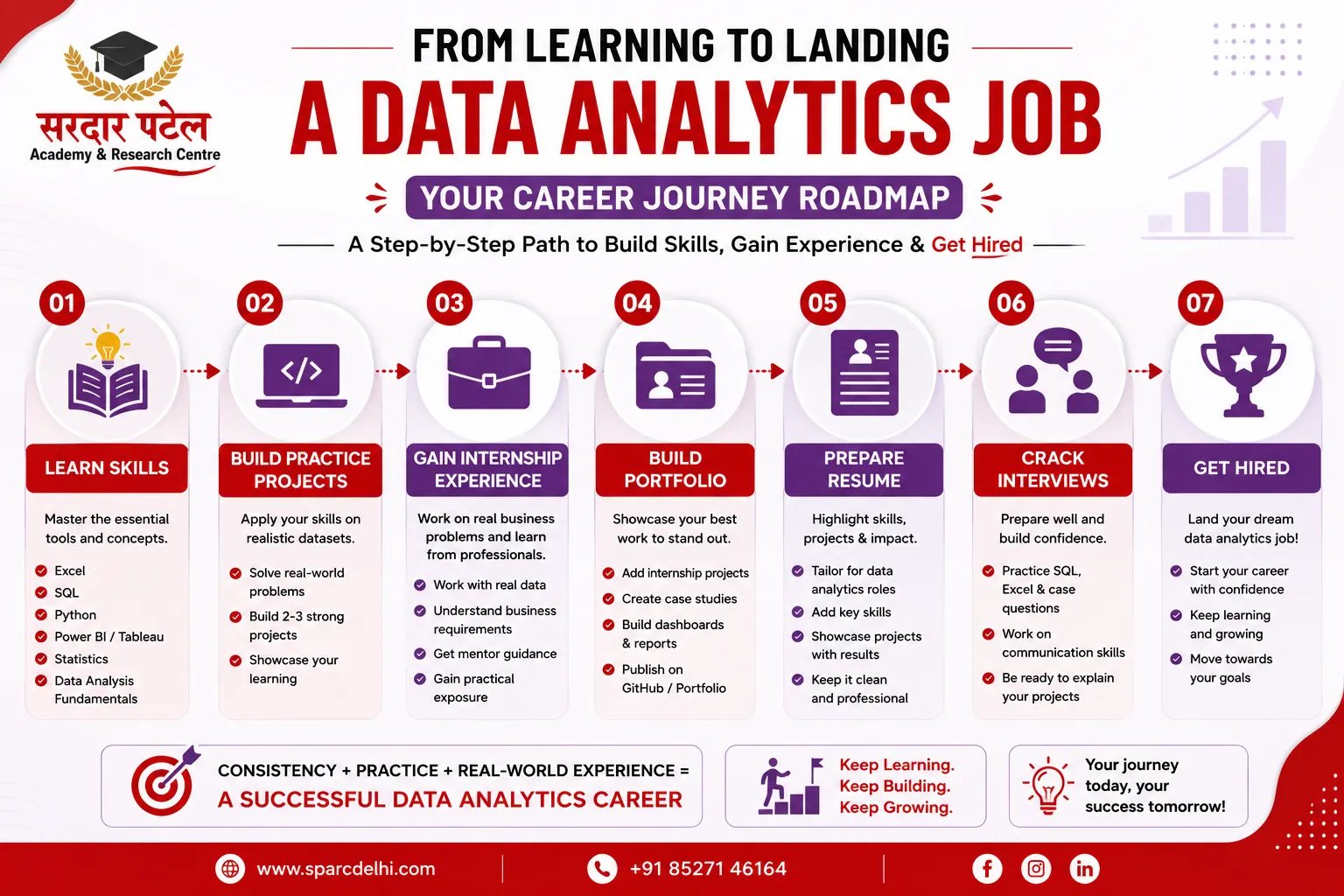
If you're planning your career timeline, our guide on how long it takes to become a data analyst can help you understand the different stages of learning, practice, and job preparation.
Strong self-built projects and a great portfolio can substitute for some of this — but they have to be genuinely strong, not tutorial clones. More on that below.
How to Get an Internship Before You Commit
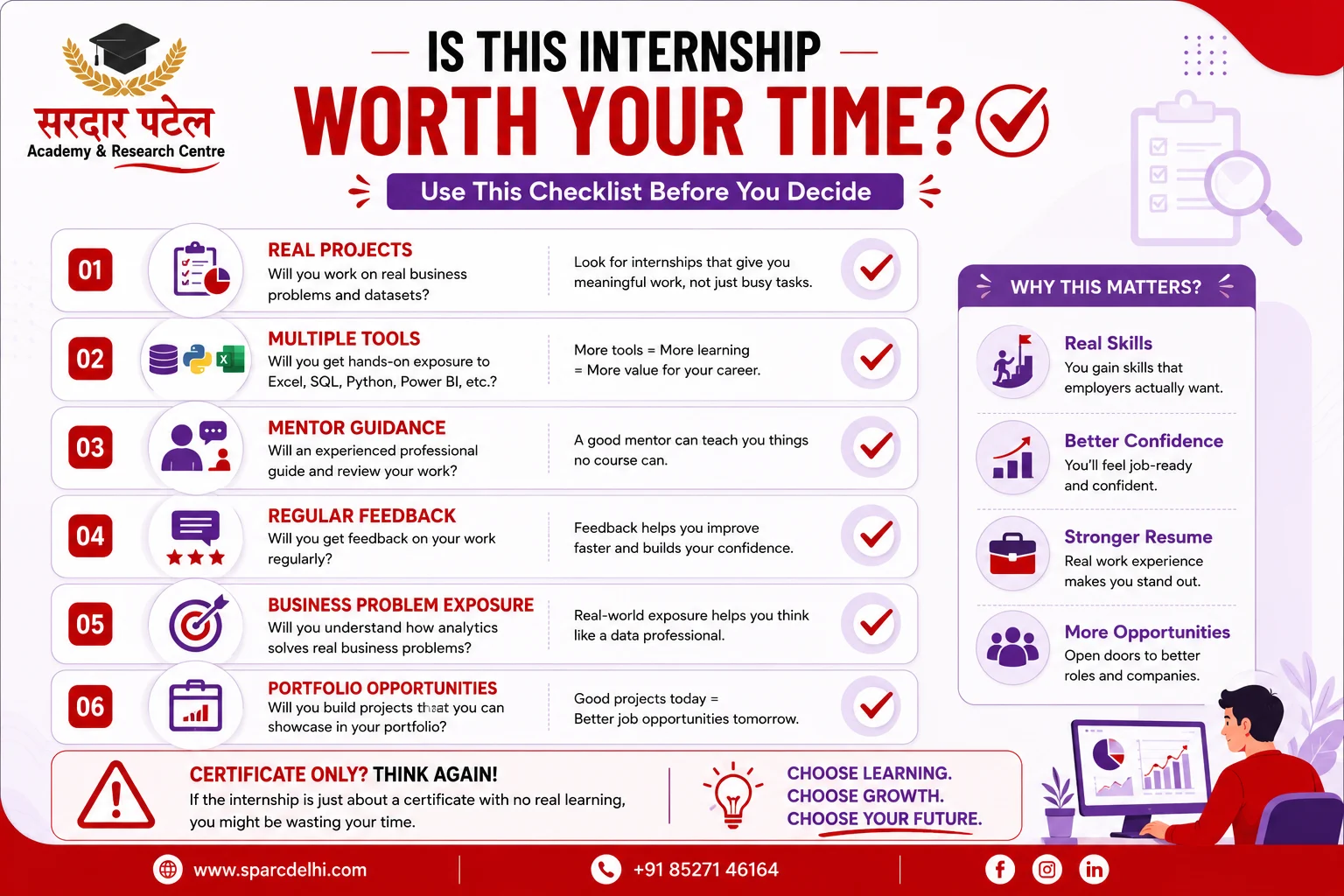
Not every internship is worth your three months. Before joining, ask directly:
- "What will I actually be working on?" If the answer is vague ("data stuff") or the role is mostly watching pre-recorded sessions, walk away. You want named tasks, not vibes.
- Will I touch more than one tool? Excel-only internships teach less than ones that mix SQL, a BI tool, and at least basic Python.
- Who reviews my work, and how often? An internship with zero feedback loop is just unpaid solo practice — you can do that at home for free.
- Will I understand the "why," not just the "how"? Ask if you'll get context on the business problem, or just a task list with no explanation.
- Can I discuss this work later — in an interview or portfolio? Get clarity on confidentiality upfront so you're not caught off guard later.
If an internship can't give you a clear answer to at least four of these five, it's likely to waste your time.
Before choosing an internship, it's also worth considering the quality of the training that comes before it. Our guide to Data Analytics Certification Courses in Delhi can help you understand what to look for in a structured learning program.
Mistakes That Waste an Internship
- Chasing the certificate, not the experience — some programs are built for the PDF, not the learning
- Sticking to the easy tasks and letting messier datasets go to someone else
- Copying a senior's approach without understanding why it works
- Running a query or building a chart without knowing what business question it answers
- Skipping validation — presenting numbers you haven't sanity-checked
- Staying quiet when stuck instead of asking, and losing the whole week to it
The internship itself doesn't make you job-ready. How you use it does.
How to Get Maximum Value Out of One
- Start with the question, not the query. Before opening SQL or Excel, write down in one sentence what business decision this analysis is supposed to support.
- Ask instead of assuming. A wrong assumption early costs you more time than the question would have.
- Document as you go. Keep a running log of what you cleaned, why, and what you found — this becomes your interview material later.
- Sanity-check before you present. Does the number make sense at a glance? If revenue "grew 400%," check your join before you check your excitement.
- Practice explaining findings in plain language — no jargon, no acronyms, as if to someone outside the team.
- Turn shareable projects into a portfolio, once you've confirmed what's safe to show.
- Ask for direct feedback, specifically: "What would make my work interview-ready?"
A strong internship follows this same loop with a dedicated mentor — logging your work, sanity-checking findings, and getting structured feedback aimed at making your projects interview-ready by the end of the program.
Conclusion
A course teaches you the tools. An internship teaches you what to do when the data doesn't cooperate, the deadline is real, and someone's waiting on your answer. Neither replaces the other — but if you're starting from zero professional experience, skipping the internship means walking into interviews with only theory to talk about.
Ready to build these skills through hands-on, project-based training? Explore SPARC's Data Analytics Course — call +91 93129-66129 or visit sparc.org.in.
FAQs
Not strictly mandatory, but it's the fastest, most credible way for a fresher with no prior data experience to prove they can apply what they learned.
Yes — with strong, original portfolio projects, solid technical skills, and confident interview performance. It's a harder path, but not a closed one.
Excel and SQL first — they're used everywhere. Add Python and one visualization tool (Power BI or Tableau) once you're comfortable with the basics.
There's no fixed number. A focused 6–8 weeks with real projects and regular feedback beats six unstructured months.
Yes, once you've confirmed what's confidential. Frame each one around your role, the tools you used, and the outcome — not just "worked on a dashboard."