+91 9312966129
 sparc.enquiry01@gmail.com


Interview with Lead Faculty on Student Career Growth
Learn digital marketing career tips from a SPARC lead trainer, covering skills, learning paths, AI, job readiness, and employer expectations in Delhi NCR.
Table of Contents
- Meet the Faculty: A Quick Introduction
- Q1: What Made You Choose Digital Marketing as a Teaching Career?
- Q2: What's the Biggest Mistake You See Beginners Make?
- Q3: How Should Someone Structure Their Learning If They're Starting From Zero?
- Q4: Is Digital Marketing Still a Good Career Choice in 2026?
- Q5: What Do Employers in Delhi NCR Actually Look For?
- Q6: How Long Should Someone Expect to Take Before They're Job-Ready?
- Q7: What Advice Would You Give Working Professionals Switching Into Digital Marketing?
- Q8: Basic Course vs. Advanced Course — What Should a Beginner Pick?
- Common Mistakes Faculty See Even in Advanced Students
- What This Means for You as a Learner
- Final Thoughts
If you're weighing whether a digital marketing course is worth your time and money, the best perspective usually doesn't come from a brochure — it comes from the person who's actually in the classroom every day, watching students struggle, improve, and eventually land jobs. That's why we sat down for a candid digital marketing faculty interview with the lead trainer at Sardar Patel Academy & Research Centre (SPARC) in GTB Nagar, Delhi.
In this conversation, we asked the questions students in Delhi NCR ask us all the time: What actually helps a career take off? What do beginners get wrong? Is this field still worth entering? The answers below are drawn directly from years of classroom experience, not generic advice you could find anywhere.
Meet the Faculty: A Quick Introduction
Before we get into the interview itself, here's some context on who's answering.
Our lead trainer at Sardar Patel Academy & Research Centre (SPARC), GTB Nagar, Delhi, brings practical digital marketing experience into the classroom. With expertise in SEO, Google Ads, social media marketing, analytics, and campaign execution, the trainer focuses on helping students connect digital marketing concepts with real-world applications.
Their teaching approach combines core digital marketing fundamentals with practical exposure to areas such as SEO, Google Ads, social media marketing, analytics, and campaign execution. Rather than focusing only on theory, the emphasis is on helping learners understand how and why different marketing strategies work.
With that introduction, let's get into the interview.
Q1: What Made You Choose Digital Marketing as a Teaching Career?
Faculty: "Honestly, it wasn't planned. I started out doing hands-on marketing work — running campaigns, fixing websites that weren't ranking, figuring out why ad spend wasn't converting. At some point, people around me kept asking the same questions, and I realized I enjoyed explaining the 'why' behind the tactics as much as doing the work itself. Teaching felt like a natural extension of that."
This is a common thread among trainers in this field — most people teaching digital marketing well have actually done the work, not just studied it. That distinction matters more than it seems on the surface.
Q2: What's the Biggest Mistake You See Beginners Make?
This question tends to draw the most detailed response, because it's the one faculty deal with almost daily.
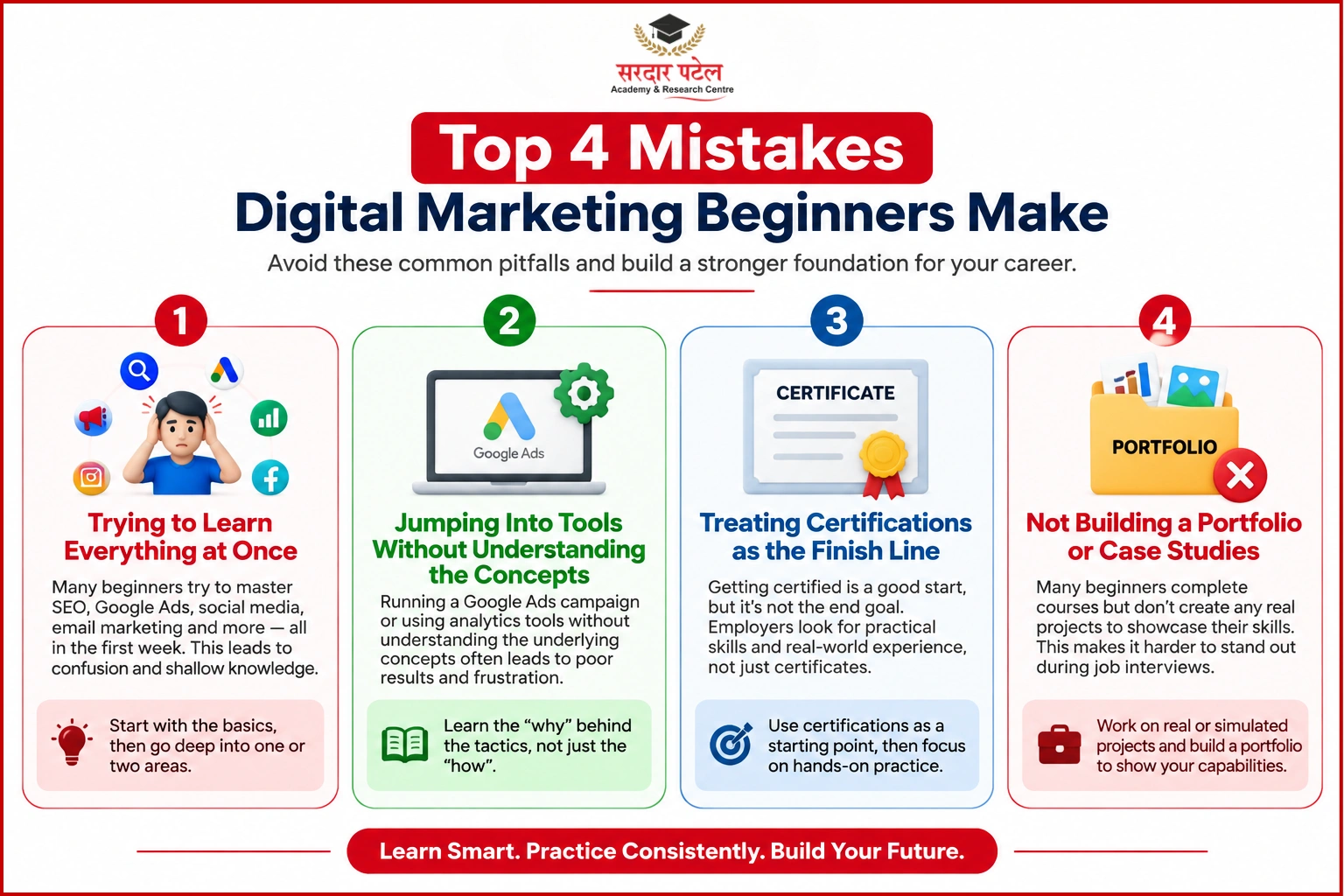
Faculty: "The biggest mistake is trying to learn everything at once — SEO, Google Ads, social media, email marketing, analytics — all in the first week, without going deep into any single skill. Digital marketing is broad, and that breadth can feel exciting, but employers usually want to see that you can actually execute one or two things really well before they trust you with the rest."
A few other patterns that come up repeatedly in digital marketing career discussions include:
- Jumping straight into tools without understanding the underlying concept (running a Google Ads campaign without understanding search intent, for example)
- Treating certifications as the finish line instead of the starting point
- Avoiding hands-on practice out of fear of "getting it wrong"
- Not building any kind of portfolio or case study to show real work
Q3: How Should Someone Structure Their Learning If They're Starting From Zero?
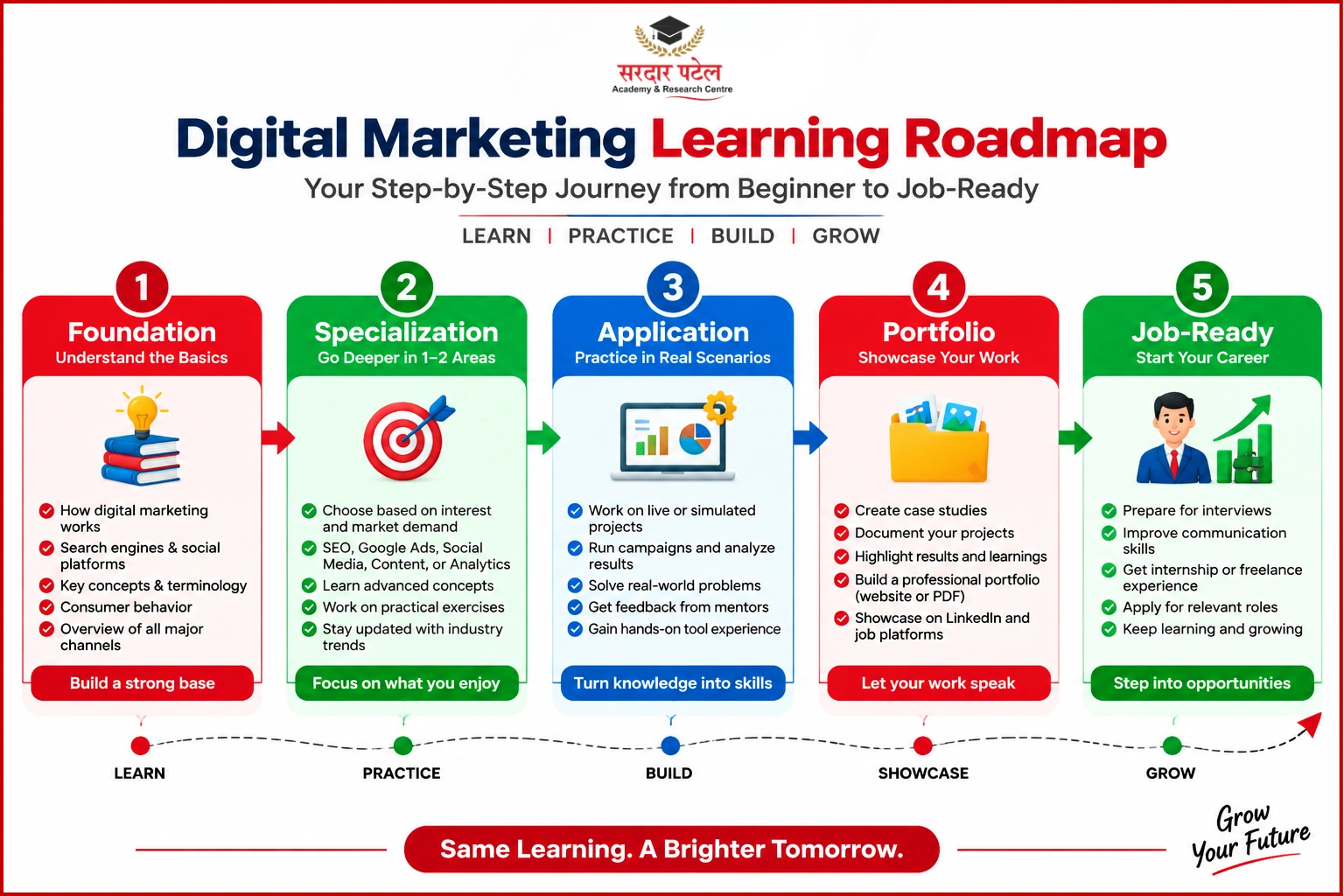
Faculty: "I usually tell beginners to think in three phases: foundation, specialization, and application. Foundation means understanding how search engines, social platforms, and paid advertising actually work — not just which buttons to click. Specialization means picking one or two areas to go deep on, based on what you enjoy and what the market is asking for locally. Application means practicing on real or simulated projects before you ever apply for a job."
Here's how that roughly breaks down in practice:
| Phase |
Focus |
Typical Activities |
| Foundation |
Core concepts |
Understanding SEO basics, ad platforms, analytics, buyer behavior |
| Specialization |
Depth in 1–2 areas |
SEO, paid ads, content, or analytics — chosen based on interest |
| Application |
Real-world practice |
Live projects, mock campaigns, portfolio building, internships |
Students who follow this kind of structured path tend to have a clearer answer when asked, "What can you actually do?" — which is exactly the question hiring managers care about.
Q4: Is Digital Marketing Still a Good Career Choice in 2026?
This question comes up in almost every batch, especially with AI tools changing how marketing work gets done.
Faculty: "The field is changing, not disappearing. AI has made certain repetitive tasks faster — writing basic ad copy, generating first-draft content, pulling reports. But someone still needs to understand strategy, interpret data, and make decisions based on business context. If anything, the people who understand both marketing fundamentals and how to use AI tools well are in a stronger position than before."
Q5: What Do Employers in Delhi NCR Actually Look For?
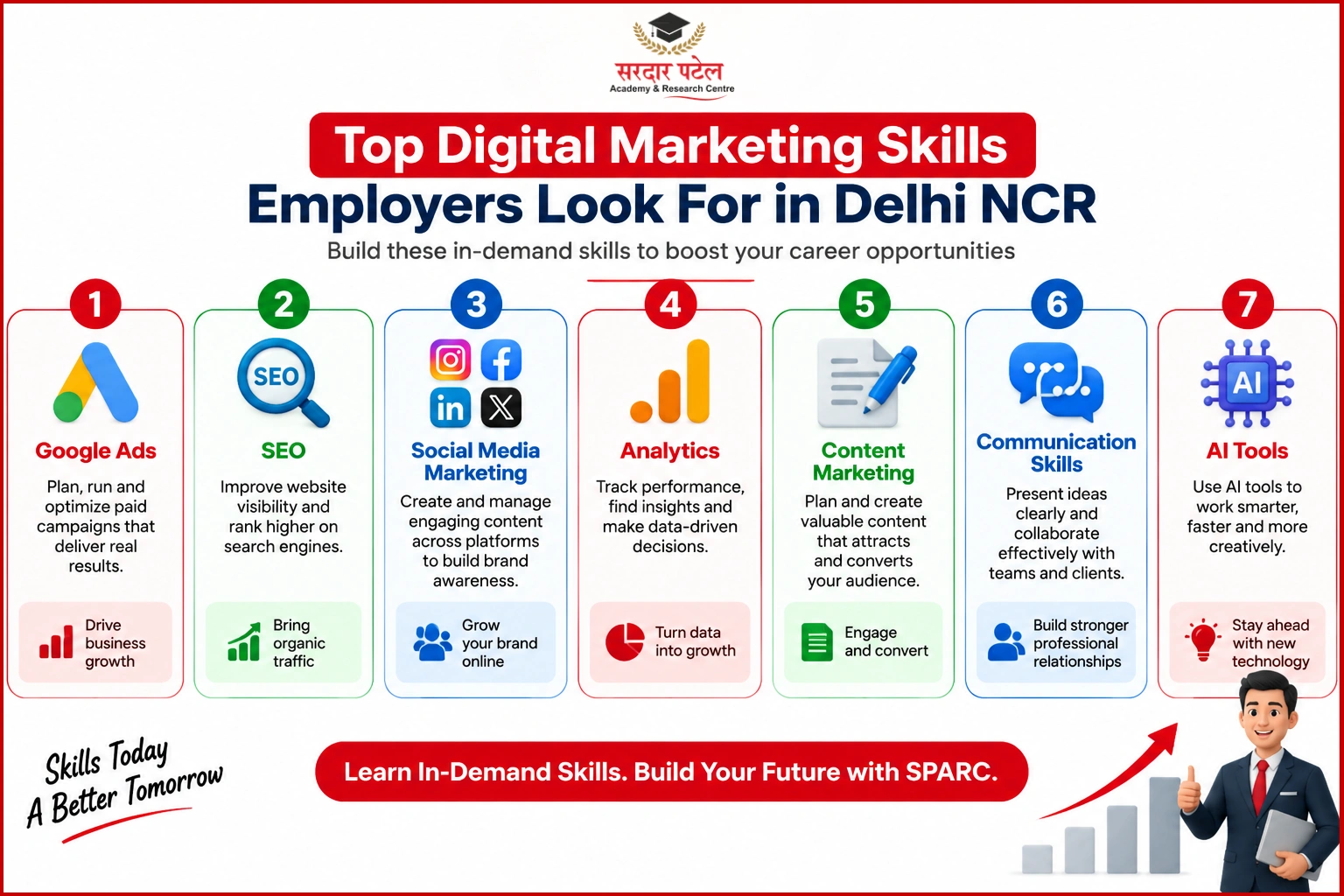
Faculty: "Locally, we see a strong demand for people who can handle Google Ads, basic SEO, and social media management together — smaller and mid-sized businesses in Delhi NCR often can't afford separate specialists for each channel, so they want someone versatile. Larger companies and agencies, on the other hand, tend to look for deeper specialization in one skill."
A few things employers consistently mention during placement conversations:
- Comfort with real tools (Google Ads, Search Console, Meta Business Suite, basic analytics platforms) rather than just knowing them in theory
- Ability to explain why a campaign performed a certain way, not just report the numbers
- Basic writing and communication skills — a surprising number of candidates struggle here
- Willingness to keep learning, since platforms and algorithms change often
Q6: How Long Should Someone Expect to Take Before They're Job-Ready?
Faculty: "There's no single answer — it depends on the person's starting point, how much time they can commit, and which specialization they choose. Someone studying full-time and practicing daily will naturally progress faster than someone learning part-time alongside a job."
We've written a more detailed breakdown of this in How Long Does It Take to Become Job Ready in Digital Marketer?, which covers realistic timelines phase by phase.
Q7: What Advice Would You Give Working Professionals Switching Into Digital Marketing?
Faculty: "Don't throw away your previous experience — use it. If you were in sales, you already understand persuasion and customer objections, which helps enormously in copywriting and paid ads. If you were in finance, analytics and reporting will feel natural. The transition is smoother when you connect your existing skills to the new field instead of starting as if you know nothing."
This is one of the more overlooked pieces of advice for professionals considering a career switch into digital marketing.
Q8: Basic Course vs. Advanced Course — What Should a Beginner Pick?
This is a frequent point of confusion, so we asked directly.
Faculty: "If someone has zero background, starting with the fundamentals makes sense — you need the vocabulary and the basic logic of how digital marketing works before advanced strategy will mean anything. If someone already has some exposure or a related degree, jumping into a more advanced, project-heavy course can save time."
For a side-by-side breakdown of what each option covers, see our comparison guide: Advanced Digital Marketing Course vs. Basic Course: Which One to Choose.
Common Mistakes Faculty See Even in Advanced Students
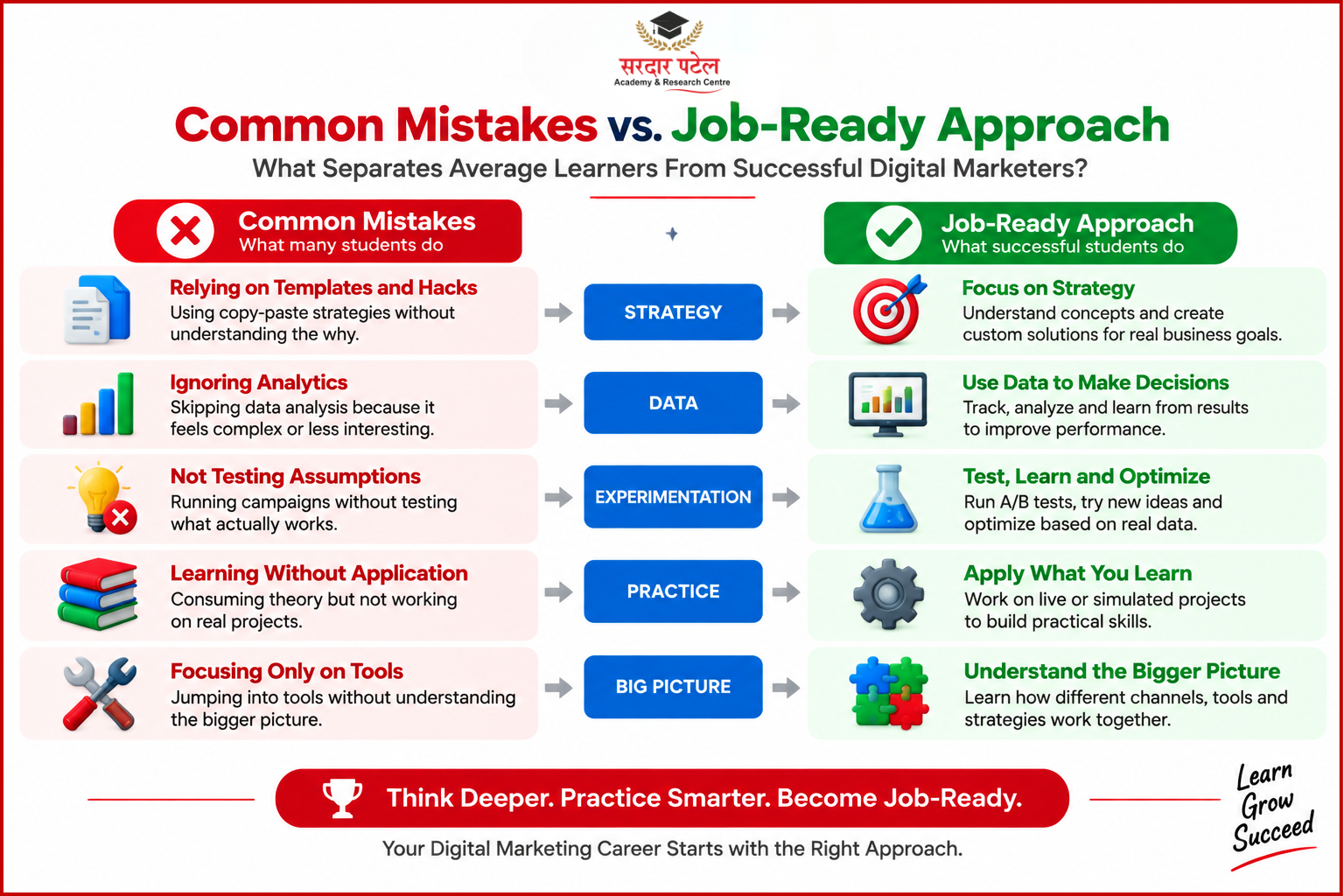
It's not just beginners who slip up. A few patterns show up even among students who've been learning for a while:
- Over-relying on templates and "hacks" instead of understanding strategy
- Ignoring analytics because it feels less exciting than creative work
- Not testing assumptions before scaling a campaign
- Underestimating how much writing and communication matters in this field
What This Means for You as a Learner
If there's one takeaway from this digital marketing faculty interview, it's this: consistency and depth beat trying to learn everything superficially. The students who do well aren't necessarily the ones who started with the most background — they're the ones who picked a direction, practiced consistently, and asked for feedback along the way.
That's also why classroom access to an experienced trainer tends to matter more than self-paced videos alone, especially in the early stages when it's hard to know what you don't know.
Final Thoughts
Interviews like this one are useful precisely because they skip the marketing pitch and get into what actually happens in a classroom — what trips students up, what helps them grow, and what the local job market genuinely expects. If you're serious about building a career in this field, the fundamentals covered here are a good starting checklist before you pick a course or a mentor.
If you'd like to see this kind of practical, experience-led teaching in action, you can explore the Digital Marketing Course at SPARC or get in touch with the team to ask questions before enrolling. Learn under experts who've actually done the work — not just taught it.
FAQs
Most experienced trainers combine practical, hands-on marketing experience with the ability to break down complex concepts simply. Formal certifications can help, but real campaign experience is usually what shapes the quality of teaching.
Yes. Most structured courses are designed to start from the basics, covering foundational concepts before moving into specialized skills like SEO, paid ads, or analytics.
Classroom training typically offers structured progression, direct feedback on your work, and the ability to ask questions in real time — things that are harder to get from scattered free content.
Delhi NCR has a large and growing base of small businesses, startups, and agencies, which creates consistent local demand for digital marketing skills, particularly for versatile professionals who can manage multiple channels.
A blended approach works best: build a solid foundation across the basics, then specialize in one or two areas where you show the most interest or aptitude, rather than trying to master everything at once.
Faculty now typically include AI tools as part of the workflow — for tasks like drafting content or analyzing data faster — while still emphasizing the strategic thinking and judgment that tools alone can't replace.
A basic course usually covers core concepts and terminology, while an advanced course goes deeper into strategy, live projects, and specialization, assuming some prior exposure to the subject.
Asking to sit in on a demo class, reviewing student testimonials, or speaking directly with current or past students are practical ways to evaluate teaching style before committing.