+91 9312966129
 sparc.enquiry01@gmail.com


Email Marketing Basics Explained
Learn email marketing basics with this beginner email marketing tutorial. Explore funnels, tools, metrics, stats and email funnel training tips for 2026.
Table of Contents
- What Is Email Marketing? (Quick Definition)
- Why Email Marketing Still Matters in 2026
- Types of Marketing Emails Every Beginner Should Know
- How Email Marketing Works: The Basic Email Funnel
- Stage 1: Awareness — Lead Magnet and Opt-in
- Stage 2: Nurture — Welcome Series and Education
- Stage 3: Conversion — Sales and Offer Emails
- Stage 4: Retention — Loyalty and Re-engagement
- Key Email Marketing Metrics to Track
- Building Your First Email List: Beginner Tips
- Step-by-Step: Your First Email Campaign (Beginner Tutorial)
- Best Email Marketing Tools for Beginners
- Common Mistakes Beginners Make in Email Marketing
- Career Scope and Salary for Email Marketing Professionals in India
- Conclusion
Inboxes are more crowded than ever, but email marketing remains one of the most measurable and cost-effective digital marketing channels. It is widely recognised as a high-ROI channel, although actual returns can vary by industry, campaign type, audience, and measurement method. This is why email marketing remains a core skill for modern digital marketers.
This guide covers the complete email marketing basics — from definitions and funnels to tools, metrics, and career opportunities — giving you a practical beginner email marketing tutorial that you can start applying right away.
What Is Email Marketing? (Quick Definition)
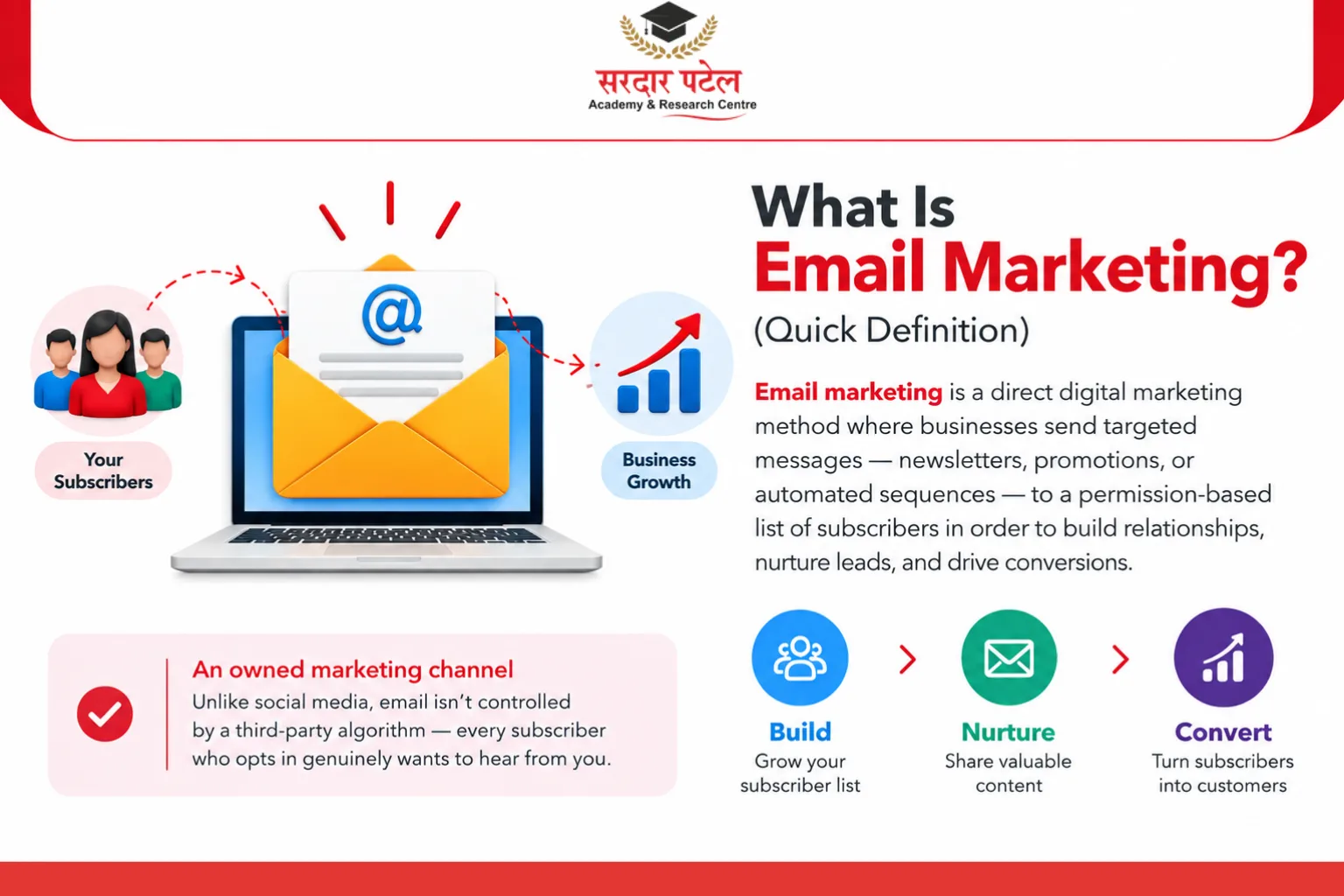
Email marketing is a direct digital marketing method where businesses send targeted messages — newsletters, promotions, or automated sequences — to a permission-based list of subscribers in order to build relationships, nurture leads, and drive conversions. It is one of the highest-ROI channels available today, and unlike social media, it is not controlled by a third-party algorithm — every subscriber who opts in genuinely wants to hear from you.
Another reason email marketing is a popular starting point for beginners is that most campaign tools use visual editors and automation workflows, so you can build practical marketing skills without learning to code. If you're exploring similar career paths, see how you can build a digital marketing career without coding
Why Email Marketing Still Matters in 2026
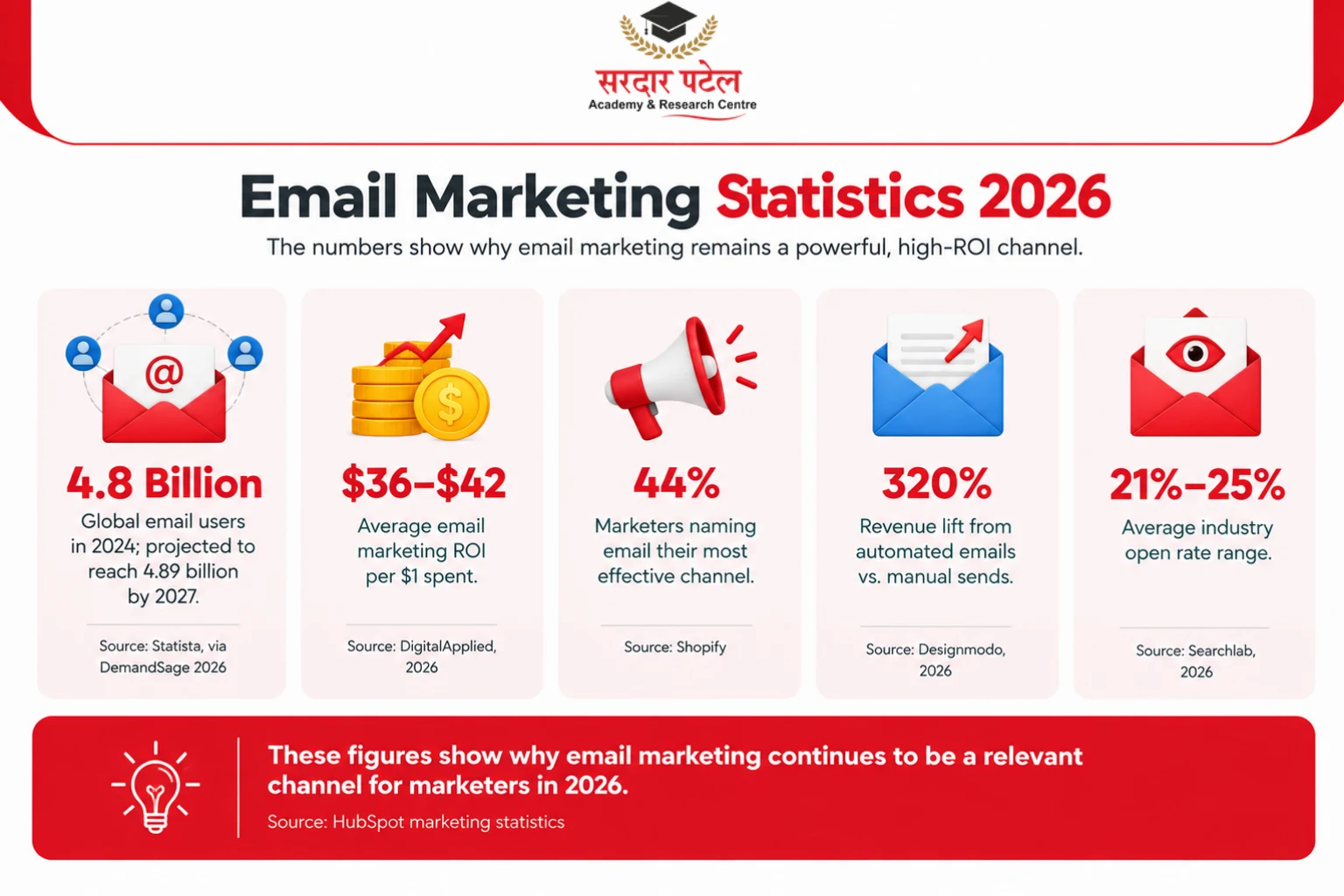
Despite the rise of social media and paid ads, email marketing basics remain a priority for marketers worldwide. Here is what the current data shows:
These figures show why email marketing continues to be a relevant channel for marketers in 2026.
These numbers also explain why digital marketing courses — including the training at Sardar Patel Academy & Research Centre (SPARC) — treat email marketing basics as a foundational skill, not an optional add-on.
Types of Marketing Emails Every Beginner Should Know
Before you can run campaigns, you need to recognise the formats you'll be working with. Each type serves a different stage of the customer journey:
Email marketing can also support local business growth by bringing website visitors and customers back through targeted offers, updates, and follow-up campaigns. For businesses that want to improve their visibility in local search as well, understanding local SEO for small businesses can be equally valuable.
How Email Marketing Works: The Basic Email Funnel
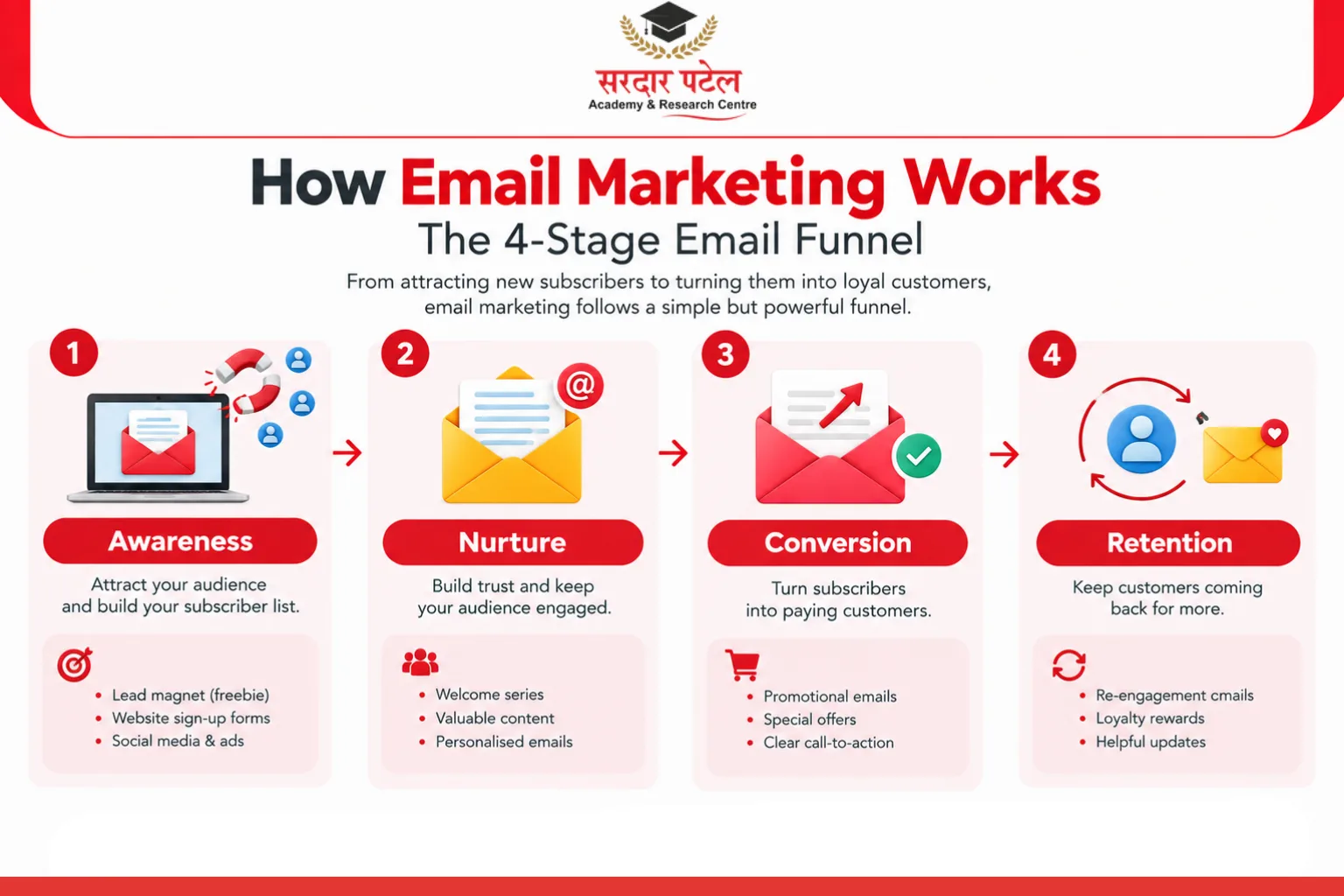
If you're searching for email funnel training, this is the core concept to master. An email funnel maps how a stranger becomes a paying, repeat customer through a structured sequence of emails. There are four stages:
Stage 1: Awareness — Lead Magnet and Opt-in
This is where a visitor first joins your list, usually in exchange for something valuable — an ebook, discount code, or free checklist. The goal at this stage is simply permission: getting the subscriber's consent to email them.
Stage 2: Nurture — Welcome Series and Education
Once someone subscribes, a welcome series (typically 3–5 emails) introduces your brand, builds trust, and educates the subscriber about the product or service, without pushing a hard sell too early.
Stage 3: Conversion — Sales and Offer Emails
After trust is established, offer-driven emails move the subscriber toward a purchase. This includes limited-time discounts, product recommendations, and case studies or testimonials that reduce buying hesitation.
Stage 4: Retention — Loyalty and Re-engagement
The funnel doesn't end at the sale. Retention emails — loyalty rewards, renewal reminders, and win-back campaigns — keep existing customers active, which costs far less than acquiring new ones.
These funnel stages work best when they are connected to a broader email marketing strategy that combines segmentation, automation, and performance tracking.
Key Email Marketing Metrics to Track
Tracking the right numbers is what separates guesswork from strategy.
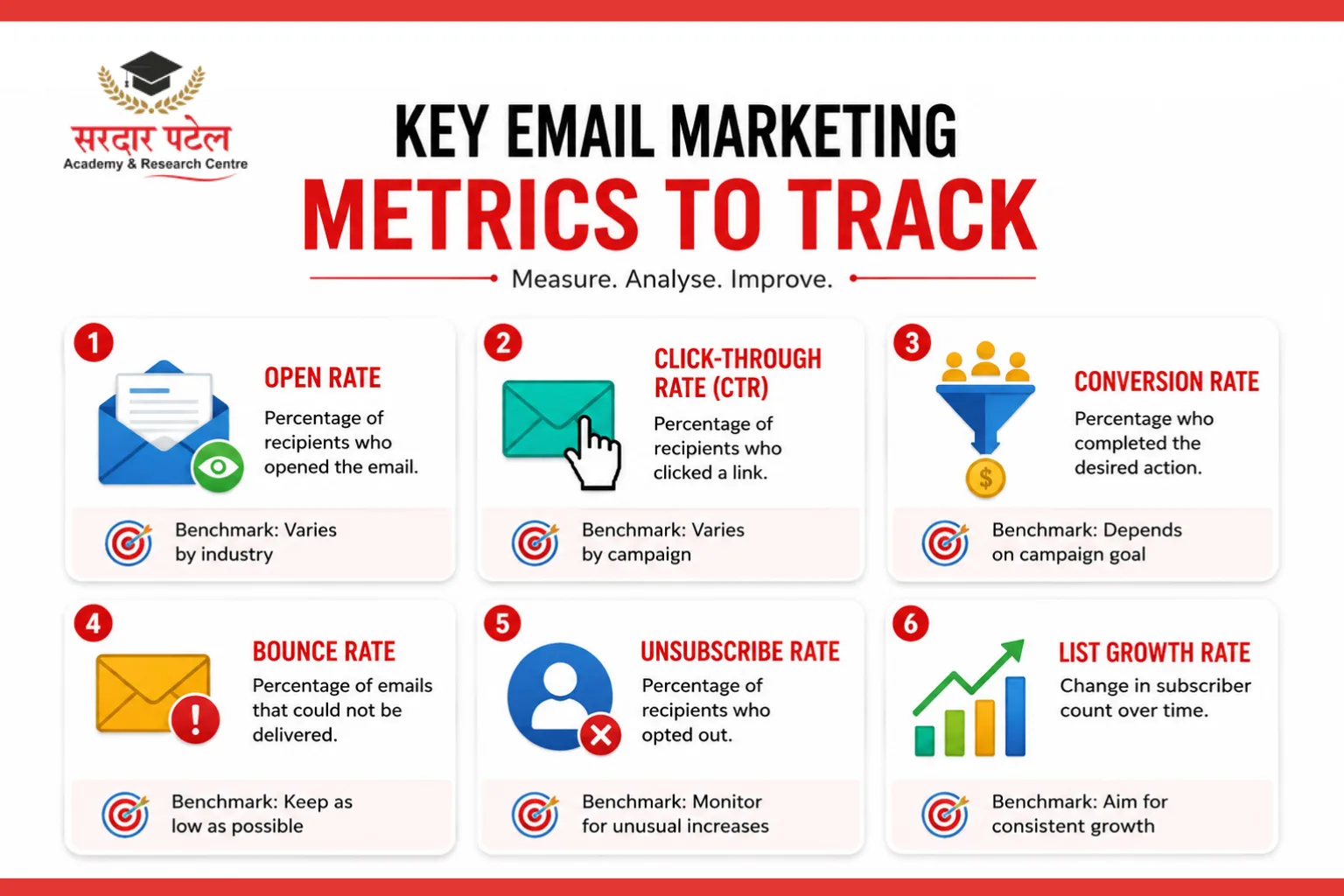
These are the key email marketing metrics every beginner should monitor from campaign one:
| Metric |
What It Measures |
Benchmark |
| Open Rate |
Percentage of recipients who opened the email |
Varies by industry |
| Click-Through Rate (CTR) |
Percentage of recipients who clicked a link |
Varies by campaign |
| Conversion Rate |
Percentage who completed the desired action |
Depends on campaign goal |
| Bounce Rate |
Percentage of emails that could not be delivered |
Keep as low as possible |
| Unsubscribe Rate |
Percentage who opted out |
Monitor for unusual increases |
| List Growth Rate |
Change in subscriber count over time |
Aim for consistent growth |
Building Your First Email List: Beginner Tips
- Use a clear opt-in form on your website, blog, or landing page — never buy an email list.
- Offer a lead magnet (checklist, template, or discount) in exchange for the sign-up.
- Add a double opt-in step to confirm genuine interest and protect deliverability.
- Segment subscribers early — by interest, location, or how they joined — for better targeting.
- Stay compliant: include a visible unsubscribe link and honour opt-outs immediately.
Following established email marketing best practices can also help you build a healthier subscriber list and maintain better engagement.
Step-by-Step: Your First Email Campaign (Beginner Tutorial)
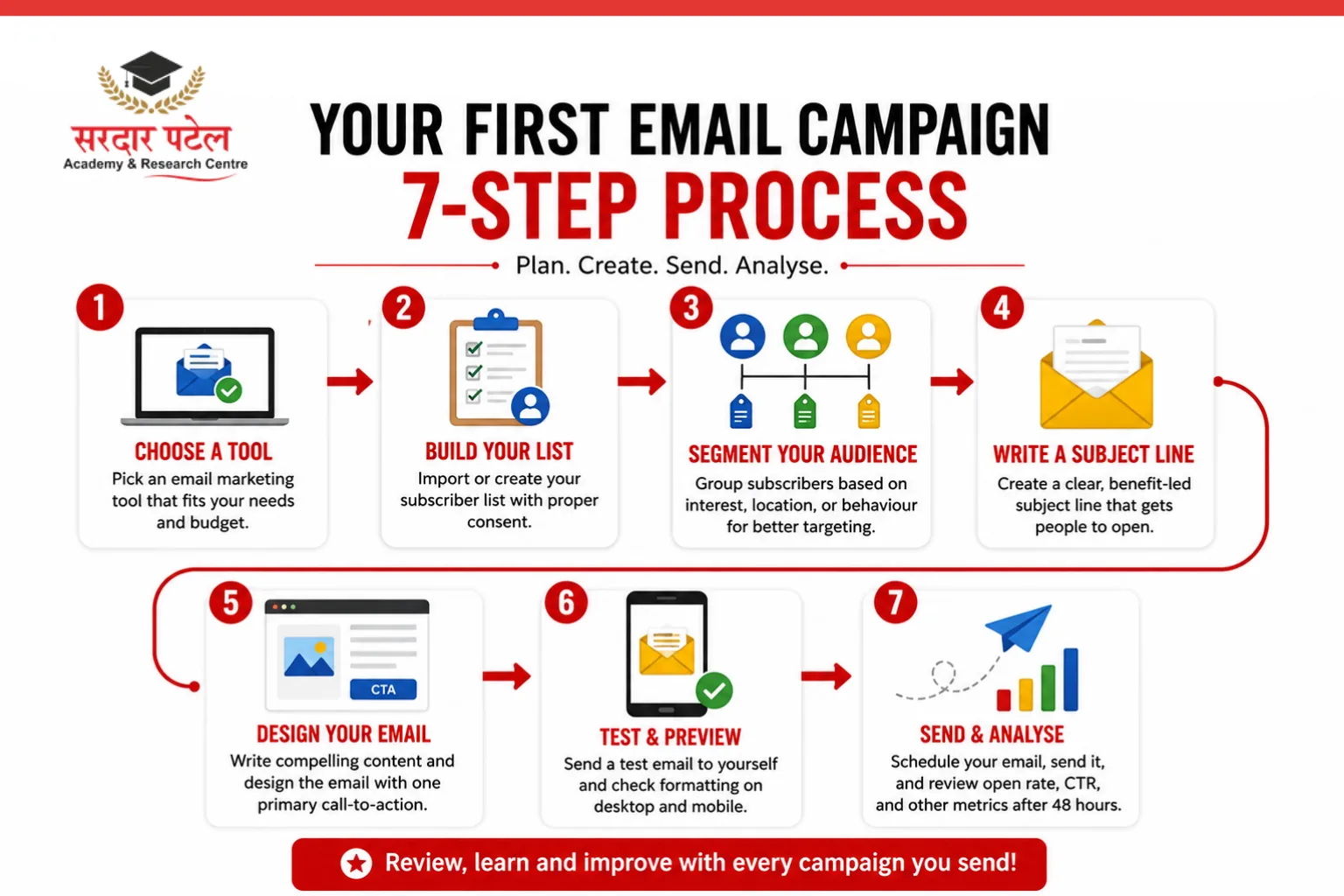
This section is written as a practical, beginner email marketing tutorial you can follow end-to-end:
- Choose an email marketing tool and create your account.
- Import or build your subscriber list with proper consent.
- Segment your audience based on interest or behaviour.
- Write a clear, benefit-led subject line (avoid spammy words like 'free money').
- Design the email body with one primary call-to-action.
Designing an effective email also requires an understanding of layout, visual hierarchy, readability, and mobile-friendly design. These same fundamentals are covered in our guide on website designing basics for digital marketing students
- Send a test email to yourself and check formatting on mobile.
- Schedule the send, then review open rate and CTR after 48 hours.
Best Email Marketing Tools for Beginners
- Mailchimp — beginner-friendly interface with a free plan for small lists.
- Brevo (formerly Sendinblue) — strong automation features at a low entry cost.
- HubSpot — ideal once you need CRM and email working together.
- ConvertKit — popular with creators for simple funnels and tagging.Mailmodo — India-based platform known for interactive, app-like emails.
Common Mistakes Beginners Make in Email Marketing
- Sending to a purchased or unverified list, which damages sender reputation.
- Ignoring mobile formatting, even though a significant share of email views comes from mobile devices. HubSpot's 2026 marketing data highlights the importance of mobile in email consumption.
- Ending an email without one clear call-to-action.Skipping A/B testing on subject lines and send times.
- Not segmenting the list, resulting in irrelevant emails and higher unsubscribes.
- Treating the welcome email as optional — it typically earns the highest open rates.
Career Scope and Salary for Email Marketing Professionals in India
Email marketing is also a strong entry point into a digital marketing career. Based on current salary data:
Recruiters on platforms such as Naukri.com, LinkedIn, and AmbitionBox regularly list email marketing, marketing automation, and CRM tools as required skills for digital marketing executive roles across Delhi NCR — one more reason structured, hands-on training matters early in your career.
Conclusion
Mastering email marketing basics is one of the most practical ways to become job-ready in digital marketing — the fundamentals of funnels, list-building, and metrics covered in this beginner email marketing tutorial apply whether you're managing a personal brand or a client account. The real skill gap, though, is usually hands-on practice with live automation tools.
| Ready to move from theory to practice? Explore the Best Digital Marketing Course in Delhi with Placement Support at Sardar Patel Academy & Research Centre (SPARC). and build a complete, automated email funnel under expert guidance. Visit sparc.org.in or call +91 93129-66129 to know more. |
FAQs
Email marketing is sending targeted messages to people who have given permission to be contacted, with the goal of building relationships and driving sales, sign-ups, or engagement over time.
Yes. Email marketing delivers an average ROI of $36 per $1 spent, outperforming paid search and social advertising, making it one of the most cost-effective channels available.
An email funnel is the sequence of emails — Awareness, Nurture, Conversion, and Retention — that guides a subscriber from first sign-up to becoming a repeat, loyal customer.
Mailchimp and Brevo are commonly recommended for beginners because of their free plans, drag-and-drop editors, and beginner-friendly automation features.
Most beginners start with one email per week, then adjust frequency based on open rates and unsubscribe trends rather than a fixed rule.
An open rate between 21% and 25% is considered a healthy industry average, though it varies by sector, with government and nonprofit emails often scoring higher.
No. Most modern tools use drag-and-drop editors, so no coding is required to design and send professional email campaigns.
A newsletter shares ongoing value like tips or updates to maintain engagement, while a promotional email is focused on a specific offer, sale, or product launch.
Add an opt-in form to your website or blog, offer a useful lead magnet in exchange for the sign-up, and promote it across your existing social channels.
Yes. Entry-level specialists earn between ₹3.6L and ₹7.2L annually in India, with strong growth into managerial roles as automation and CRM skills are added (Source: Glassdoor / SalaryExpert, 2026).