+91 9312966129
 sparc.enquiry01@gmail.com


Instagram Marketing New Algorithm Changes
See the Instagram algorithm changes 2026 brought — new ranking signals, the Your Algorithm feature, and practical SEO tips for marketers across Delhi NCR.
Table of Contents
- Instagram Algorithm Changes 2026: What Marketers Should Know
- Instagram Runs Four Algorithms, Not One
- The Ranking Signals That Matter Most Right Now
- Why “Raw and Real” Content Is Being Rewarded
- “Your Algorithm”: Viewers Can Now Edit Their Own Feed
- Views Have Replaced Likes as the Headline Metric
- New Content Gets Auditioned Before It Goes Wide
- Original Content Is Rewarded, Reposts Are Not
- Hashtags Have Stopped Doing Much Work
- Quick Comparison: 2024–25 vs 2026
- Common Mistakes Marketers Are Still Making
- Practical Steps to Adapt Your Strategy
- Final Thoughts
Instagram Algorithm Changes 2026: What Marketers Should Know
If your Instagram reach has been sliding for a few months, even though your posting frequency hasn't dropped, you're not imagining it. A big part of it comes down to the Instagram algorithm changes 2026 has brought in — and a few of the habits that worked reliably a year ago are now quietly working against you.
This guide walks through what's actually different, why Instagram made these calls, and what to change in your content plan — whether you run a small business page in Delhi NCR, are building a student portfolio, or manage brand accounts on the side. We'll also cover the newer Instagram ranking signals introduced in 2026 and why instagram seo trends now matter almost as much as the content itself.
Instagram Runs Four Algorithms, Not One
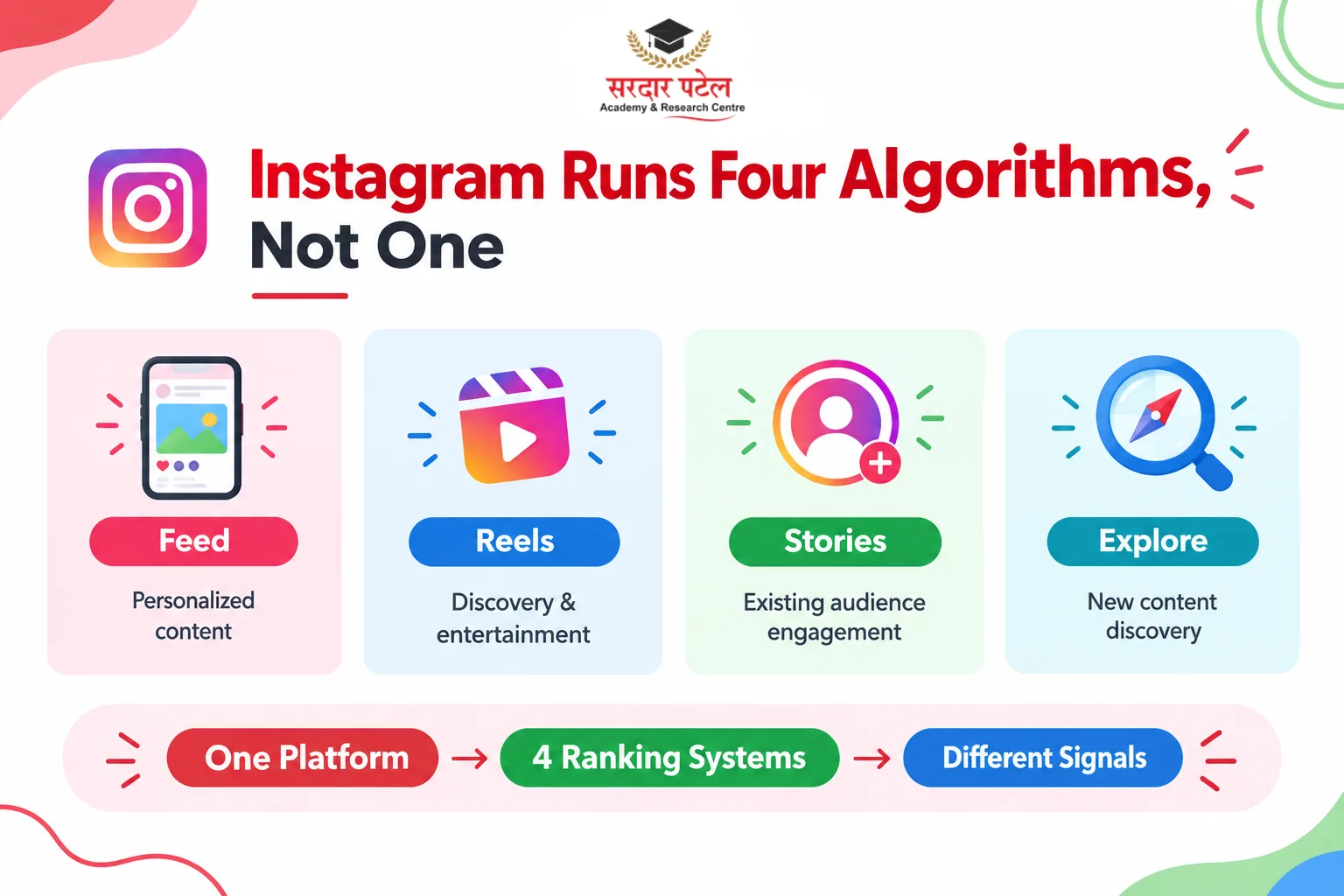
The first thing to get straight is that “the Instagram algorithm” is really a set of four separate ranking systems — one each for Feed, Reels, Stories, and Explore. Each one is tuned for a different job, so they don't weigh the same signals in the same way.
That's why a Reel can take off while a Feed post from the same account barely moves, or why something performing well in Explore never reaches your own followers' main feed. Once you treat these as four different systems instead of one master formula, a lot of the “inconsistent” performance starts to make sense.
The Ranking Signals That Matter Most Right Now
| In short: Instagram's 2026 ranking systems weigh watch time, DM shares (sends per reach), and saves most heavily, with meaningful comments gaining ground and likes now the weakest signal in the mix. |
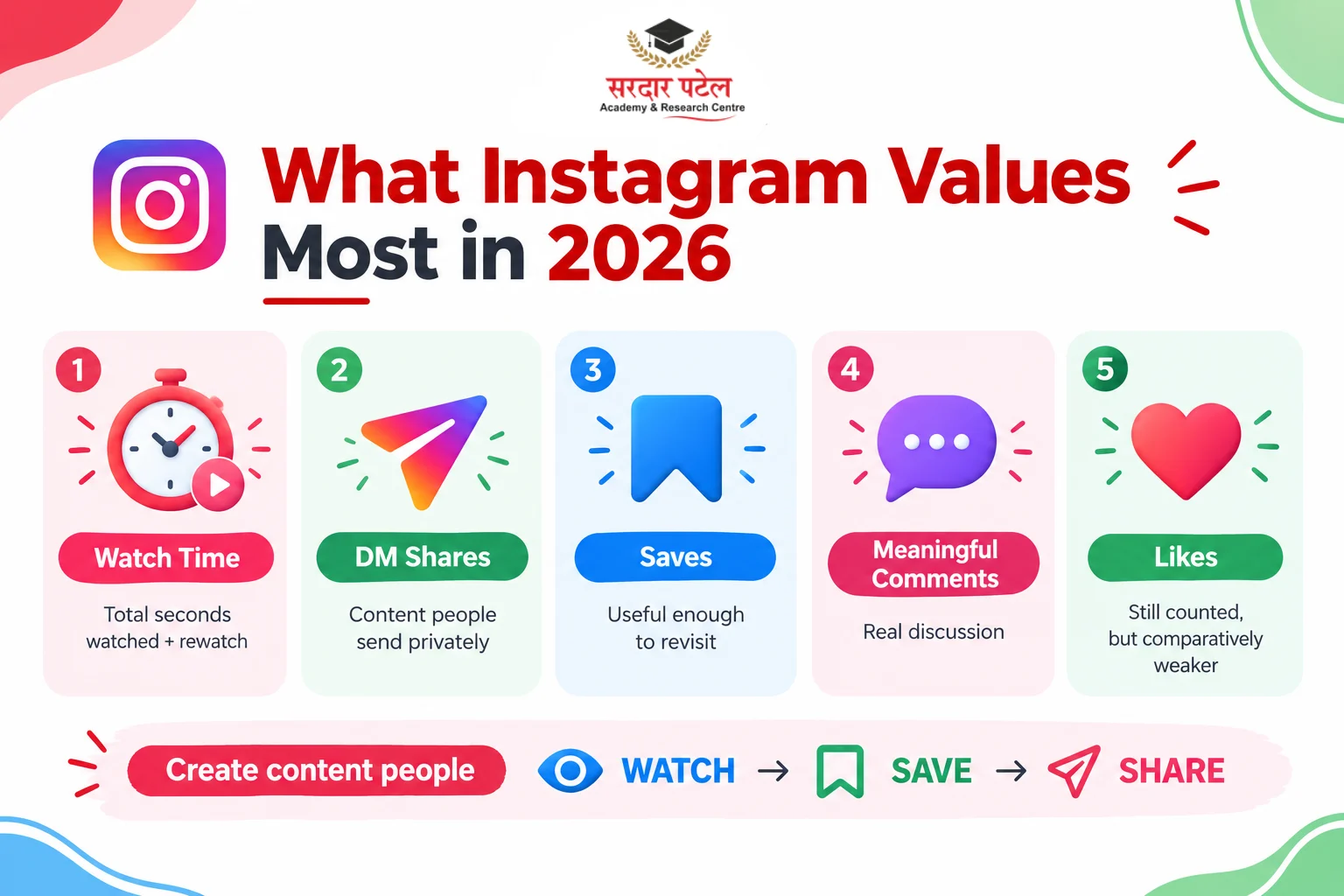
Instagram head Adam Mosseri named the signals that matter most as far back as January 2025 — watch time, likes per reach, and sends per reach — and repeated that guidance through 2026 (Social Media Today, Jan–Feb 2025; Instagram Creators channel, 2026). Over the course of the year, saves and meaningful comments were promoted into that same ranked tier.
- Watch time — total seconds watched and whether people rewatch, not just whether they open the post
- Sends per reach — how often content gets shared privately over DM, which Mosseri has said can carry three to five times the weight of a like when Instagram decides whether to push content to non-followers
- Saves and meaningful comments — signals that content was useful enough to revisit or discuss, not just glance at
Likes still count, but they've become one of the weakest signals in the mix. A post can rack up likes out of habit; a DM share or a save tells Instagram something more specific — that the content was worth a second look or worth passing on.
Why “Raw and Real” Content Is Being Rewarded
In his December 31, 2025 year-end memo, Mosseri told creators that 2026 would favour raw, real, human content over anything that reads as overly polished or AI-generated, and that Instagram would weight authenticity and provenance signals more heavily across the year. In practice, content that feels unscripted or clearly made by a person tends to hold its reach better than a heavily produced or AI-assisted post competing for the same audience.
“Your Algorithm”: Viewers Can Now Edit Their Own Feed
One of the bigger structural changes is a feature Instagram calls “Your Algorithm.” It began rolling out on Reels in the US in December 2025 and expanded across more surfaces and languages through 2026. You'll find it under Settings → Content Preferences.
The feature lets users see the topics Instagram's system thinks they're interested in, add topics they want more of, remove ones they don't, or reset their recommendations entirely. Instagram also tracks negative signals — fast scrolling past a post, tapping “Not Interested,” or bouncing off content quickly — and downranks accounts that keep getting skipped.
For marketers, this means your content needs to match the topics your actual audience has chosen, not just the category Instagram guesses for them. An account that jumps across unrelated topics is easier for a viewer to mute or filter out at the topic level, so niching down matters more now than it used to.
Views Have Replaced Likes as the Headline Metric
Instagram has shifted to “Views” as a single, unified metric across Feed posts, Reels, Stories, and carousels — a view counts every time your content appears on someone's screen, including repeat views. This nudges the whole system toward rewarding content people watch more than once, rather than content that gets a one-time glance and a scroll past.
New Content Gets Auditioned Before It Goes Wide
Instagram now runs what's often described as an “audition system” for public content — new posts and Reels are shown first to a slice of non-followers to gauge performance before being pushed to your full follower base or into recommendation surfaces like Explore. It's a useful signal in itself: if a piece of content isn't landing with people who don't already follow you, it's unlikely to be pushed much further.
Original Content Is Rewarded, Reposts Are Not
Instagram has been actively identifying and de-ranking content that's reposted, watermarked from other platforms, or recycled without meaningful changes. This restriction first applied to Reels and, as of April 30, 2026, was extended to photos and carousels as well — so a repost-heavy account performing fine simply because the content was engaging is largely a thing of the past.
Mosseri has been clear that aggregator accounts can keep working, provided they meaningfully transform what they repost — a fresh voiceover, original framing, or edits made with Instagram's own creative tools go a long way toward being read as original, rather than lifted.
| What counts as an “original creation signal” Content first published on Instagram, not lifted from another platformUse of Instagram's native tools — text overlays, in-app editing, audio from its own libraryAn account history with more original posting than reposting |
Hashtags Have Stopped Doing Much Work
Instagram capped hashtags at five per post in December 2025, and Mosseri has said directly that hashtags do not improve reach. They still help with topical clarity and in-app search, but treating them as a distribution strategy on their own no longer makes sense — they work best paired with keyword-rich captions, bios, and alt text as part of a broader instagram seo trends approach.
Quick Comparison: 2024–25 vs 2026
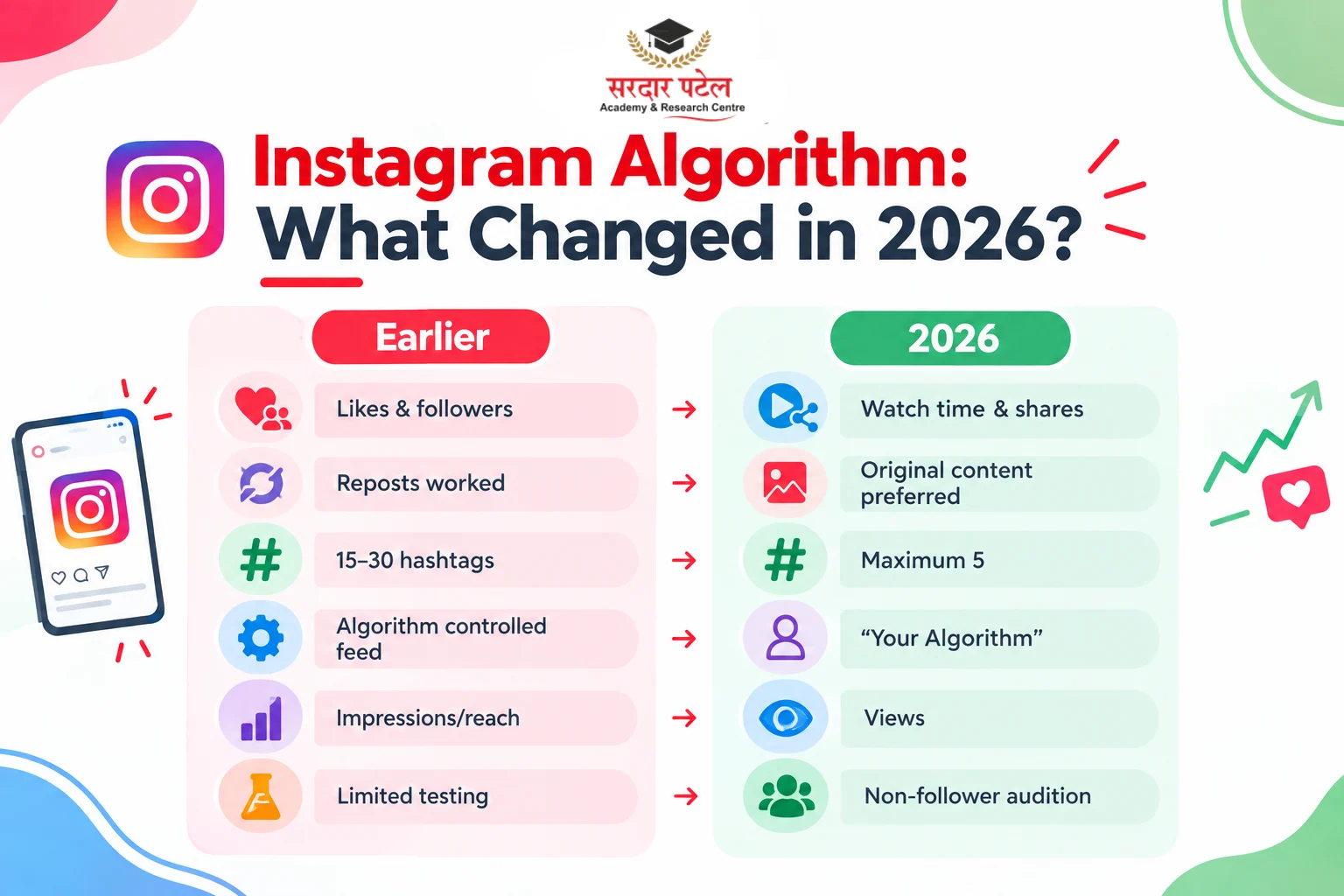
| Ranking Factor |
Earlier Approach (2024-25) |
2026 Approach |
| Top signal |
Likes and follower count |
Watch time, DM shares, saves |
| Content source |
Reposts performed fine if engaging |
Originality restriction now covers photos and carousels, not just Reels |
| Hashtags |
Used loosely, often 15-30 per post |
Capped at 5 per post; don't improve reach |
| User control |
Minimal, mostly algorithm-driven |
"Your Algorithm" lets users edit and reset recommendations |
| Metric focus |
Impressions / reach |
Unified "Views" across all formats |
| Content testing |
Limited pre-launch visibility |
New posts "auditioned" on non-followers first |
Common Mistakes Marketers Are Still Making
- Chasing likes with generic, quote-style content — it's the weakest signal now
- Ignoring the Your Algorithm settings entirely — checking your own account's topic tags can explain a sudden reach drop
- Posting reposted or lightly-edited content at scale, now that the restriction covers photos and carousels too
- Using the same caption and content approach across Feed and Reels, when each surface ranks differently
- Padding posts with 20–30 hashtags out of habit, when the cap is five, and they don't move reach anyway
Practical Steps to Adapt Your Strategy
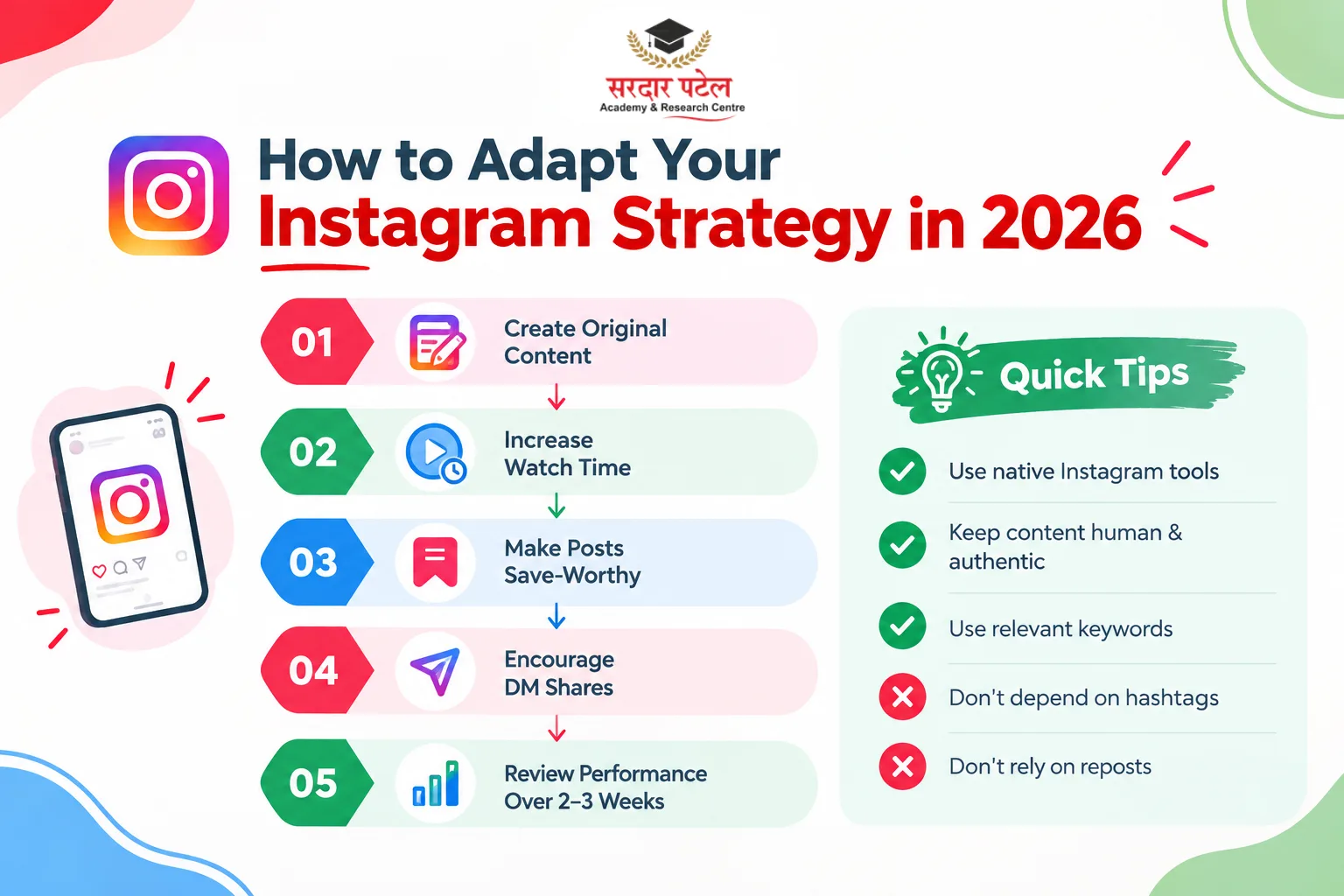
- Build at least one save-worthy or shareable post into your weekly content mix — a checklist, a short tutorial, or a quick resource roundup
- Favour content that feels unscripted and human over something that's clearly AI-polished, in line with Instagram's own 2026 direction
- Keep native creative tools front and centre instead of exporting content from other apps with visible branding
- Check your account's topic tagging under Content Preferences periodically to catch mismatches early
- Judge changes over two to three weeks of posting rather than a single upload, since the system reads a rolling pattern rather than one post in isolation
For businesses and students building a career or a brand presence in Delhi NCR, understanding platform mechanics like these is becoming as important as the content itself — employers increasingly expect marketers to know why a strategy works, not just how to execute it. If you'd like a structured way to build this understanding, our [Digital Marketing Course in Delhi] covers current SMM strategy in depth, and our related read on [Digital Marketing Certification Courses in Delhi] is worth a look if you're comparing options.
Final Thoughts
The Instagram algorithm changes 2026 has brought aren't a minor tweak — they represent a real shift in what gets rewarded. Watch time, saves, and DM shares now matter more than likes and follower counts, original content is protected more strictly than before, and viewers have far more direct control over what they see through Your Algorithm.
None of this means starting your content strategy from scratch — it means adjusting what you measure and prioritise. If you'd like structured, updated guidance on applying these changes to a real content plan, our team at Sardar Patel Academy & Research Centre (SPARC), GTB Nagar, Delhi, can help. Reach out at +91 93129-66129 or explore our [Digital Marketing Course] to build these skills in depth.
FAQs
The clearest shift is away from likes and follower count toward watch time, DM shares, and saves as the top ranking signals, paired with a stricter originality restriction that now covers photos and carousels, not just Reels. Together, these changes reward content that is genuinely watched, privately shared, and made specifically for Instagram.
Not really. Instagram capped hashtags at five per post in December 2025, and Adam Mosseri has said directly that hashtags do not improve reach. They still help with topical clarity and in-app search, but they work best paired with keyword-rich captions, bios, and alt text rather than used as a standalone growth tactic.
It is a feature under Settings → Content Preferences that lets users see the topics Instagram's system thinks they are interested in, add or remove topics, and reset their recommendations entirely. It rolled out on Reels in December 2025 and expanded across more surfaces through 2026, giving viewers more direct control over their feed.
Instagram actively de-ranks content identified as reposted, watermarked, or recycled without meaningful changes. This restriction applied to Reels first and was extended to photos and carousels from April 30, 2026. Aggregator accounts can still work if they meaningfully transform what they repost rather than sharing it as-is.
Likes still count, but they are now one of the weakest signals compared with watch time, DM shares, and saves. A like can happen out of habit; Instagram treats a private share or a save as a stronger sign that content was genuinely useful, which is why strategies built purely around likes tend to underperform.
It is the process by which new public posts, especially Reels, are shown first to a slice of non-followers before being pushed more widely to your existing audience or into Explore. It works as an early performance test: content that does not land with people who do not already follow you is unlikely to be recommended much further.
Focus on keyword-relevant bios, natural keyword use in captions, accurate alt text on images and Reels, and Instagram's own search-bar autocomplete to see what people are actually searching for. Combined with consistent original posting, this improves both in-app discoverability and, in some cases, visibility in external search results.
In his December 2025 year-end memo, Adam Mosseri said Instagram would prioritise authentic, human content over anything that reads as overly polished or AI-generated through 2026. This is partly a response to feeds increasingly filled with AI-assisted content, and it means unscripted, imperfect posts often hold their reach better than heavily produced ones.
A View is counted every time your content, whether a Feed post, Reel, Story, or carousel, appears on someone's screen, including repeat views from the same person. Instagram has moved to Views as its unified headline metric across all formats, replacing the older mix of impressions, reach, and format-specific counts.
Frequency matters less than consistency and pattern. Instagram reads a rolling pattern of recent performance rather than judging a single post in isolation, so it is more useful to judge a strategy change over two to three weeks of posting than to react to how one specific post performed.
Yes, but the tactics have shifted. Local businesses now need to lean on save-worthy, shareable content, accurate location and keyword details in their bio and captions, and genuinely original posting, rather than relying on hashtags or repost-heavy strategies that carried more weight in earlier years.