+91 9312966129
 sparc.enquiry01@gmail.com


How to Start a Career in Accounting After 12th? Complete Roadmap
Learn how to start a career in accounting after 12th with the right courses, Tally skills, GST training, career roadmap and fresher job options.
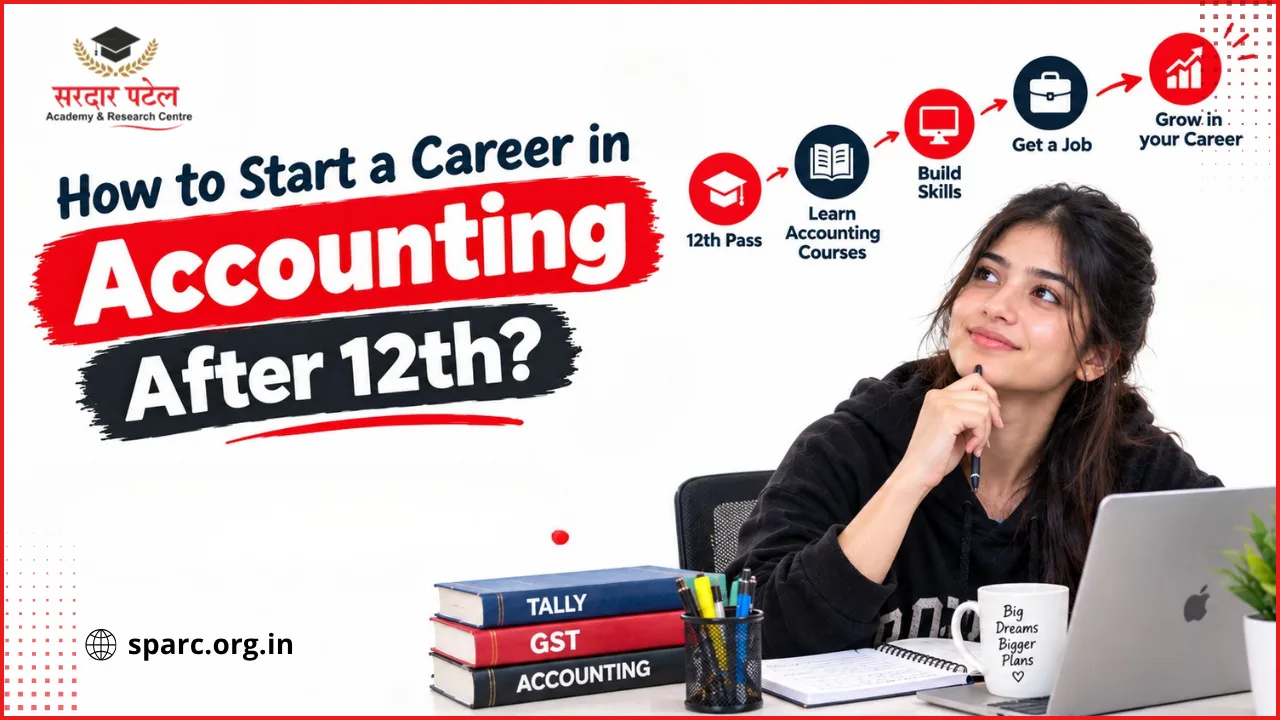
Table of Contents
- What Does "Starting a Career in Accounting" Actually Involve?
- Step 1: Understand Your Starting Point
- Step 2: Choose the Right Accounting Course After 12th
- Quick Comparison
- Step 3: Build the Accounting Skills After 12th That Employers Actually Check For
- Step 4: Target the Right Accounting Jobs for Freshers
- Common Mistakes That Slow Students Down
- Final Thoughts: Your Next Step
If you've just wrapped up 12th and you're staring at "accounting" as an option without really knowing where to begin, you're not alone. Most students in this spot have the same question: how to start a career in accounting after 12th when you don't have a commerce degree, work experience, or even a clear idea of what accountants actually do day-to-day?
Here's the good news: accounting is one of the more accessible careers to break into right after school. It doesn't demand years of theoretical study before you can start earning. What it demands is the right sequence: the right course, the right practical skills, and a realistic first job target. This guide lays out that sequence step by step, so you're not guessing your way through it.
What Does "Starting a Career in Accounting" Actually Involve?
Before jumping into courses, it helps to be clear on what the job actually looks like. Accounting work, especially at the entry level, revolves around a few recurring tasks:
- Recording daily financial transactions (sales, purchases, expenses)
- Maintaining ledgers and reconciling bank statements
- Preparing GST invoices and assisting with tax filings
- Managing payroll entries and vendor payments
- Generating basic financial reports for business owners or senior accountants
None of this requires advanced mathematics. It requires accuracy, consistency, and comfort with accounting software skills that are taught, not inherited from your school stream. That's why students from commerce, science, and arts backgrounds all end up in accounting roles, provided they've done the right training.
Step 1: Understand Your Starting Point
Your ideal path depends a lot on where you're starting from.
If you're from a commerce background, you already have a head start with concepts like debit/credit and basic taxation. Students who want to explore different career paths can also review these accounting career options after 12th commerce before choosing a specific direction. So a focused practical course (Tally, GST) might be all you need before applying for jobs.
If you're from science or arts, you can absolutely start an accounting career after 12th too you'll just want a course that builds the fundamentals from scratch rather than assuming prior knowledge.
Either way, the roadmap below applies. The pace at which you move through it will simply vary based on your comfort with the basics.
Step 2: Choose the Right Accounting Course After 12th
This is the decision most students get stuck on, mainly because there are too many options and not enough clarity on what each one actually leads to. Here's a practical breakdown.If you're comparing different study routes, exploring the best accounting courses after 12th commerce can help you understand which option matches your career goals.
Certificate and Diploma Courses
These are short, focused, and designed specifically to get you job-ready. A solid diploma typically covers:
- Basic accounting principles and bookkeeping
- Tally ERP / Tally Prime
- GST registration and return filing
- TDS and payroll basics
- Excel for day-to-day accounting tasks
Most run from a few weeks up to a year, making them the fastest route into the workforce for someone asking how to become an accountant after 12th without committing to a multi-year degree first.
Tally Course After 12th
If you only have time or budget for one course, this is the one that shows up most often in entry-level job postings. Tally remains the backbone of accounting software for small and mid-sized businesses across India, and a huge share of accounts assistant and billing roles list it as a core requirement. Students can also explore the official TallyPrime accounting software platform to understand the tools commonly used for bookkeeping and business accounting.
A good Tally course after 12th usually includes:
- Voucher and ledger entry
- Inventory and stock management within Tally
- GST invoicing and filing through the software
- Bank reconciliation statements
- Basic report generation (trial balance, P&L)
B.Com or BBA (Degree Route)
If you want a formal degree alongside your practical training, a B.Com or BBA is the conventional path. It takes about three years and gives you broader theoretical grounding, though most students still need to add hands-on Tally and GST training separately to be genuinely job-ready. [VERIFY SOURCE] for specific eligibility and admission criteria, since these vary between colleges.
CA / CMA Foundation
For students who are fairly certain they want to pursue chartered accountancy or cost accounting as a long-term qualification, the official ICAI Foundation Course resources provide current course and exam information. The foundation-level exams are open right after 12th, regardless of stream. This is a longer, more demanding route – not the fastest way into a first job, but the strongest long-term qualification if that's genuinely your goal.
Quick Comparison
| Course Type |
Typical duration |
Best Suited For |
Speed to First job |
| Certificate/Diploma in Accounting |
A few weeks – 1 year |
Fast, practical entry |
Fast |
| Tally Course after 12th |
A few weeks – a few months |
Software-specific job readiness |
Fast |
| B.Com / BBA |
3 years |
Formal degree + broader knowledge |
Slower |
| CA/CMA Foundation |
Multi-year path |
Long-term professional qualification |
Slower initially |
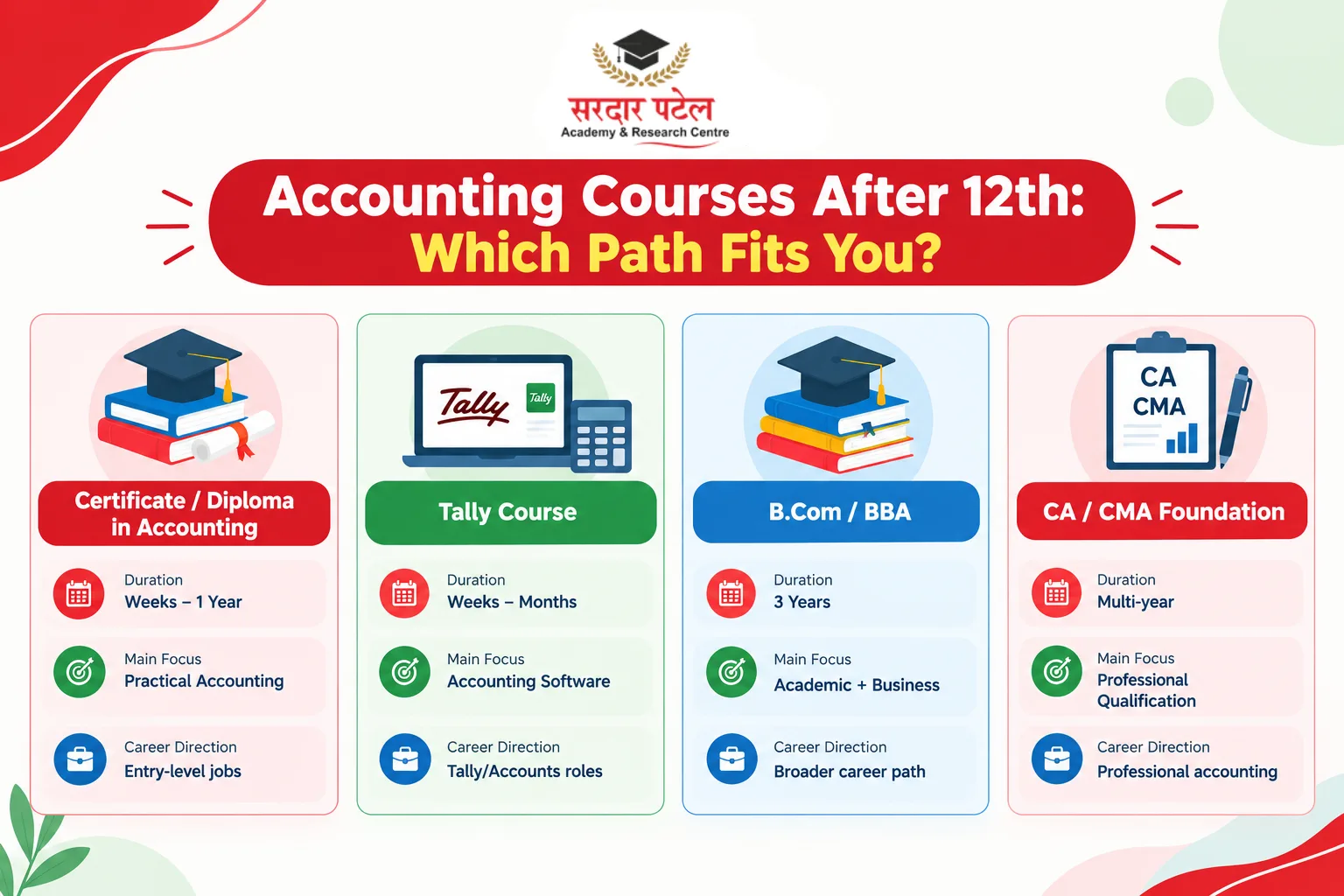
A common and sensible approach: start with a diploma or Tally-focused course to become job-ready quickly, then decide later whether a degree or professional qualification fits your longer-term goals.
Step 3: Build the Accounting Skills After 12th That Employers Actually Check For
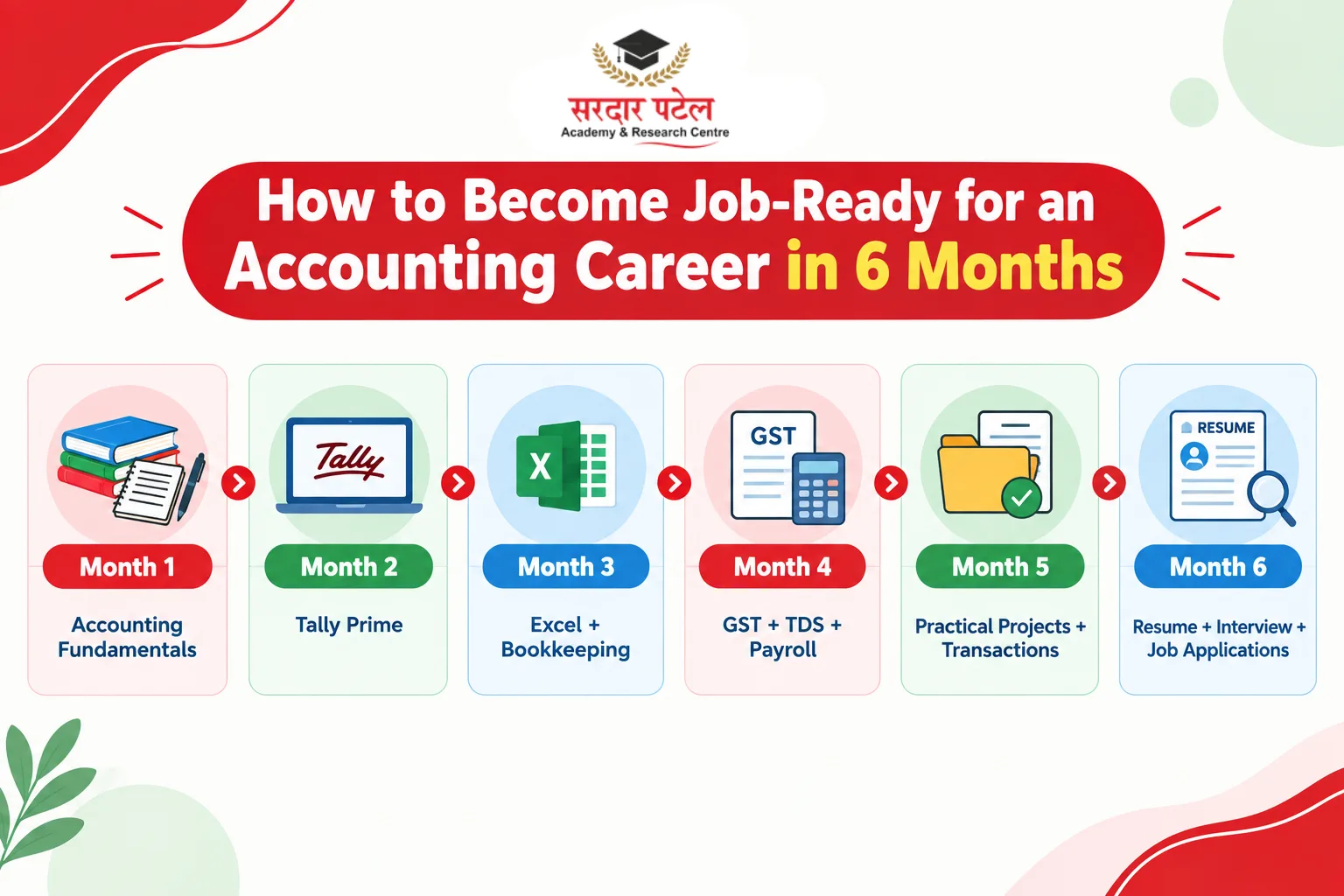
Courses give you a structured start, but employers hire based on demonstrable skills. Here's what to prioritise: For students working toward a short-term career goal, this guide explains how to become job-ready for an accounting career in 6 months through focused skill development and practical training.
Foundational accounting knowledge
- Debit and credit logic
- Journal entries and ledger posting
- Reading a trial balance and basic balance sheet
Software proficiency
- Tally ERP / Tally Prime (still the most requested skill in job listings for freshers)
- MS Excel – particularly SUM, VLOOKUP, and simple pivot tables
- Basic familiarity with GST portals
For practical understanding, beginners can refer to this TallyPrime GST setup guide to see how GST details are configured within accounting software.
Compliance fundamentals
- GST filing process, even at a conceptual level
- TDS deduction basics
- Payroll processing essentials
Workplace skills that quietly matter a lot
- Accuracy under repetitive, detail-heavy work
- Meeting filing and reporting deadlines consistently
- Clear communication with vendors, clients, and senior staff
You don't need every one of these mastered before you apply. But walking into an interview with working knowledge of Tally and GST basics puts you well ahead of candidates who only have theoretical knowledge. For additional practice, beginners can review how TallyPrime handles GST rates and HSN/SAC details.
Step 4: Target the Right Accounting Jobs for Freshers
Once you've built a foundation, here are the accounting jobs for freshers that are realistically within reach. Before applying, it helps to understand the different accounting jobs for freshers and the skills employers commonly expect in each role.
- Accounts Assistant – data entry, invoice processing, ledger maintenance
- Tally Operator – dedicated software-based bookkeeping role
- Billing Executive – invoice generation and basic GST complianceJunior Bookkeeper – day-to-day financial record-keeping for small businesses
- GST/Tax Assistant – supporting senior staff with filings and documentation
- Payroll Assistant – helping process employee salaries and statutory deductions
Small and medium businesses – particularly across Delhi NCR – consistently hire for these roles because they need reliable, practical accounting support without the overhead of a full-time chartered accountant. This creates steady, ongoing demand for freshers with solid Tally and GST fundamentals.
On salary expectations: these vary widely by role, company, and location, so it's worth checking current listings for your specific area rather than relying on a general figure here [VERIFY SOURCE] for up-to-date salary ranges.
Step 5: Follow a Realistic Accounting Career Roadmap
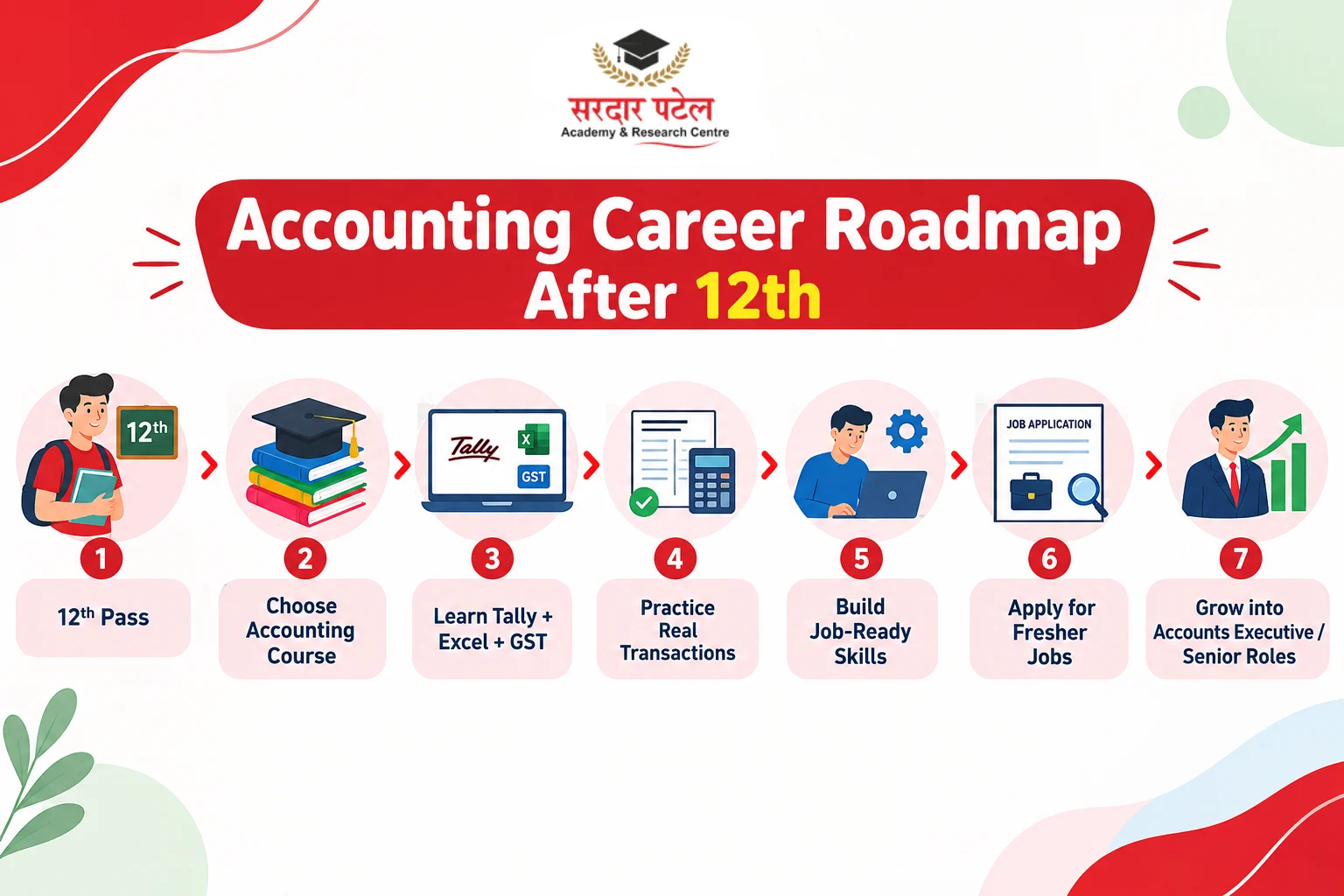
Putting it all together, here's a practical accounting career roadmap you can actually follow:
1. Pick a starting course.
A diploma- or Tally-focused programme gets you job-ready fastest.
2. Practice on real transactions.
Simulated or real data entry, reconciliation, and report generation – not just theory.
3. Apply for entry-level roles early.
Don't wait until you feel "fully ready." Most skill-building happens on the job. If you're unsure how to approach applications, this practical guide on how to get your first job as an accountant can help you prepare for the process.
4. Add GST and payroll specialisation.
This is what moves you from basic data entry toward accounts executive-level responsibility.
5. Consider a degree in parallel, if relevant.
A B.Com or BBA alongside work experience can open doors to higher-responsibility roles later.
6. Reassess CA/CMA only if you're genuinely committed.
These are serious, multi-year paths – worth pursuing if accounting is clearly your long-term direction, not a default choice.
Common Mistakes That Slow Students Down
- Overthinking the "perfect" course – instead of starting with a solid, practical one and adjusting as you go.
- Skipping hands-on software practice. - Interviews test whether you can actually use Tally, not just describe it.
- Underestimating GST – Even basic familiarity noticeably strengthens your candidacy, since GST touches nearly every accounting role today.
- Assuming a degree is compulsory. - Many entry-level employers prioritise demonstrable skills over academic background.
Final Thoughts: Your Next Step
Figuring out how to start a career in accounting after 12th really comes down to picking a practical starting course, building real hands-on skills, and applying for entry-level roles without waiting for a sense of "complete readiness" that rarely arrives on its own. Whether you begin with a diploma, a focused Tally course, or work toward a degree alongside your training, the path is genuinely open regardless of your 12th-grade stream.
For students looking for practical accounting training after 12th, SPARC's accounting and Tally course can be explored as a job-focused learning option covering essential accounting concepts and software skills.
FAQs
Start with a foundational certificate or diploma course that teaches accounting concepts from scratch, followed by hands-on Tally and GST training. Prior commerce knowledge helps but isn't required.
For many entry-level roles like Accounts Assistant or Tally Operator, a solid Tally course combined with basic GST knowledge is often sufficient. A degree can help for more senior or specialised roles later on.
Short diploma or Tally-focused courses can make you job-ready within a few weeks to a few months. A full degree route like B.Com or BBA takes around three years.
A diploma focuses on fast, practical, job-ready skills over a short period, while a B.Com offers broader academic coverage over three years. Many students start with a diploma and add a degree later if it fits their goals.
Yes, students from any stream can appear for the CA Foundation and CMA Foundation exams after 12th. These are long-term, rigorous paths best suited to students committed to a professional accounting qualification.
Focus first on debit/credit fundamentals and ledger basics, then build practical skills in Tally and Excel, followed by GST essentials. This order tends to make the learning curve more manageable.
Common entry points include Accounts Assistant, Tally Operator, Billing Executive, and Junior Bookkeeper roles, especially at small and mid-sized businesses that need reliable day-to-day accounting support.