+91 9312966129
 sparc.enquiry01@gmail.com



How AI Is Changing Google Ads in 2026
See how AI in Google Ads is changing in 2026: AI Max, Ask Advisor, smarter bidding and the steps marketers should take next. Read the full trend report.
If you opened a Google Ads account in 2024 and logged back in this year, the screen would look familiar. The engine underneath would not. The real story of AI in Google Ads in 2026 is not one flashy feature. It is a quiet handover of decisions: which searches trigger your ad, what the ad says, which page the click lands on, and how much you pay for it.
This report covers what Google announced at Marketing Live in May, what shifted in Search campaigns, and where automation helps or quietly wastes budget. It is written for students, beginners and working marketers who want a clear picture rather than a pile of buzzwords.
What Is Changing: Before and After
For years, a Search campaign was a manual craft: you chose keywords, wrote headlines and picked the landing page. Today, AI in Google Ads touches every one of those steps.
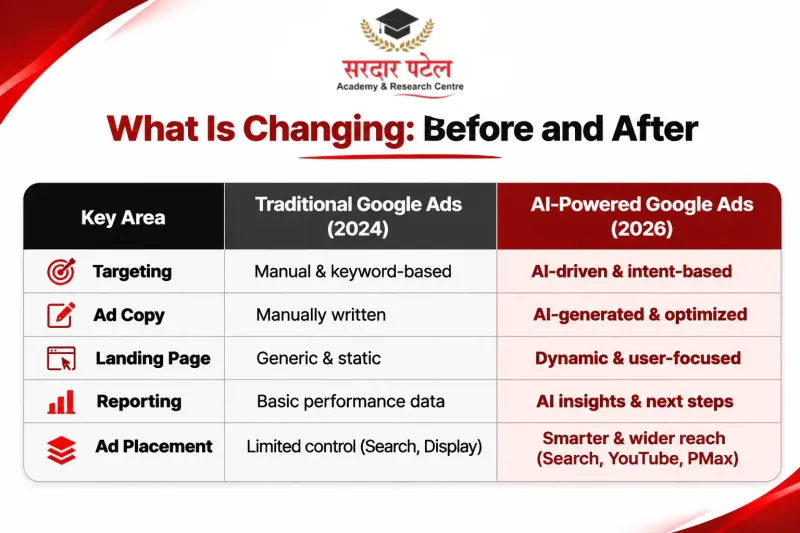
| Area |
The older way |
The 2026 way |
| Targeting |
You list keywords and match types |
AI reads intent and matches searches beyond your list |
| Ad copy |
You write responsive search ad assets |
Gemini-based tools adapt and generate text |
| Landing page |
You set one final URL |
The system can pick a better-fitting page on your site |
| Reporting |
Manual segments and spreadsheets |
Conversational, AI-built reports and assistants |
| Ad placement |
Classic search results |
Search results, AI Overviews and AI Mode |
Your job moves from pressing buttons to supplying good inputs: clean conversion data, sharp goals and sensible guardrails. Event coverage such as TechWyse’s Marketing Live analysis describes Google’s message the same way: let Gemini handle more of the execution while advertisers steer.
AI Max for Search: The Centre of the Shift
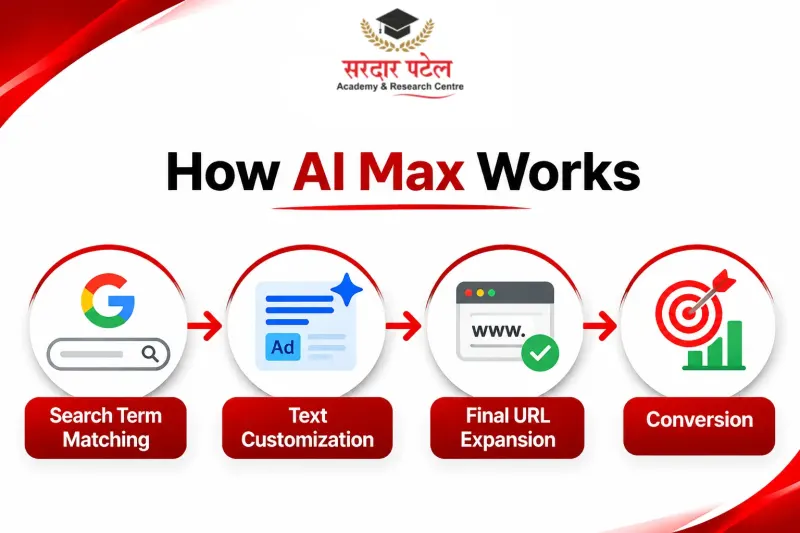
AI Max is an optional layer inside an ordinary Search campaign, not a new campaign type. It bundles search term matching, text customisation, and final URL expansion. You can still steer it with brand settings, location settings and search themes, and Google’s AI Max help page explains how each part works.
The Migration Timeline
As Digiday reported, AI Max left beta on 15 April 2026, and Google moved eligible campaigns using automatically created assets or campaign-level broad match in September. Dynamic Search Ads are reported to follow in February 2027. Google has adjusted dates before, so check your account messages.
Does It Actually Perform?
Google says AI Max can lift conversions at a similar CPA or ROAS, while at least one independent analysis flagged higher invalid traffic. We keep the figures and the feature-by-feature breakdown in our guide to Google AI Max for Search campaigns.
What Google Marketing Live 2026 Added
At Marketing Live on 20 May 2026, Google rebuilt much of its ads stack around Gemini; its own Marketing Live highlights page lists every announcement. Four pieces matter most for everyday advertisers.
Ask Advisor, One Agent Across the Stack
Ask Advisor is a Gemini-powered assistant spanning Google Ads, Analytics, Merchant Centre, and Google Marketing Platform. You ask in plain language, and it pulls data and suggests workflows. Think of it as a research assistant, not an autopilot, and verify what it tells you before acting.
Ads Inside AI Mode
Google is testing two Gemini-built formats in AI Mode, Conversational Discovery ads and Highlighted Answers, and both stay labelled as sponsored. These tests are currently in the United States, so Indian advertisers should treat them as a preview rather than a budget line. They still show where AI in Google Ads is heading: longer, conversational queries that reward clear, well-structured business information.
Business Agent for Leads
This format swaps static lead forms for a chat agent grounded in the advertiser’s website, and it is launching in open beta for US advertisers. It raises a practical question every lead-gen team will face: where should the follow-up happen?
Asset Studio and Creative Generation
Asset Studio now connects to Gemini’s latest models to produce images and video from a brief. Speed is the benefit; sameness is the risk.
Bidding and Data: Why Your Inputs Matter More Now
Smart Bidding already ran on machine learning. What is new is how much else leans on the same signals: search matching, creative selection and page choice. So AI in Google Ads is only as smart as the conversions you feed it. Track conversions that reflect revenue, import first-party and offline data, and keep negative keywords and brand exclusions current. For the mechanics, read how AI-powered Google Ads campaigns work.
Where Automation Goes Wrong
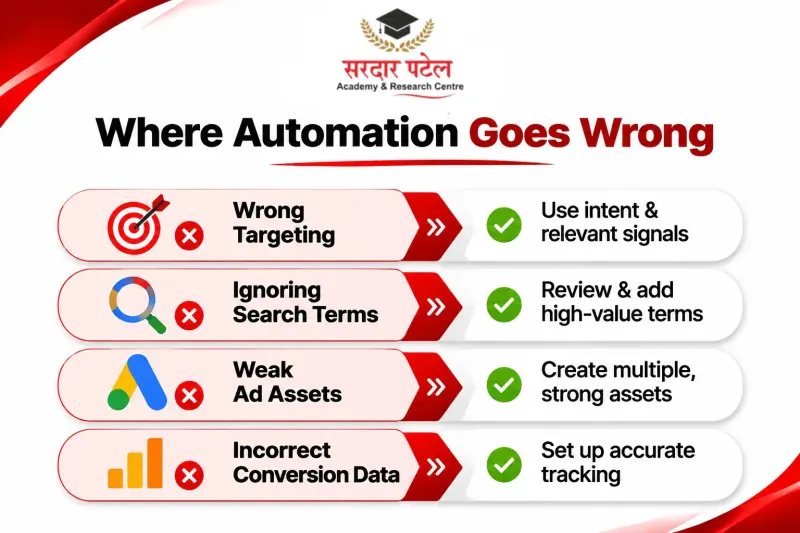
- Switching on every toggle at once. Change one thing, then measure for a few weeks.
- Ignoring the search terms report. Wider matching means more irrelevant queries unless you check weekly.
- Weak ad assets. Thin headlines produce thin variations, so give the system strong copy to learn from.
- Trusting platform metrics alone. Cross-check conversions against your CRM or sales records.
The fix is rarely switching automation off; it is tidier inputs. Our roundup of Google Ads automation trends covers the wider list of pitfalls.
A Practical Playbook for 2026
- Audit your tracking first. Confirm that conversions fire correctly and mean something to the business.
- Check your legacy settings. See whether your campaigns were already moved to AI Max in September; Dynamic Search Ads follow in February 2027.
- Test AI Max on one stable campaign. Keep a clear baseline and run it for several weeks.
- Review search terms weekly. Add negatives and refine brand controls and search themes.
- Report on business outcomes. Track cost per lead, qualified leads and revenue, not just clicks.
Career Scope: What This Means for Marketers
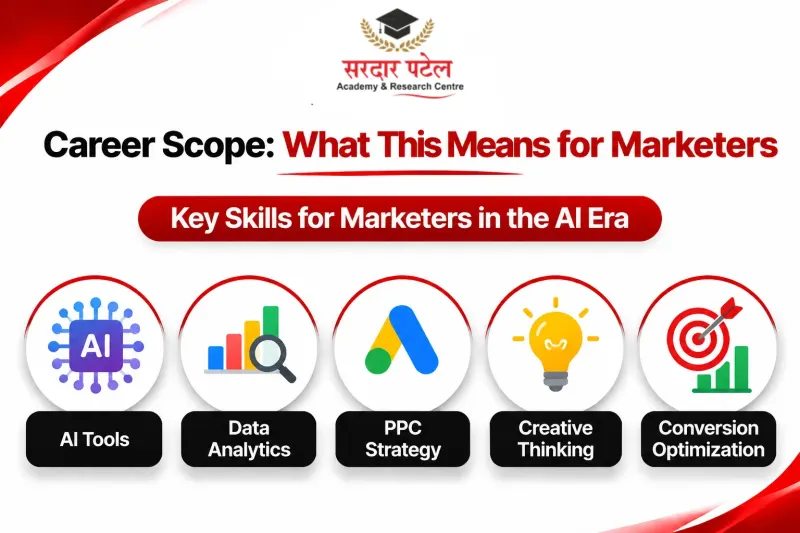
As AI in Google Ads matures, the work is changing rather than vanishing. Execution tasks shrink, while measurement, strategy, data quality and creative judgement grow. We explore this in why AI plus digital marketing professionals are in demand.
At Sardar Patel Academy & Research Centre (SPARC), training is built around practical projects. Its Digital Marketing Course with AI at the GTB Nagar campus in Delhi runs for 7 months with 50+ projects and covers SEO, social media marketing, Google Ads, AI tools, content marketing and analytics, with placement support. SPARC has worked as a non-profit, no-loss education NGO since 2003.
Conclusion
The picture for 2026 is consistent. AI in Google Ads is moving from an optional extra to the default operating layer, with AI Max, Gemini assistants and new ad formats all pulling the same way. The advertisers who gain are not the ones who click every new toggle; they are the ones with trustworthy data, clear goals and the habit of checking what the machine is doing.
Start small, measure honestly and treat it as a skill to practise, not a switch to flip. For structured, practical training, you can learn Google Ads with guided projects at SPARC.
FAQs
It is the set of machine learning and generative tools Google uses to choose search matches, write and assemble ad text, select landing pages, set bids and produce reports. Smart Bidding, AI Max and Gemini-based assistants are the main examples.
No. AI Max is a layer inside Search campaigns, while Performance Max is a separate campaign type that serves across Search, YouTube, Display and other Google channels.
Unlikely in the near term. Automation handles repetitive execution, but goal setting, tracking, creative direction and analysis still need people.
Not entirely, but the direction is clear. Several older features are being migrated, so ignoring automation is getting harder. Learn it so you can control it.
Maintain negative keyword lists, use brand and location controls, review search terms weekly and send accurate conversion data.
At the time of writing, Google describes the tests as US-based. Availability may expand, so check your account notifications.
It can, but small budgets give the system less data to learn from. Focus on a few high-intent campaigns and clean conversion tracking before expanding.