+91 9312966129
 sparc.enquiry01@gmail.com



Can You Become an Accountant Without a B.Com Degree?
Yes, you can become an accountant without a B.Com. See the skills, courses after 12th, jobs and CA eligibility rules to start your accounting career
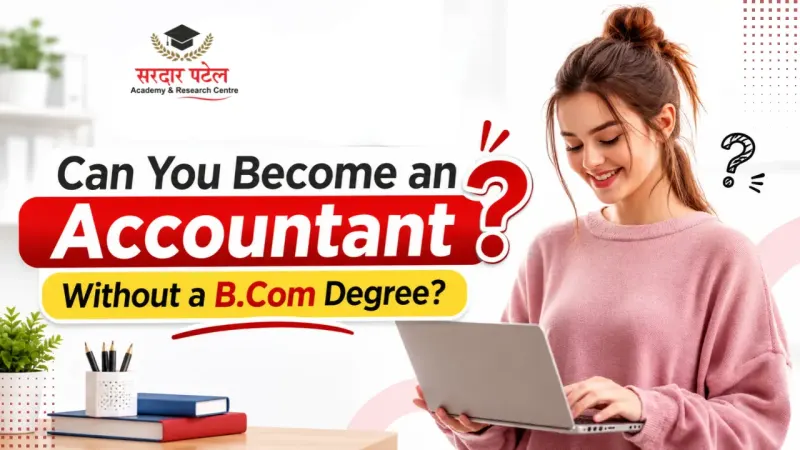
Table of Contents
- What Does “Accountant” Actually Mean?
- So, Can You Become an Accountant Without a B.Com Degree?
- What Employers Actually Look For
- Skills You Need to Build an Accounting Career Without a B.Com
- Core Accounting Skills
- Software and Practical Skills
- Best Accounting Courses After 12th (For Non-B.Com Students)
- Step-by-Step: How to Become an Accountant Without a B.Com
- 1. Learn accounting fundamentals
- 2. Get hands-on with Tally Prime
- 3. Understand GST and TDS basics
- 4. Build Excel confidence
- 5. Take on an internship or entry-level role
- 6. Add a certification to your resume
- 7. Apply for skill-matched roles first
- Accounting Jobs You Can Get Without B.Com
- B.Com vs No B.Com: A Realistic Comparison
- Common Mistakes to Avoid
- A Practical Example
- Final Thoughts
If you didn’t study commerce in college, or you dropped B.Com halfway, or you’re simply exploring accounting later in life — you’ve probably asked yourself the same question that a lot of people quietly search for: can you become an accountant without a B.Com degree?
The short answer is yes. The longer, more useful answer is that it depends on which kind of accounting role you’re aiming for and how you build the skills that usually come “built-in” with a commerce degree.
In this guide, we’ll walk through what accounting work actually involves, which skills and courses can substitute for a B.Com, what kind of jobs are realistically open to you, and the practical steps to get there, especially if you’re based in Delhi NCR and looking at local training options.
What Does “Accountant” Actually Mean?
Before answering whether you need a B.Com, it helps to separate the different roles that get lumped under “accountant.”
- Bookkeeper / Accounts Assistant — Records day-to-day transactions, maintains ledgers, handles invoices and basic reconciliation. Entry-level, skill-based.
- Accounts Executive — Manages accounts payable/receivable, GST filings, payroll support, and basic MIS reports. Requires working knowledge of software and compliance.
- Junior Accountant / Accounts Officer — Prepares financial statements, handles TDS and GST returns, assists in audits. Usually needs a degree plus practical accounting skills.
- Chartered Accountant (CA) / Company Secretary (CS) — A regulated, licensed professional role that requires clearing the CA or CS exams through ICAI or ICSI. These routes have their own entry rules, and a B.Com is not a prerequisite for starting the CA route.
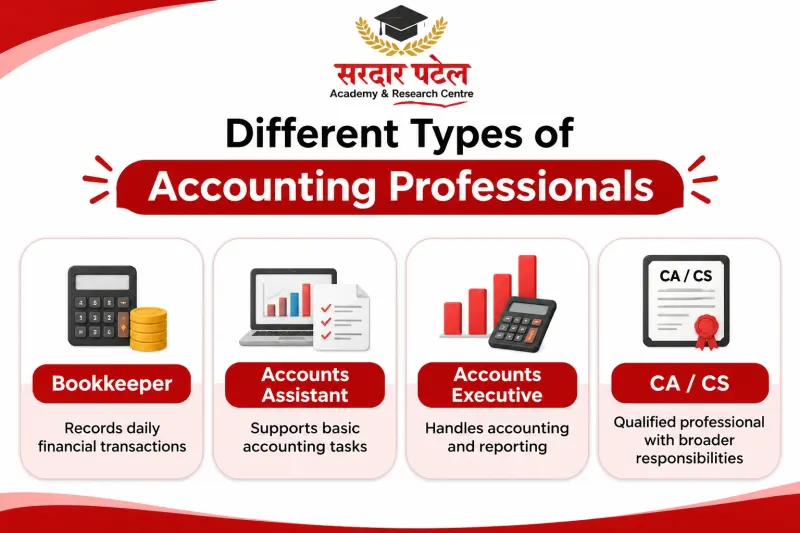
Notice something important here: only the top tier, CA, CS, or similar licensed designations, is gatekept by a formal qualification pathway, and even that doesn’t strictly require a B.Com to begin. The other roles are far more skill- and experience-driven than degree-driven. If you want the full roadmap, read our step-by-step guide on how to become an accountant in India.
So, Can You Become an Accountant Without a B.Com Degree?
Yes. Most accounting and bookkeeping roles in India are open to candidates without a B.Com, as long as they have practical accounting knowledge, software skills, and relevant certifications. Employers hiring for accounts executive, billing, GST, or Tally-based roles typically care more about whether you can actually do the job than which degree you hold. A B.Com isn't required even for the CA route: you can take CA Foundation after Class 12 from any stream. It matters mainly for some government, PSU and bank accounting posts that list it as an eligibility criterion.
That distinction matters a lot when you’re planning your next step. If your goal is a stable, well-paying job in private-sector accounting, think small and mid-sized businesses, retail chains, trading firms, or accounting outsourcing companies; skills usually open more doors than the degree on your certificate.
What Employers Actually Look For
Talk to anyone who has been hired for an accounts role, and you’ll hear a similar theme: they’re checking for practical competence, not academic pedigree. Here’s what typically matters more than the degree itself:
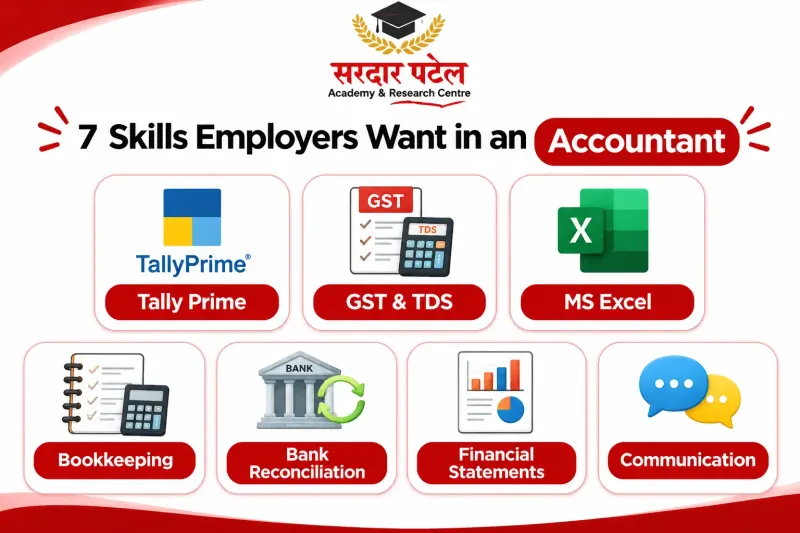
- Comfort with Tally Prime or similar accounting software
- Working knowledge of GST filing, TDS, and basic taxation
- Excel proficiency — VLOOKUP, pivot tables, basic formulas
- Understanding of bookkeeping fundamentals, journal entries, ledgers, and trial balance
- Attention to detail and accuracy with numbers
- Ability to reconcile bank statements and vendor accounts
- Basic communication skills for client or vendor follow-ups
A candidate with a B.A. or B.Sc. who has completed a solid accounting and Tally course can often outperform a B.Com graduate with no hands-on software experience, because in real offices, nobody hands you a textbook problem; they hand you a messy ledger and a deadline.
Skills You Need to Build an Accounting Career Without a B.Com
If you’re serious about an accounting career without a B.Com, think of it as replacing the theoretical foundation a commerce degree gives you with focused, practical training. Here’s what to prioritise.
Core Accounting Skills
- Fundamentals of accounting — debit/credit logic, types of accounts, the accounting cycle
- Financial statements — reading and preparing a basic profit & loss account and balance sheet
- Taxation basics — GST structure, input tax credit, TDS deduction and filing
- Payroll processing — PF, ESI, salary structuring for small businesses
Software and Practical Skills
- A Tally course for accounting — this is often the single most in-demand skill for entry-level and mid-level accounting jobs in India. Most small and medium businesses run their books on Tally, so knowing it well is close to non-negotiable.
- MS Excel — especially for MIS reporting, budgeting, and data reconciliation
- GST return filing software — GSTR-1, GSTR-3B filing processes
- Basic knowledge of banking and e-way bills — for firms dealing in goods
The combination of accounting fundamentals plus Tally plus GST is, in practice, what most job postings for “Accounts Executive” or “Junior Accountant” are really asking for.
Best Accounting Courses After 12th (For Non-B.Com Students)
If you’re starting right after school or pivoting from another stream, there’s no shortage of accounting courses after 12th that don’t require a commerce background to enrol in.
| Course Type |
Duration |
Best For |
What It Covers |
| Certificate in Tally & Accounting |
2–4 Months |
Absolute beginners, job-ready fast |
Tally Prime, basic bookkeeping, GST entries |
| Diploma in Financial Accounting |
6–12 Months |
Deeper practical foundation |
Accounting principles, taxation, payroll, MIS |
| GST & Taxation Certification |
1–3 Months |
Working professionals upskilling |
GST returns, TDS, e-invoicing |
| B.Com (regular/distance) |
3 Years |
Long-term academic path; some government and bank roles |
Full commerce curriculum |
| CA / CMA / CS Foundation |
Multi-Year |
Licensed professional track (CA Foundation is open after Class 12, any stream) |
Regulated syllabus via ICAI/ICMAI/ICSI |
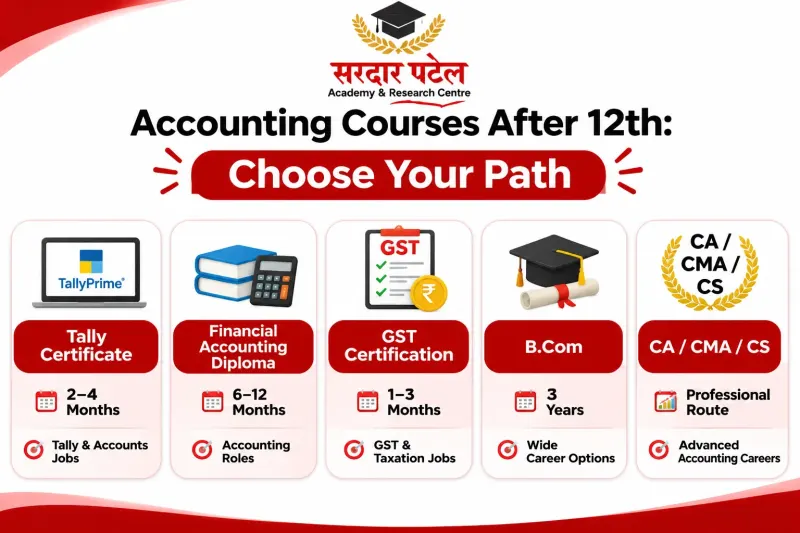
Notice that a focused diploma or certificate program can get you job-ready in a matter of months, while a full B.Com takes three years. For someone who wants to start earning and gaining experience sooner, a practical course combined with real software training is often the faster route into the workforce. Not sure which format suits you? Compare a short-term accounting course vs. a diploma in financial accounting.
Step-by-Step: How to Become an Accountant Without a B.Com
1. Learn accounting fundamentals
Even a short foundational course covering journal entries, ledgers, and trial balances will make everything else click faster.
2. Get hands-on with Tally Prime
This is where theory turns into a job-ready skill. Practice with real invoices, purchase entries, and bank reconciliations, not just demo data.
3. Understand GST and TDS basics
You don’t need to be a tax expert, but you should be able to explain how GST returns work and assist with filing.
4. Build Excel confidence
Most accounting roles expect at least intermediate Excel skills, especially for reporting.
5. Take on an internship or entry-level role
Even unpaid or low-paid short internships at a CA firm, small business, or trading company give you the practical exposure that recruiters value.
6. Add a certification to your resume
A recognised certificate in accounting or Tally signals to employers that your skills are current and verified, not self-taught guesswork.
7. Apply for skill-matched roles first
Target accounts assistant, billing executive, or GST executive positions before aiming for roles that explicitly list “B.Com required”. Our practical guide on how to get your first job as an accountant walks through resumes, interviews and applications.
Accounting Jobs You Can Get Without B.Com
Here are roles where a B.Com is often preferred but not always mandatory, particularly for candidates who can demonstrate practical skills:
- Accounts Assistant / Junior Accountant — at small and mid-sized firms
- Billing Executive / Invoicing Executive — in retail, manufacturing, or trading businesses
- GST Executive — handling return filing for multiple clients (common in CA firms and outsourcing units)
- Tally Operator / Data Entry with Accounting Roles; Payroll Executive — in HR-cum-accounts functions at smaller companies
- Accounts Executive — in e-commerce and logistics firms, where volume-based transaction handling matters more than formal qualifications
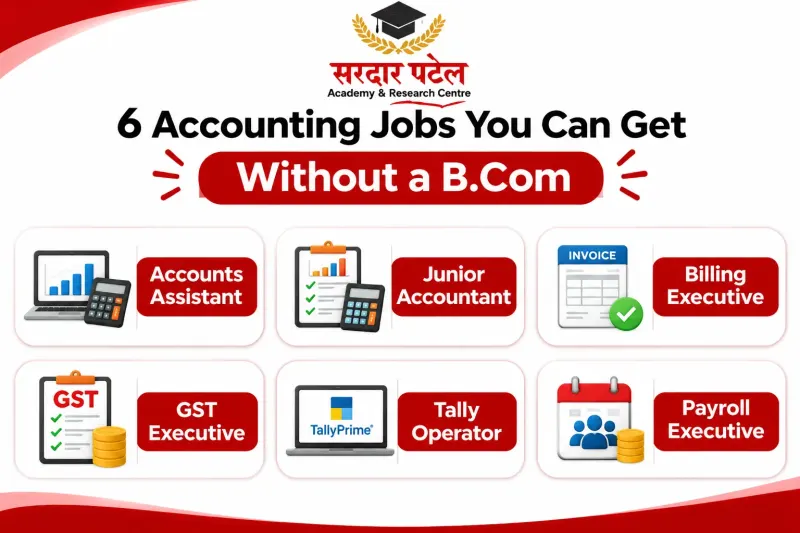
Roles that may list a B.Com (or equivalent finance degree) as an eligibility criterion include some bank accounting positions and certain government or PSU postings with fixed requirements. A B.Com is not needed to start the CA route, which you can enter after Class 12 from any stream; for CS and CMA, confirm the current rules with ICSI and ICMAI.
B.Com vs No B.Com: A Realistic Comparison
| Factors |
With B.Com |
Without B.Com (Skills-Based Path) |
| Time to job-readiness |
3 Years |
3–12 months, depending on the course |
| Entry-level job access |
Broad |
Broad, with some exceptions |
| CA eligibility |
Commerce graduates with 55%+ can enter CA Intermediate directly |
Open after Class 12 from any stream via CA Foundation; non-commerce graduates with 60%+ can enter CA Intermediate directly |
| Practical software skills |
Not always covered in depth |
Central focus of most short courses |
| Government, PSU and bank roles |
Often preferred/required |
May be excluded from some postings |
| Salary growth potential |
Strong, especially long-term |
Strong if skills and experience keep growing |
The table makes one thing clear: the degree helps mainly with certain government, PSU and bank pathways, while the skills-based route competes well in the private sector, especially at the entry and mid-career levels. For CA, the entry routes are set by ICAI itself, so check its official FAQ on CA course eligibility before you register, since rules can change.
Common Mistakes to Avoid
- Learning Tally theoretically without practising on real-style data. Employers test practical speed and accuracy, not just familiarity with menus.
- Skipping GST basics. Almost every accounting role today touches GST in some way; ignoring it limits your options.
- Assuming certificates alone guarantee a job. Certificates open doors; interviews and practical tests decide the outcome.
- Applying only to roles that explicitly list “B.Com required”. Many postings use it as a preference, not a strict filter, so apply anyway if your skills match.
- Underestimating Excel. Candidates often focus entirely on Tally and forget that MIS and reporting tasks lean heavily on spreadsheet skills.
A Practical Example
Consider someone who completed a B.A. in a non-commerce subject and, after graduating, felt unsure about job prospects. Instead of going back for a B.Com, they enrolled in a focused accounting and Tally course, practised GST return filing on sample data, and took up a short internship at a local firm handling billing and reconciliation.
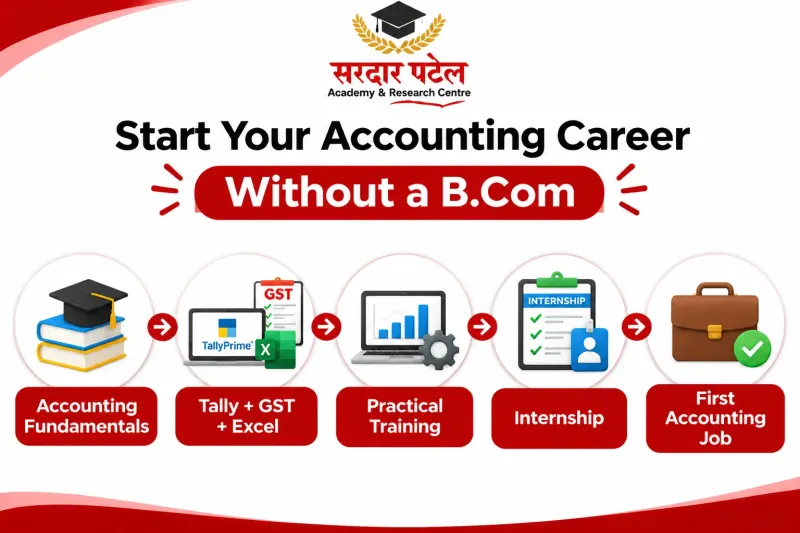
Within a few months, that combination of a certification and hands-on internship experience was enough to be considered for accounts assistant and GST executive roles — positions where the job description asked for “accounting knowledge and Tally proficiency” rather than a specific degree. This is a fairly typical trajectory for learners who choose the skills-first route in Delhi NCR’s active small-business and services job market, where firms often need accounts staff who can start contributing quickly.
Final Thoughts
To sum it up: yes, you can become an accountant without a B.Com degree, as long as you’re willing to build the practical skills that the degree would otherwise have given you — solid accounting fundamentals, comfort with Tally, working knowledge of GST and TDS, and reasonable Excel skills. The B.Com route still has its place, particularly if you’re aiming for certain bank, government or PSU roles that list it, but it isn’t the only door into an accounting career, and it isn’t required to start the CA route.
If you’re based in or around Delhi NCR and want a faster, hands-on way into the field, building job-ready skills through structured, practical training is often the more efficient path. You can explore SPARC’s E-Accounting Course (E-DAFA) for structured, hands-on training in Tally, Busy, GST and TDS designed around what employers actually ask for.
Still unsure which course fits your background and goals? Get in touch with the SPARC team and talk it through.
FAQs
Yes, for most private-sector accounting and bookkeeping roles. A B.Com is mainly listed as an eligibility criterion for some government, PSU and bank accounting postings; it isn’t required to start the CA route.
A practical accounting and Tally course, ideally combined with GST and taxation training, is usually the most direct route to job-readiness for non-commerce candidates.
Tally is one of the most important skills, but pairing it with accounting fundamentals, GST knowledge, and Excel gives you a much stronger, more complete profile.
Yes. CA Foundation can be taken after Class 12 from any stream, and graduates can enter CA Intermediate directly through the direct entry route: commerce graduates need at least 55% and graduates from other streams at least 60%. Rules can change, so confirm the current eligibility on ICAI’s official website before registering.
Pay depends far more on your practical skills, software proficiency, and experience than on the degree itself, especially at the entry and mid-level in the private sector.
Certificate and diploma programmes in accounting, Tally, and GST are typically open to students from any stream, not just commerce backgrounds.
Not necessarily. Interviewers for accounts executive and similar roles usually test practical knowledge, journal entries, Tally navigation, and GST basics, where hands-on training matters more than the degree listed on your resume.