+91 9312966129
 sparc.enquiry01@gmail.com



What Is Practical Data Analytics Training? A Complete Guide
Learn what practical data analytics training is, how live projects work, and what an 8-month course in GTB Nagar, Delhi covers before you enrol.

Ask ten aspiring analysts what they want from a course and most will give the same answer: skills they can use at work from day one. Yet plenty of programmes still spend weeks on theory and leave students staring at a blank spreadsheet when the first real task arrives.
That gap is what practical data analytics training is built to close. This guide explains what it means, how it differs from classroom-only learning, what a good programme contains and how to judge one before you enrol.
What Is Practical Data Analytics Training?
Practical data analytics training is a hands-on way of learning in which you build analytical skills by working on real datasets, real business questions and industry tools from the first weeks. Instead of memorising definitions, you clean untidy files, write queries, build dashboards and explain what the numbers mean to someone who has never opened a spreadsheet.
Think of learning to drive. You can read the manual for a month, but you only learn behind the wheel in traffic. Analytics works the same way: it is a craft of judgement, such as knowing which column to trust or which outlier is a typing error, and judgement only grows through repetition.
How It Differs From Theory-Led Learning
| Aspect |
Theory-led course |
Practical approach |
| Data used |
Tidy textbook samples |
Messy, business-style datasets |
| Assessment |
Written tests |
Dashboards, reports, presentations |
| Tools |
Shown briefly |
Used every week |
| Feedback |
Marks and grades |
Mentor review of your actual work |
| Result |
You know the terms |
You can do the task |
Good hands-on training does not throw theory away. Statistics and logical thinking still matter, but each concept is tied to a task you must finish.
Why It Matters for Freshers and Career Switchers
Employers hiring for analyst roles tend to look for evidence that you can carry out data analysis, not just proof of attendance. A course that produces finished work gives you that evidence.
Hands-on learning builds what lectures rarely do:
- Comfort with messy data, because real data is never as tidy as textbook examples.
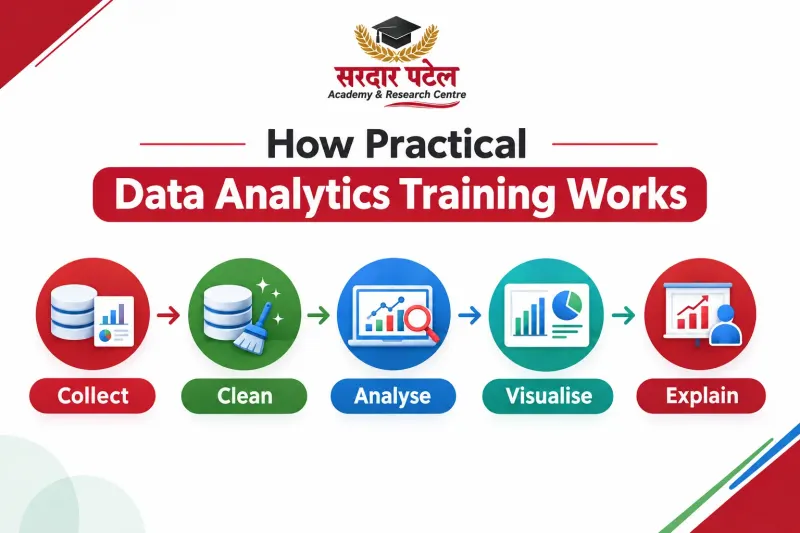
- A repeatable workflow: collect, clean, analyse, visualise, explain.
- Communication skills, since an insight nobody understands has no value.
- Proof of work you can show in an interview.
This is why practical data analytics training suits fresh graduates, students from non-technical streams and working professionals moving into analytics.
What a Live Project Looks Like
A live project-based analytics course puts a business problem at the centre of the curriculum instead of treating a project as an optional extra at the end.
An Illustrative Example
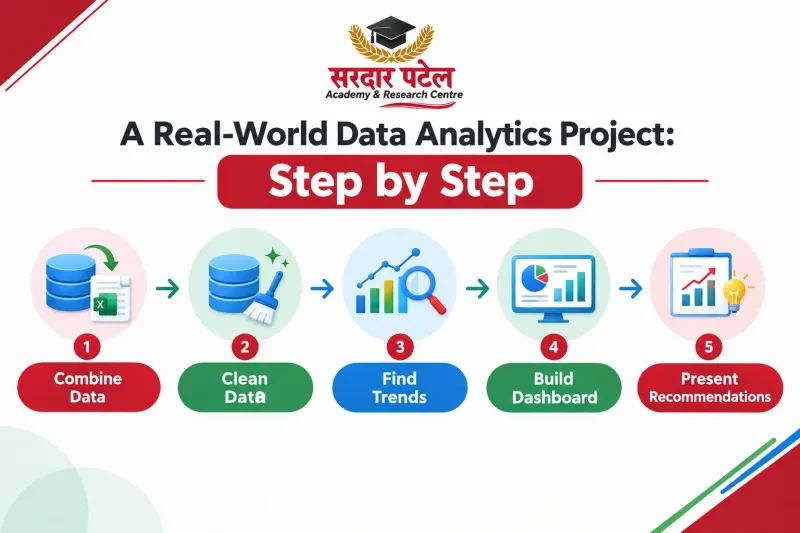
Imagine a retail business with twelve months of sales files from three stores. Your assignment might be to:
- Combine the files into one dataset.
- Standardise inconsistent product names and fix missing values.
- Find which categories slow down in particular months.
- Build a dashboard for the store manager.
- Present three recommendations in plain language
In a course like this, a mentor reviews each step and pushes back where your reasoning is weak. That feedback loop turns practice into skill.
Finished projects also become your portfolio. You can see how learners present such work in the student portfolio showcase.
How SPARC Teaches It: The 8-Month Data Analytics Course
Sardar Patel Academy & Research Centre has provided education in GTB Nagar, Delhi since 2003, and its Data Analytics Course with AI is built around practical data analytics training. The 8-month programme is listed with 40+ projects and covers Excel, SQL, Python, Power BI, Tableau and AI tools through guided projects and business-focused scenarios.
What You Practise With Each Tool
| Tool |
What you practise |
| Advanced Excel |
Cleaning raw sheets, lookups with XLOOKUP, pivot tables, simple macros and a manager-ready dashboard |
| SQL |
Writing queries, joining tables, filtering and grouping records to answer business questions |
| Python |
Cleaning and reshaping datasets, handling missing values and running basic analysis |
| Power BI |
Building interactive dashboards and reports from multiple data sources |
| Tableau |
Turning findings into clear charts and visual stories for non-technical audiences |
| AI tools |
Using AI assistants to speed up analysis, write code and summarise results |
There is no strict educational eligibility: Class 12 students, graduates and working professionals can all join, and the course runs from basic to advanced level.
Support Around the Classroom
Alongside classes, learners get a day-wise class plan, an app for assignments and recordings, notes prepared by SPARC's own publication team, and placement help that covers resume guidance and mock interviews. A certificate records the project work you complete. The full list of features and a brochure are on the data analytics course page.
How to Choose the Right Programme
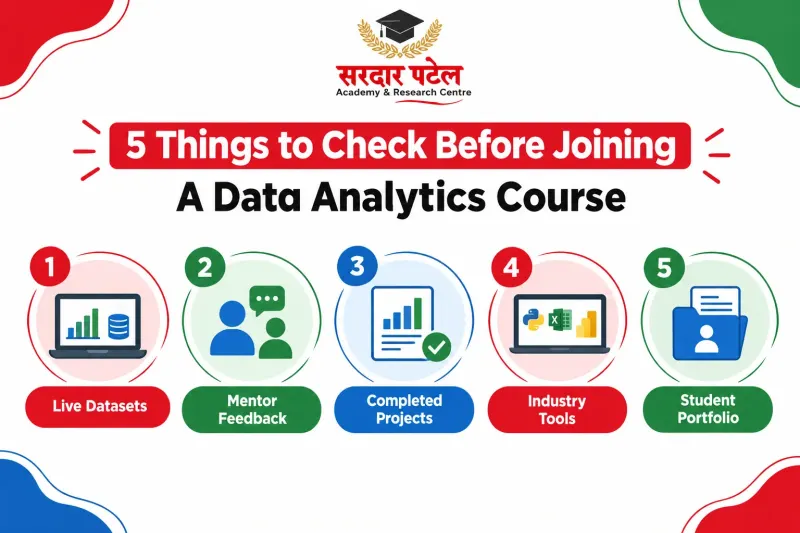
Before enrolling in any practical data analytics training programme, ask these questions:
- Will I work on datasets from the first few weeks?
- Does a mentor review my work individually?
- Does every project end with a presentation or written report?
- Are the tools taught the same ones that appear in job descriptions?
- Can I see work produced by past learners?
If you are comparing options in the capital, this breakdown of which institute offers practical data analytics training in Delhi covers the factors that matter.
Common Mistakes to Avoid
Even a strong hands-on course can be wasted by a few habits:
- Choosing by certificate alone. A certificate shows attendance; a portfolio shows ability. Our guide to data analytics certification courses in Delhi explains how to compare them.
- Skipping the basics. Dashboards built on weak statistics or messy data mislead.
- Copying project solutions. You will struggle when an interviewer asks why you made a choice.
- Skipping assignments. Skills fade without regular practice between classes.
Career Scope After Training
Completing a practical course can prepare you for entry-level roles in data analytics, business intelligence, and MIS reporting, including MIS executive and other reporting positions. Results depend on your effort, your background and the job market, so treat any promise of guaranteed outcomes with caution. A portfolio, a clear resume and the ability to explain your projects will do more for you than a long list of tool names.
Conclusion
Practical data analytics training is less about collecting a certificate and more about building a habit: take a messy question, work through the data, and explain the answer clearly. If a programme lets you practise that cycle repeatedly under mentor guidance, you are on the right track.
Use the checklist above, build a portfolio as you go, and choose a course only if it shows you real work.
Ready to see how this works in practice? Experience Hands-On Training with guided projects at SPARC in GTB Nagar.
FAQs
It is learning analytics by doing it: working with real-world data and professional tools, then producing dashboards and reports instead of only attending lectures.
Yes, in most cases. SPARC lists no strict educational eligibility, and the course runs from basic to advanced level. Confirm coding expectations with the counselling team before enrolling.
The Data Analytics Course with AI runs for 8 months. Other institutes vary, so always ask how much of the schedule is hands-on.
Yes, SPARC lists working professionals among eligible learners. Ask the counselling team about batch timings that fit your job.
No training can promise that. SPARC offers placement support, including resume guidance and mock interviews, but results depend on your effort and the market.
A certification course may focus on a syllabus and an exam. A practical course centres on tasks and projects, so the proof of learning is the work you produce.
It can give you real skills and a portfolio, which count for a lot in analyst hiring. Some employers still list a degree in their requirements, so check the job descriptions you are aiming for. SPARC lists no strict educational requirements to join the course.