+91 9312966129
 sparc.enquiry01@gmail.com


Data Analytics Jobs for Commerce Students
Explore analytics jobs for commerce students after BCom — role types, must-have skills, and how Delhi NCR graduates can start a career in data analytics.
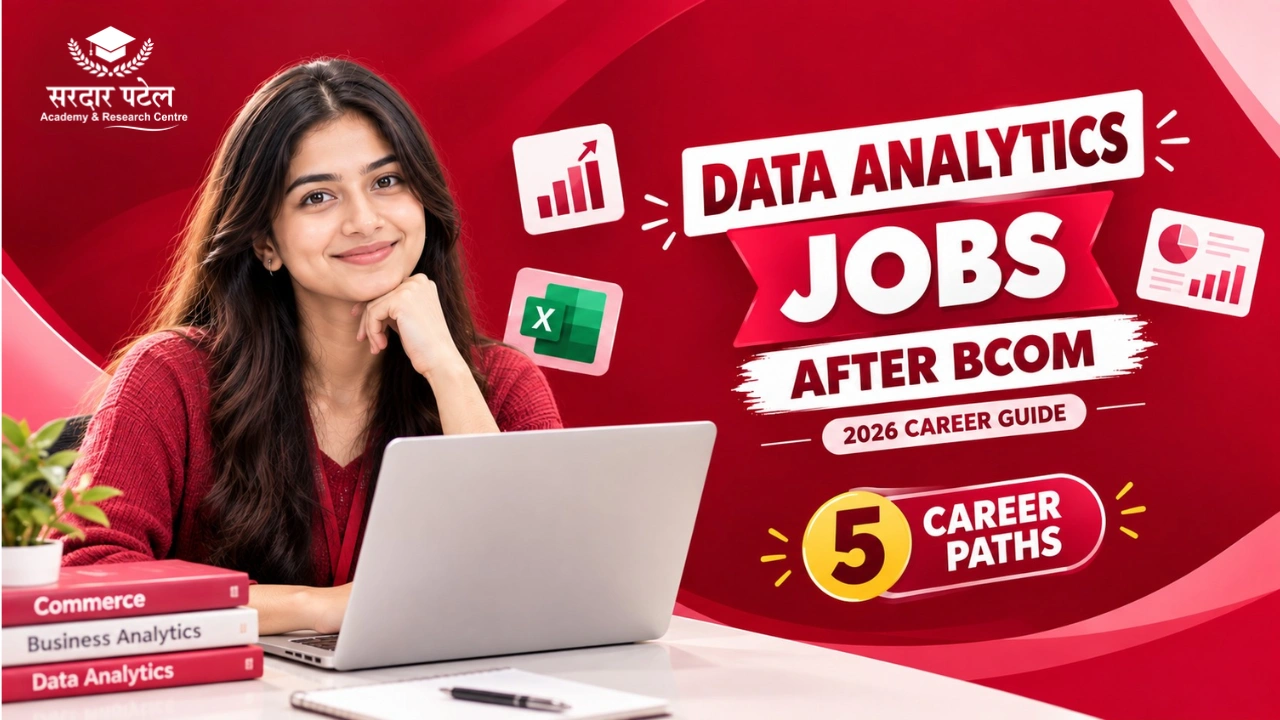
Table of Contents
- Can Commerce Students Learn Data Analytics?
- Why Commerce Students Are a Natural Fit for Data Analytics
- The Numbers Background Advantage
- What Is Data Analytics After BCom?
- Types of Analytics Jobs for Commerce Students
- Business Analyst
- Data Analyst
- Financial Analyst / Finance Data Analyst
- Marketing Analyst
- MIS Executive / Reporting Analyst
- Skills You Need to Build
- Technical Skills
- Business & Soft Skills
- Do You Need to Learn Coding?
- How Commerce Graduates Can Start Learning Data Analytics
- Data Analytics Job Opportunities in Delhi NCR
- Common Mistakes and How to Avoid Them in Your Resume
- Freelancing: A Path Worth Knowing About Later
- Conclusion
If you've just finished BCom or are midway through it, you've probably noticed how often "data analytics" comes up in career conversations these days. The good news is that analytics jobs for commerce students are no longer a stretch — commerce graduates are actually well positioned for this field, often more than they realise.
Can Commerce Students Learn Data Analytics?
The answer is yes, especially when they build practical skills alongside their existing commerce knowledge.
Between accounts, taxation, economics, and business studies, most commerce students already understand numbers and business logic. What's missing is usually just the technical layer, and that's a gap you can close.
This guide walks through what analytics roles actually look like for someone from a commerce background, what skills matter, how to get started, and what the job market in Delhi NCR looks like right now.
Why Commerce Students Are a Natural Fit for Data Analytics
The Numbers Background Advantage
A BCom degree already trains you to work with numbers — profit and loss statements, ratios, budgets, taxation slabs. Data analytics builds on that same comfort with numbers, just applied to a different kind of data: sales trends, customer behaviour, marketing performance, operational metrics.
Commerce students also tend to understand how a business actually runs — revenue, costs, margins, cash flow. That context matters a lot in analytics roles, because raw numbers mean very little without business understanding behind them. A data analyst who understands what a "conversion rate" or "gross margin" actually means for a business will always interpret data better than someone who only knows the technical tools. This is also why understanding the importance of data analytics in business is valuable for commerce graduates entering the field.
Most analytics teams also need people who can translate numbers into decisions, not just run queries — which is where that same business background helps again.
What Is Data Analytics After BCom?
Data analytics after BCom essentially means picking up practical data skills — spreadsheets, SQL, data visualisation tools, and basic statistics — on top of your commerce degree, so you can work with business data professionally. If you're also exploring data analytics course eligibility and career opportunities, understanding the entry requirements and career paths can help you plan your transition more effectively.
It's not a separate degree replacing your BCom — think of it as a skill layer added to your existing education, usually built through a certification course, diploma, or structured training program rather than another full degree. Your BCom taught you what a business needs to track — sales, costs, inventory, customer trends. Analytics training teaches you how to extract, clean, and interpret that data using tools companies use every day.
Types of Analytics Jobs for Commerce Students
There isn't just one "data analytics job" — the field branches into several roles, and commerce graduates tend to do well across most of them. If you're exploring top job roles after a data analytics course, several career paths can align with a commerce background, depending on your skills and interests.
Business Analyst
Business analysts sit between the data team and business teams. The role involves understanding a business problem, pulling relevant data, and presenting findings in a way that helps managers make decisions. Commerce graduates often move into this role comfortably because it leans heavily on business context.
Data Analyst
Data analysts work more directly with datasets — cleaning data, building dashboards, running queries, and identifying patterns. This role usually requires stronger technical skills (Excel, SQL, Power BI or Tableau) but doesn't necessarily require a coding background to start.
Financial Analyst / Finance Data Analyst
Given the commerce foundation, many graduates naturally gravitate toward financial analytics — analysing revenue trends, budgeting data, cost patterns, and financial forecasting using data tools rather than manual spreadsheets alone.
Marketing Analyst
Marketing analytics involves studying campaign performance, customer behaviour, and sales funnels. Companies increasingly want marketing decisions backed by data rather than intuition, which opens roles for people who understand both business and numbers.
MIS Executive / Reporting Analyst
MIS (Management Information Systems) roles focus on building regular reports and dashboards for management. This is often a common entry point for commerce graduates moving into analytics, since it relies heavily on Excel and reporting tools before expanding into more advanced work.
Skills You Need to Build
Technical Skills
Most entry-level analytics roles expect familiarity with:
- Advanced Excel — formulas, pivot tables, data cleaning
- SQL — for querying and working with databasesA BI tool like
- Power BI or Tableau — for building dashboards and visualisations
- Basic statistics — averages, trends, correlation, enough to interpret data correctly
- Python (optional but valuable) — useful for more advanced roles, though not always required at entry level
These tools form the practical foundation for most entry-level analytics roles. If you want a broader overview of the tools used in the field, check out our guide to data analytics tools you must know.
You don't need to master all of this before applying for jobs. Most companies expect a working knowledge that improves on the job.
Business & Soft Skills
Technical skills alone don't get you hired or promoted. Equally important: explaining findings in plain language to non-technical managers, understanding business context rather than just running numbers, attention to detail, and basic presentation skills for reporting to teams. This is where commerce students tend to have a head start over purely technical candidates.
Do You Need to Learn Coding?
Not necessarily, at least not right away. Many analytics roles — especially business analyst, MIS, and reporting-focused positions — rely mainly on Excel, SQL, and visualisation tools rather than programming. SQL itself isn't really "coding" in the traditional sense; it's closer to structured querying and is usually approachable even for non-technical learners.
Python becomes more relevant only as you move into advanced data-analyst or data-science-adjacent roles — it's rarely required to enter the field, so coding shouldn't feel like a barrier at the start.
How Commerce Graduates Can Start Learning Data Analytics
Certification courses covering Excel, SQL, and a visualisation tool are a common starting point for commerce graduates who want practical, job-ready skills without committing to another full degree. Bodies like the National Skill Development Corporation (NSDC) also recognise data analytics as a priority skilling area, which reflects the growing demand for this training path. Specifically, Data Analytics appears among the Advanced Digital Skills listed on the government's Skill India Digital portal, run under the Ministry of Skill Development and Entrepreneurship (MSDE).
Self-study works for motivated learners using free and paid resources on Excel, SQL basics, and Power BI, though it requires more discipline since there's no structured schedule or mentor support.
Structured training programs in Delhi suit learners who prefer guided, hands-on learning with mentor support. Institutes like Sardar Patel Academy & Research Centre (SPARC) run analytics programs designed around practical, project-based learning rather than just theory, which tends to work well for commerce graduates who want job-ready skills without a heavy coding-first approach.
For a more structured approach, a data analytics learning guide can help beginners understand what to learn first, which tools to prioritise, and how to progress toward job-ready skills.
Data Analytics Job Opportunities in Delhi NCR
Delhi NCR has a large concentration of finance, consulting, retail, and IT-services companies, all of which rely heavily on data-driven decision-making. This creates steady demand for entry-level analytics talent—MIS executives, junior business analysts, and reporting analysts—especially from candidates who understand both business fundamentals and basic data tools. Business Analyst salaries in New Delhi average around ₹6 LPA (a ₹3–14 LPA range), with entry-level packages typically between ₹4–7 LPA, per AmbitionBox salary data compiled by Naukri.com. As businesses increasingly combine automation, artificial intelligence, and data-driven decision-making, understanding why AI + analytics professionals are in demand can also help commerce graduates identify where the field is heading.
Commerce graduates can also explore the wider data analytics career scope, skills and salaries to understand how their opportunities can grow beyond entry-level roles.
For commerce graduates based in Delhi, this local demand is worth factoring in when choosing where to train — programs with strong local placement connections can make the transition from classroom to job noticeably smoother.
Common Mistakes and How to Avoid Them in Your Resume
A few patterns hold commerce graduates back from landing their first analytics role:
- Waiting to "master" everything before applying — most entry-level roles expect a working foundation, not expert-level skills.
- Ignoring Excel because it feels basic — Excel remains one of the most used tools in real analytics jobs, especially in finance-heavy roles.
- Learning tools without practising on real data — knowing what a pivot table is and using one on messy real-world data are different skills.
- Skipping business context — technical skills without understanding why a metric matters make for weaker interview answers.
- Choosing a course by duration alone rather than checking its actual practical project exposure.
The fix shows up directly on your resume. Employers want evidence of applied skills, not just certificates — include a couple of real, self-built projects (even simple ones, like a basic sales dashboard), clearly list the tools you know, and write a summary connecting your commerce background to analytics. Recruiters notice the difference between a resume that lists tool names and one that shows actual project work.
Freelancing: A Path Worth Knowing About Later
Once you've built some confidence with tools and completed a few real projects, freelancing in data analytics becomes a realistic second step — not usually a starting point. Small businesses often need help building simple dashboards, cleaning sales data, or setting up recurring reports, but don't have the budget for a full-time analyst. For commerce graduates who eventually want flexibility or additional income alongside a full-time role, this is a natural extension of the same skills covered above, provided you can show a portfolio of real work.
Conclusion
Analytics jobs for commerce students aren't a distant possibility — they're a realistic next step for anyone willing to add practical data skills to their existing business foundation. You don't need to abandon your commerce background or start over with a technical degree. You need working knowledge of the right tools, some real project practice, and the confidence to apply what you already understand about business.
If you're based in Delhi NCR and want structured, practical guidance rather than figuring it out alone, it's worth exploring commerce-friendly analytics training options built around real project work.
→ Explore Commerce-Friendly Careers
FAQs
Yes. Most entry-level analytics roles value business understanding and tool proficiency (Excel, SQL, BI tools) over a technical degree. Commerce students often adapt quickly because they already understand business numbers.
Not for most entry-level roles. SQL and BI tools cover a large share of daily analytics work. Python becomes more relevant only as you move into more advanced analytics positions.
It varies by individual pace and course structure, but most focused, practical training programs are designed to build job-ready foundational skills within a few months, followed by continued learning on the job.
MIS executive and junior business analyst roles are common starting points, since they lean on Excel, reporting, and business communication — areas commerce graduates are usually already comfortable with.
Both routes work. Self-learning requires more discipline and structure on your own; a certification or training program offers guided learning, mentor support, and often placement assistance, which some learners find more effective.
Yes, Delhi NCR has consistent demand across finance, retail, and IT-services sectors for entry-level analytics and reporting roles, particularly for candidates combining business understanding with basic data tool skills.
Yes, working professionals from accounting, finance, or operations backgrounds often transition into analytics roles by building tool skills alongside existing work experience, which can strengthen their profile rather than start it from zero.