+91 9312966129
 sparc.enquiry01@gmail.com


Top New Social Media Trends in 2026
Explore the top social media trends 2026 is bringing across every major platform, with practical tips for marketers, students, and business owners in Delhi NCR.
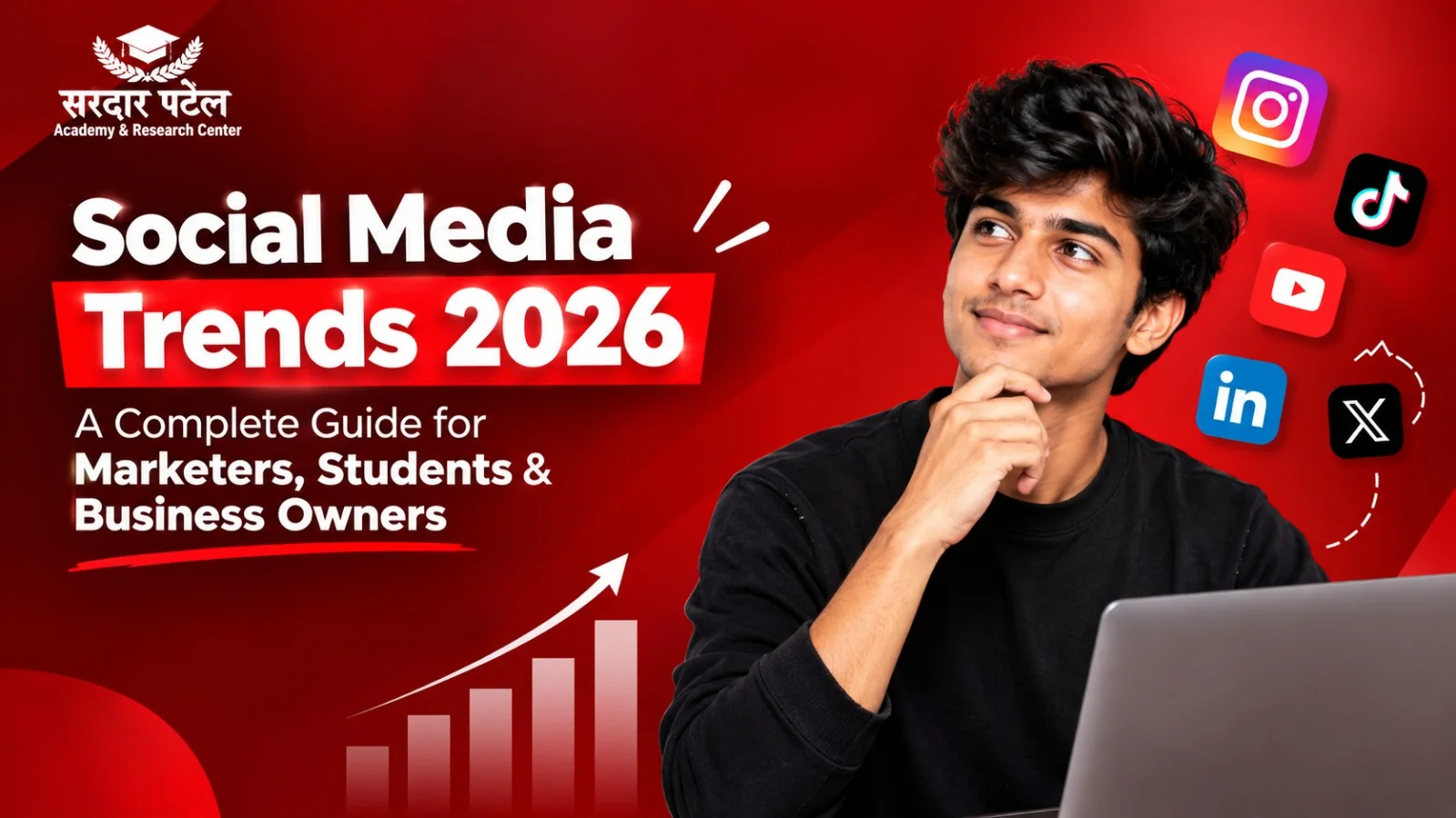
Table of Contents
- Why Social Media Trends 2026 Look So Different
- The Biggest Social Media Trends Marketers Are Watching in 2026
- 1. Social Search Is Becoming a Real Discovery Channel
- 2. Authenticity Is Beating Polish
- 3. Community Is Replacing Reach as the Real Growth Metric
- 4. Short-Form Video Keeps Evolving, Not Disappearing
- 5. Private and Semi-Private Spaces Are Growing
- 6. AI Tools Are Everywhere, But Human Editing Still Wins
- Platform-by-Platform Snapshot for 2026
- YouTube
- X (Twitter), WhatsApp, and Pinterest
- Social Media Trends 2026: Platform Comparison at a Glance
- Common Mistakes Brands Make With Their 2026 Social Media Strategy
- Practical Tips for Beginners, Students, and Business Owners
- Final Thoughts
If your social media approach still looks the way it did in 2023, you are already behind. Platforms have rebuilt how they rank content, audiences have grown tired of anything that feels manufactured, and the gap between a “social app” and a “search engine” has nearly closed. Understanding the social media trends 2026 has brought is no longer optional — it is the difference between content people actually see and content that gets scrolled past.
This guide looks at what is genuinely shaping feeds this year across every major platform, not just one or two. Whether you are a student experimenting with your first page, a working professional running a brand’s social accounts, or a business owner trying to get more out of a limited marketing budget, you will find practical guidance here that applies regardless of which app your audience prefers.
Why Social Media Trends 2026 Look So Different
A few years ago, “going viral” was the whole strategy. That is no longer the full picture. Platforms increasingly behave like discovery engines — people search directly inside Instagram, YouTube, and even LinkedIn the same way they would type a query into Google, especially for product recommendations, local services, courses, and reviews.
At the same time, audiences have become far better at spotting content that feels generated rather than made. An overly polished, obviously AI-written caption or a synthetic-looking video gets scrolled past more often than it gets saved. That does not mean AI tools are disappearing — most marketers now use them daily for planning, editing, and research — it simply means the finished post still has to feel human.In short, the social media trends 2026 has introduced are less about chasing one viral moment and more about building a consistent, trustworthy presence that holds up across platforms and over time. For beginners who want to understand the fundamentals behind this approach, this guide to social media marketing is a useful starting point.
The Biggest Social Media Trends Marketers Are Watching in 2026
1. Social Search Is Becoming a Real Discovery Channel
A large and growing share of users, particularly those under 35, now start their research on a social platform instead of a traditional search engine. Someone looking for “best digital marketing course near GTB Nagar” or “affordable cafes in Delhi NCR” is just as likely to type that phrase into Instagram or YouTube as into Google.
- Write captions the way people actually speak or search, not just as clever one-liners.
- Say your keyword out loud in videos — spoken audio is increasingly indexed by platforms.
- Add clear on-screen text, since a large share of viewers watch without sound.
2. Authenticity Is Beating Polish
Perfectly produced, ad-like content is losing ground to raw, real footage — a quick behind-the-scenes clip, an unscripted team update, or a customer describing their experience honestly. Viewers increasingly save and share content that feels like a genuine recommendation rather than a pitch, across every platform, not just one.
Practical Example
A short, slightly imperfect video of a faculty member explaining a course module will often outperform a highly produced studio advertisement for the same course.
3. Community Is Replacing Reach as the Real Growth Metric
Brands are shifting effort away from broadcasting to as many people as possible and toward building smaller, more engaged groups — think WhatsApp communities, LinkedIn groups, Instagram Broadcast Channels, or niche Facebook Groups. A smaller, responsive audience is proving more valuable than a large but passive following.
Common Mistake
Chasing follower count instead of engagement quality. A page with 5,000 followers who comment and share regularly is usually worth more than one with 50,000 who never interact.
4. Short-Form Video Keeps Evolving, Not Disappearing
Short videos are not going away, but the format is maturing. Alongside quick 15–30 second clips, “serialized” content — short video series that bring viewers back episode after episode — is gaining traction across Reels, Shorts, and even LinkedIn video.
- A weekly “student question, answered” series
- Behind-the-scenes episodes following a project or course batch
- Quick myth-busting clips on a topic your audience keeps asking about
These skills can also become useful across several digital marketing career paths. If you are exploring where social media and content skills can lead professionally, see these job roles after completing a digital marketing course.
5. Private and Semi-Private Spaces Are Growing
Public feeds are crowded, so brands are investing more in spaces that feel exclusive — newsletters, broadcast channels, and members-only groups. These spaces tend to build stronger loyalty because the audience opted in specifically to hear from you, rather than encountering you by algorithmic chance.
6. AI Tools Are Everywhere, But Human Editing Still Wins
Nearly every marketer now uses AI somewhere in the workflow — for ideation, scripting, captioning, or editing. The trend to watch is not adoption, which is already near universal, but the fact that unedited, fully AI-generated posts are increasingly easy to spot and tend to underperform content that has had a genuine human pass.
Platform-by-Platform Snapshot for 2026
Different platforms are rewarding slightly different behaviour this year. Here is a quick snapshot before the full comparison table.
Instagram
Reels remain the primary discovery format, reaching well beyond your existing followers. Longer-format Reels now leave room for tutorial-style content, and user-generated testimonials, reposted with credit, continue to build trust faster than brand-made posts.
Facebook
Facebook is often written off as “old,” but it still holds one of the largest active user bases globally and remains strong for local discovery. A large share of what users see now comes from pages they do not follow, recommended by the algorithm — so discoverability matters more than raw follower count.
For businesses that want to go beyond organic reach, learning how Meta Ads work can help turn Facebook and Instagram visibility into targeted campaigns.
LinkedIn
LinkedIn has become a genuine content platform, not just a resume repository. Native documents, short personal-experience posts, and short videos are all being rewarded, particularly for B2B marketing, recruitment, and thought-leadership content.
YouTube
YouTube continues to reward depth. Long-form tutorials and explainers still drive strong search visibility months after publishing, while Shorts serve as a discovery funnel into that longer content.
X (Twitter), WhatsApp, and Pinterest
X remains useful for real-time commentary, announcements, and customer service. WhatsApp broadcast lists and communities are increasingly used for direct, opted-in nurturing, while Pinterest continues to work well as a long-shelf-life discovery tool for product and course inspiration.
Social Media Trends 2026: Platform Comparison at a Glance
| Platform |
Best Content Format |
Core Strength in 2026 |
Best Suited For |
| Instagram |
Reels, carousels, Stories |
Trend discovery, visual storytelling |
Brand storytelling, UGC, creator collabs |
| Video, Groups, Live sessions |
Local reach, unconnected content recommendations |
Local business marketing, community building | |
| LinkedIn |
Text posts, native documents, short video |
Professional trust and thought leadership |
B2B marketing, recruitment, career content |
| YouTube |
Long-form video, Shorts |
Deep search visibility, evergreen reach |
Tutorials, explainers, in-depth brand content |
| X (Twitter) |
Text threads, real-time updates |
Real-time conversation and news commentary |
Announcements, customer service, industry commentary |
| WhatsApp / Pinterest |
Broadcast lists, saved boards |
Direct, opted-in reach and long shelf-life discovery |
Community nurturing, product inspiration |
Common Mistakes Brands Make With Their 2026 Social Media Strategy
- Posting everywhere, poorly — spreading thin across five platforms instead of doing two or three well.
- Ignoring comments and DMs — engagement signals now influence reach more than raw posting frequency.
- Over-relying on AI-generated captions and visuals without a human editing pass, which audiences increasingly notice.
- Treating every trend as mandatory — not every audio or format trend fits every brand, and forcing it can feel inauthentic.
- Measuring only likes instead of saves, shares, and genuine conversation, which are stronger indicators of real interest.
Practical Tips for Beginners, Students, and Business Owners
If you are just starting out or trying to sharpen an existing strategy, keep it simple:
- Pick two or three platforms that match where your actual audience spends time, rather than trying to be everywhere.
- Batch-plan a week of raw, low-production content instead of chasing one perfect post.
- Reply to comments within the first hour of posting — early engagement often boosts reach.
- Track saves and shares weekly, not just follower growth.
If you are a student or early-career professional, practising these trends hands-on — running a real page, testing formats, analysing what performs — teaches far more than theory alone. Structured learning environments, like a digital marketing course in Delhi, can help connect these platform-level trends to a broader strategic skill set, from analytics to campaign planning.
For those exploring certifications specifically, it is also worth understanding how digital marketing certification courses in Delhi are structured, since platform trends change fast but foundational skills — content strategy, analytics, audience research — stay relevant no matter which app is trending this year.
Final Thoughts
The social media trends 2026 has brought are not about abandoning what already worked — they are about refining it across every platform your audience actually uses. Search-style discovery, authentic content, tighter communities, and smarter use of short-form video are all pointing toward the same idea: platforms are rewarding brands that feel genuinely useful and human, not just visible.
Whether you are a student building your first portfolio, a working professional managing a brand’s social presence, or a business owner trying to get more from a limited budget, staying current with these shifts matters more than chasing every single trend that appears.
If you would like to build a stronger, more current understanding of digital marketing beyond social media trends, explore the digital marketing course at Sardar Patel Academy & Research Centre (SPARC), GTB Nagar, Delhi, or get in touch with our team at +91 93129-66129 (sparc.org.in) to ask where to start.
FAQs
The most significant shifts include platforms functioning as search engines, a strong preference for authentic, less-polished content, growth in private community spaces, evolving short-form video formats, and a continued move toward engagement quality over raw follower count across every major platform.
It depends on your audience. Instagram and YouTube suit visually driven brands, LinkedIn works well for B2B and recruitment, and Facebook remains strong for local businesses and community Groups. Most brands see the best results from doing two or three platforms well rather than spreading across all of them.
No. Posting frequency matters less than consistency and engagement quality. Three to five well-planned posts a week, combined with active reply and comment management, usually outperform daily, low-effort posting on most platforms.
AI tools remain useful for planning, research, and editing, but fully AI-generated content without a human touch tends to underperform, since audiences are increasingly cautious about anything that feels synthetic or templated.
Understanding platform algorithms, short-form video editing, basic analytics, community management, and cross-platform content strategy are all high-value skills, especially for students considering a career in digital marketing.
Focus on hyper-local content — local landmarks, local language cues, and customer stories from the area — and prioritise the one or two platforms, such as Facebook Groups or Instagram Reels, that best suit local audience discovery in your specific market.
Yes. It remains one of the most effective formats for reach across nearly every platform, but the trend within the trend is serialized, episodic short content that keeps viewers coming back, rather than one-off clips with no follow-through.
LinkedIn rewards professional, experience-based content and works best for B2B marketing, recruitment, and thought leadership, while Instagram and Facebook lean more toward visual storytelling, community building, and local discovery for a broader consumer audience.
No. Trying to maintain a strong presence everywhere usually spreads effort too thin. It is generally more effective to identify where your specific audience is most active and invest consistent effort in two or three platforms rather than a token presence on all of them.
The clearest shift is away from chasing one viral moment and toward building a consistent, trustworthy, and searchable presence — content that feels genuinely useful and human, rewarded by algorithms that increasingly behave like discovery and search engines.