+91 9312966129
 sparc.enquiry01@gmail.com


Is Data Analytics a Good Career in 2026?
Explore the future of Data Analytics, required skills, salary trends, job roles, and career growth opportunities. Understand whether Data Analytics is the right career choice for beginners in 2026.
Table of Contents
- Still Wondering Which Career Is Future-Proof?
- What Is Data Analytics?
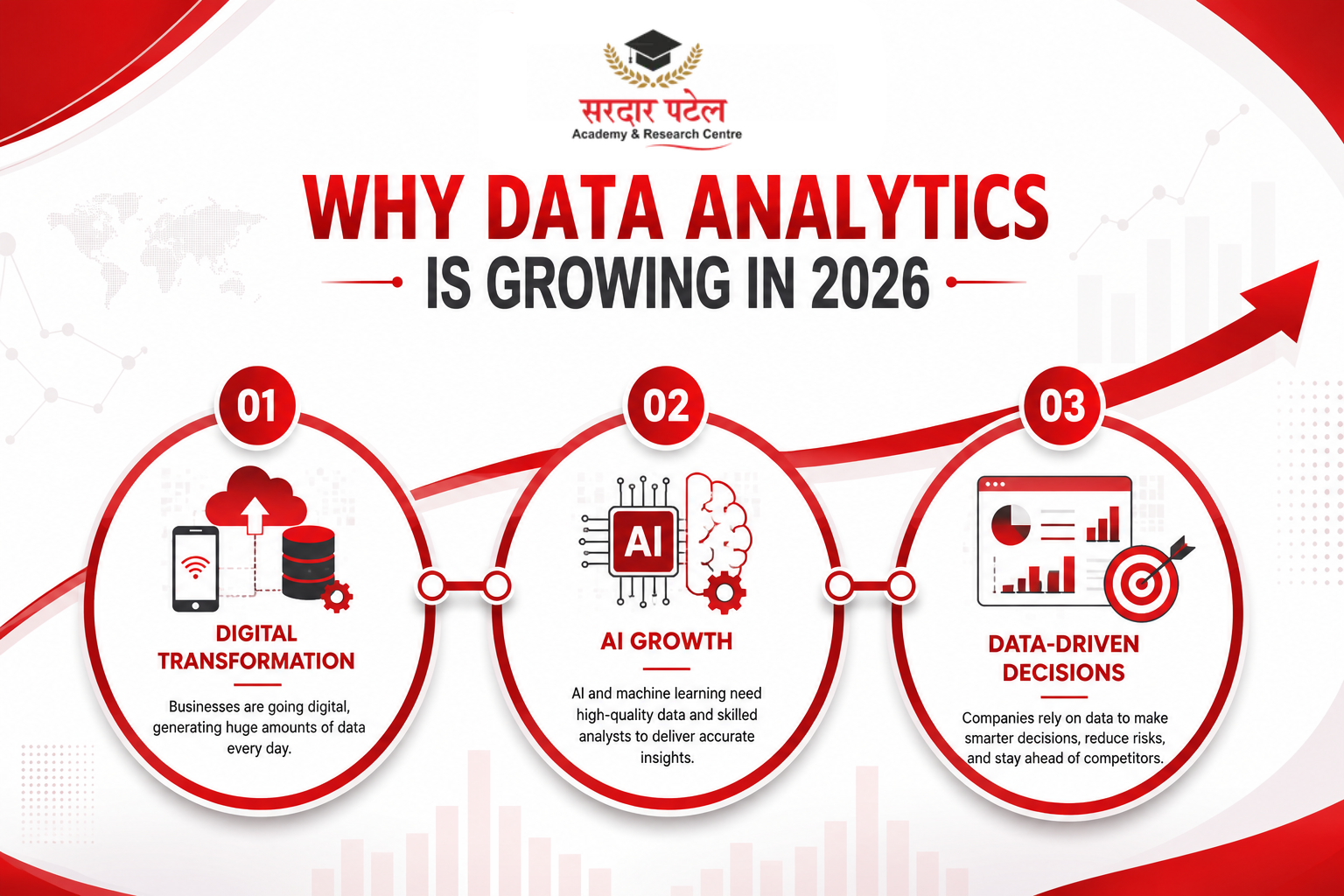
- Why Is Data Analytics Growing So Fast in 2026?
- 1. Digital Transformation
- 2. AI Is Creating More Demand, Not Less
- 3. Data-Driven Decision Making
- What Does a Data Analyst Actually Do?
- Essential Skills for a Data Analytics Career
- Technical Skills
- Soft Skills
- Salary Expectations for Data Analysts in 2026 (India)
- The Future of Analytics Jobs in India
- Is AI Replacing Data Analysts?
- What AI Can Automate:
- What AI Cannot Replace:
- Data Analytics vs Data Science: Which Is Better in 2026?
- Top Data Analytics Certifications in 2026
- How to Start Your Data Analytics Career — Step-by-Step Roadmap
- Who Should Consider Data Analytics?
- Career Growth Path in Data Analytics
- Final Verdict: Is Data Analytics a Good Career in 2026?
Still Wondering Which Career Is Future-Proof?
Got a degree but still struggling to land a job?
Or are you asking yourself — in the age of AI, which skill will actually keep you employable?
In 2026, Data Analytics has become one of the most in-demand skills across almost every industry — from IT and healthcare to finance, e-commerce, and government.
Every online purchase, social media interaction, Google search, or food delivery order generates data. Companies collect this information to improve their products and services. But raw data alone has no value unless someone can interpret it and turn it into meaningful insights.
This is exactly where data analysts come in.
As industries continue to embrace digital transformation, many students and professionals are asking one important question: Is data analytics a good career in 2026?
The answer is encouraging, but understanding the opportunities, required skills, salary expectations, and future demand will help you make an informed decision. Let's break it all down.
What Is Data Analytics?
Data analytics is the process of collecting, organising, analysing, and interpreting data to support smarter business decisions.
Think of a data analyst like a business detective — instead of solving crimes, they solve business problems using numbers and patterns. For example:
- Why are sales declining in a particular region?
- Which products are performing best — and why?
- What do customers actually want?
- Where can operational costs be reduced?
Why Is Data Analytics Growing So Fast in 2026?
1. Digital Transformation
Every sector — e-commerce, healthcare, education, manufacturing — is generating massive volumes of data every day. Companies need skilled analysts who can make sense of it all.
2. AI Is Creating More Demand, Not Less
AI models depend on quality, well-organised data to function. Analysts clean and structure that data — so the rise of AI has actually increased demand for analysts, not reduced it.
3. Data-Driven Decision Making
Today, companies rely on data — not gut instinct — to make major decisions. This has made analytics skills essential across almost every industry.
What Does a Data Analyst Actually Do?
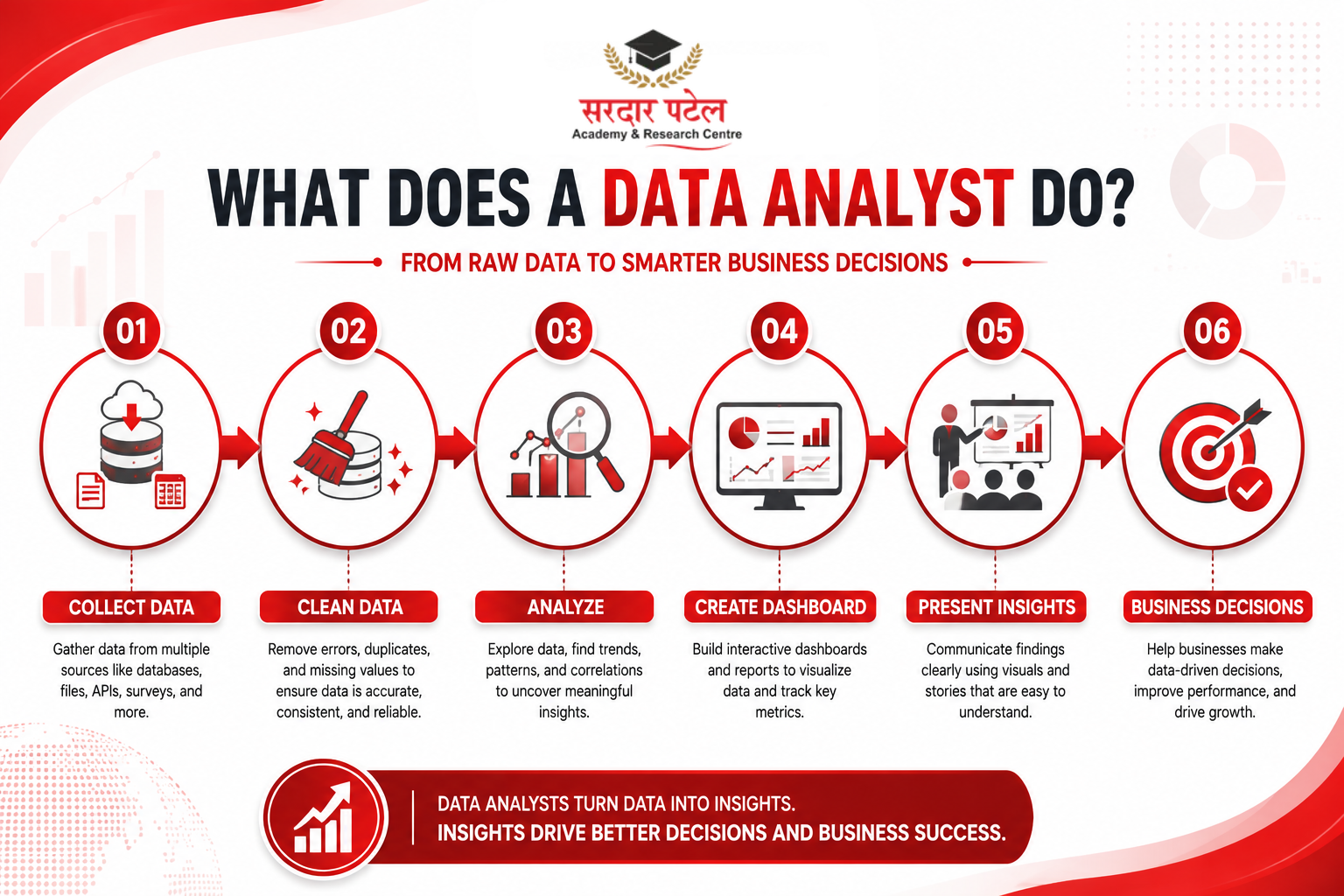
A typical day might include:
- Gathering data from multiple sources
- Cleaning inaccurate or incomplete data
- Analysing trends and patterns in business performance
- Building interactive dashboards and reports
- Presenting findings to management in simple, actionable language
- Recommending specific improvements based on data insights
Essential Skills for a Data Analytics Career
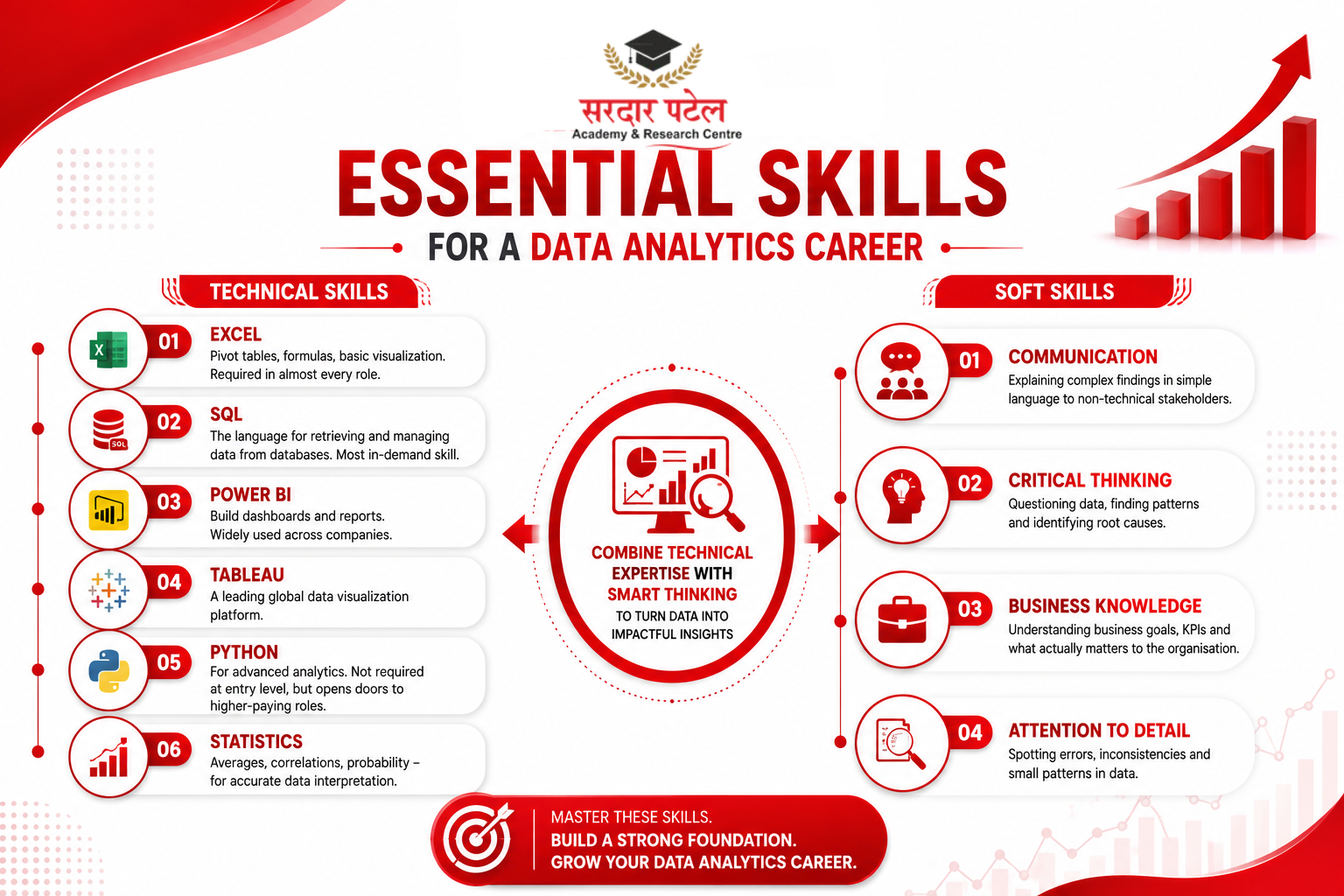
Technical Skills
- Excel — Pivot tables, formulas, basic visualisation. Required in almost every role.
- SQL — The language for retrieving and managing data from databases. Most in-demand skill.
- Power BI — Build dashboards and reports. Widely used across Indian companies and MNCs.
- Tableau — A leading global data visualisation platform.
- Python — For advanced analytics. Not required at the entry level, but opens doors to higher-paying roles.
- Statistics — Averages, correlations, probability — for accurate data interpretation.
👉Skills Required to Become Data Analyst
Soft Skills
- Critical thinking — Questioning data and finding root causes
- Communication — Explaining complex findings in simple language to non-technical stakeholders
- Business understanding — Knowing what actually matters to the organisation
- Attention to detail — Spotting errors and inconsistencies in data
Real Student Experience: At SPARC, many students from non-technical backgrounds — commerce, arts, and business — have successfully transitioned into data analytics careers. After learning practical tools like SQL, Power BI, and Python, they built real projects and secured placements in companies.
| Want to become job-ready in Data Analytics within 6 months? ➡ Explore SPARC's Data Analytics Program — Live Projects + Internship Support ➡ Talk to a Career Counsellor Today👉 Best Data Analytics Course in Delhi with Placement |
Salary Expectations for Data Analysts in 2026 (India)
Source: Naukri.com / AmbitionBox, Q1 2026. Professionals in fintech and e-commerce typically earn at the higher end of these ranges.
👉 Also Read: Data Analyst Salary in Delhi for Freshers
The Future of Analytics Jobs in India
India is one of the world's fastest-growing analytics markets. Key growth drivers include:
- Growing Startup Ecosystem — Cities like Bengaluru, Hyderabad, Pune, and Delhi NCR host thousands of startups actively hiring analytics talent at every level.
- E-Commerce Expansion — Platforms like Flipkart, Meesho, and Nykaa rely on data for recommendations, pricing, and customer retention.
- Fintech Revolution — Fraud detection, credit risk modelling, and customer experience improvement all depend on data analysts.
- Healthcare Digitisation — Improving patient outcomes, reducing costs, and predicting disease patterns through analytics.
- Government Digital Initiatives — Digital India and Smart Cities are generating enormous datasets that require skilled professionals to interpret.
According to NASSCOM and IDC projections, India's analytics market is expected to grow significantly through 2027, creating hundreds of thousands of new jobs across sectors.
👉 Read More: Future of Data Analytics Jobs in India
Is AI Replacing Data Analysts?
This is one of the most common questions — and it deserves an honest answer.
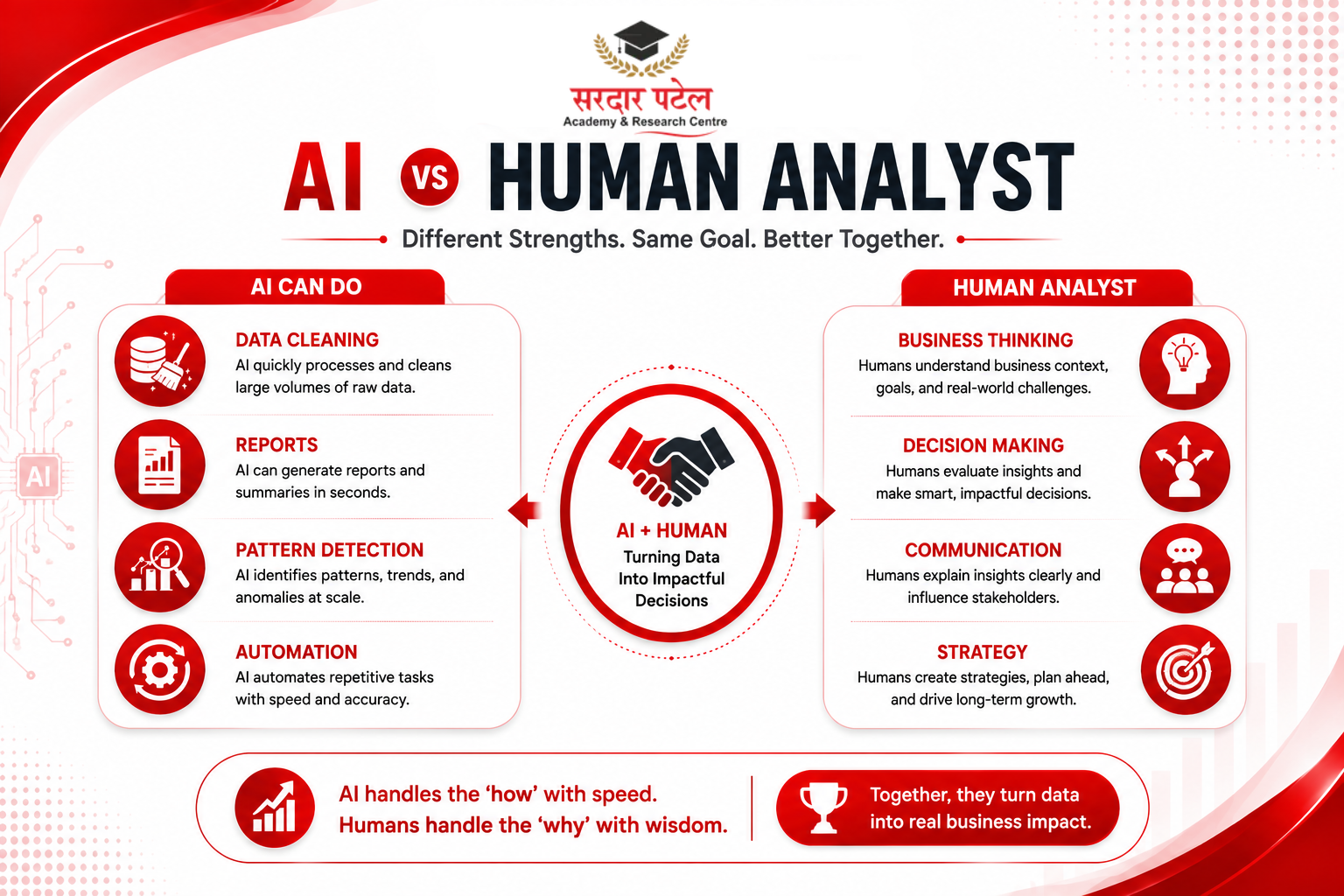
What AI Can Automate:
- Basic data cleaning and preprocessing
- Generating standard reports and summaries
- Simple pattern recognition in structured datasets
What AI Cannot Replace:
- Understanding business context and organisational goals
- Asking the right questions in the first place
- Communicating findings persuasively to non-technical stakeholders
- Making judgment calls when data is incomplete or ambiguous
Bottom line: AI is not replacing data analysts — it is changing what they spend their time on. Analysts who learn to work effectively with AI tools will have a significant competitive advantage.
Data Analytics vs Data Science: Which Is Better in 2026?
Recommendation: If you are just starting, Data Analytics is the smarter entry point. Shorter learning curve, faster time to employment, and strong salary growth. Many data scientists actually started their careers as data analysts.
Top Data Analytics Certifications in 2026
- Google Data Analytics Professional Certificate — Available on Coursera. Most beginner-friendly. Covers SQL, Tableau, and R.
- Microsoft Power BI Data Analyst Associate (PL-300) — Highly recommended for Indian corporate analytics roles.
- Tableau Desktop Specialist — High demand across global companies and consulting firms.
- IBM Data Analyst Professional Certificate — Covers Excel, SQL, Python, and data visualisation. Strong brand recognition.
- Microsoft Azure Data Fundamentals (DP-900) — Foundational cloud data knowledge, increasingly valuable as companies move to the cloud.
Tip: You do not need all five. Start with the Google Data Analytics Certificate, then add Power BI or Tableau — that combination covers what most Indian employers actually look for.
How to Start Your Data Analytics Career — Step-by-Step Roadmap
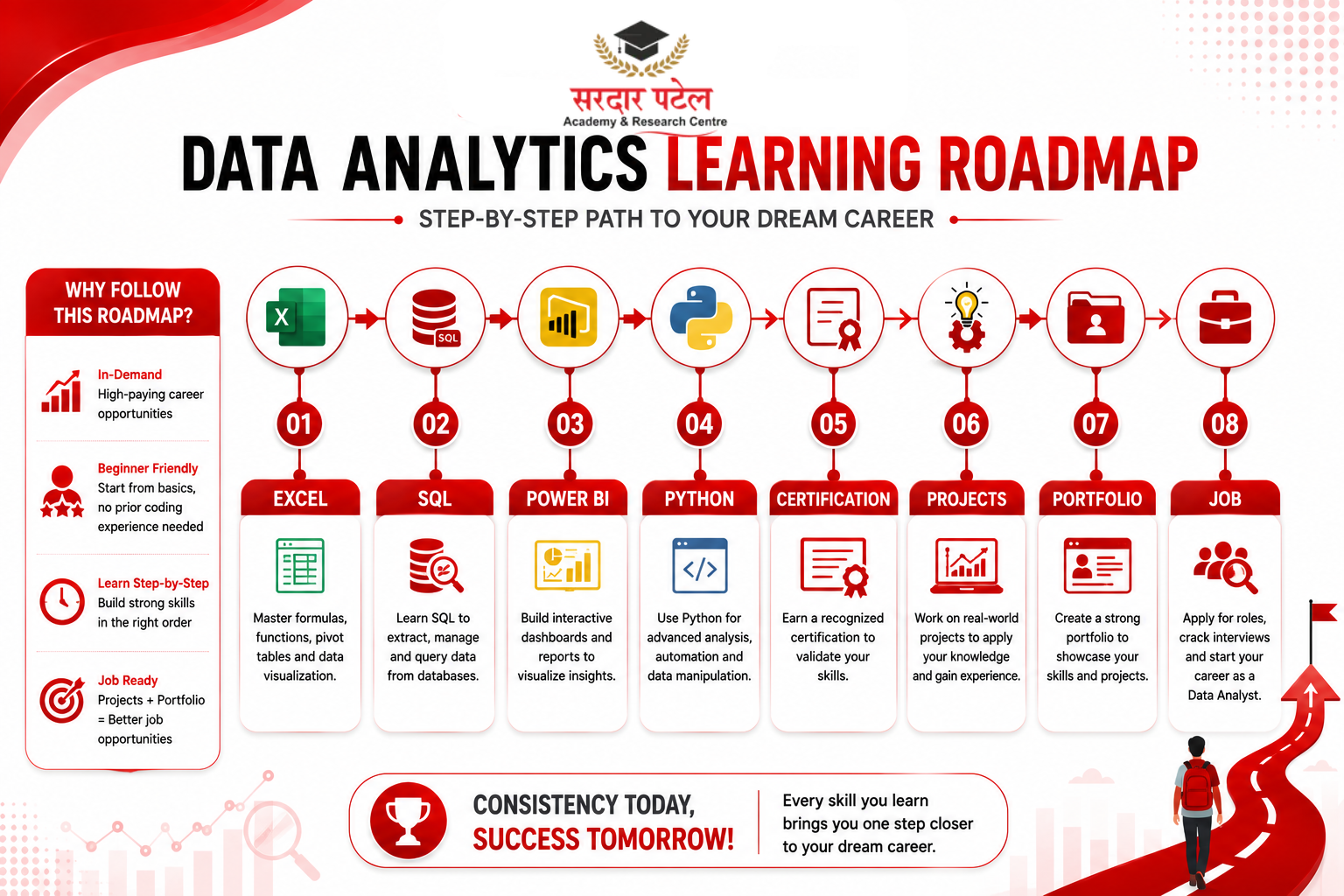
- Step 1: Learn Excel thoroughly — Pivot tables, VLOOKUP, conditional formatting, charting.
- Step 2: Master SQL — Queries, filters, joins, and aggregations.
- Step 3: Learn Power BI or Tableau — Pick one tool and go deep.
- Step 4: Learn Python basics — Pandas for data manipulation, Matplotlib for visualisation.
- Step 5: Earn a recognised certification — The Google Data Analytics Certificate is the best starting point.
- Step 6: Build real projects — Use Kaggle, Google Dataset Search, or government open data portals.
- Step 7: Create a portfolio — Document your projects on GitHub or a personal blog.
- Step 8: Apply for internships or entry-level roles — Real experience accelerates learning faster than any course.
Who Should Consider Data Analytics?
This career may be ideal for you if:
- You enjoy solving complex problems and finding root causes
- You like working with numbers, patterns, and logical thinking
- You are curious about how businesses make decisions
- You want a career with strong long-term growth prospects
- You are willing to keep learning as technology evolves
Important: Students from commerce, arts, business, and social sciences regularly and successfully transition into data analytics. A programming background is not required — analytical thinking and a willingness to learn are enough to get started.
Career Growth Path in Data Analytics
There is a clear, well-defined progression in this field:
- Junior Data Analyst
- Data Analyst
- Senior Data Analyst
- Business Analyst / Analytics Specialist
- Analytics Consultant
- Data Scientist
- Analytics Manager / Head of Analytics
Each level brings higher responsibility, broader scope, and significantly better compensation. Many experienced analysts also move into product management, business intelligence architecture, or data engineering.
👉 Top Job Roles After Data Analytics Course
Final Verdict: Is Data Analytics a Good Career in 2026?
After examining industry trends, salary expectations, and the real impact of AI — the answer is clear.
Data Analytics in 2026 remains one of the most promising and stable career options for both students and working professionals.
- Growing reliance on data across every industry
- AI increases demand for analysts rather than eliminating them
- Genuine shortage of skilled professionals in the market
- Clear long-term career progression with strong salary growth
Every month you delay is a month someone else is building the portfolio, earning the certifications, and gaining the experience that gets you shortlisted ahead of you. The demand is real. The tools are available. The only variable is when you decide to start.
| Stop just collecting degrees. Start building real-world analytical skills that companies actually hire for. ➡ Explore SPARC's Data Analytics Course ➡ View Digital Marketing Course (Analytics + Marketing combined) ➡ Read Student Success Stories ➡ Book a Free Career Counselling Session |
FAQs
Yes. Demand continues to rise due to growing digital transformation, AI adoption, and data-driven decision making across every sector.
Not always. Entry-level roles often require only SQL and Excel. Learning Python significantly expands your opportunities over time, but it is not mandatory to start.
Yes. With practical tools, recognised certifications, and a real project portfolio, freshers can successfully enter the field. Demonstrated skills matter more than academic credentials in most hiring decisions.
For beginners, analytics is more accessible — lower entry barriers, faster employment, and strong salary growth. Data science offers a higher ceiling but requires more technical depth and a longer learning period.
No. AI automates repetitive tasks, but it cannot replace human judgment, business understanding, or strategic communication. Analysts who learn to use AI tools effectively will have a clear competitive advantage.
Yes. Many successful data analysts come from commerce, arts, and business backgrounds. Learning tools like Excel, SQL, and Power BI can help you enter the field even without a computer science degree.
Beginners should start with Excel, SQL, and Power BI. These tools are widely used in the industry and are enough to qualify for many entry-level data analytics roles.
The learning timeline depends on your dedication and prior knowledge. Most beginners can build job-ready skills in 4–8 months with consistent practice and project work.
Data Analysts are hired in sectors such as IT, healthcare, banking, finance, e-commerce, education, logistics, telecommunications, and government organisations.