+91 9312966129
 sparc.enquiry01@gmail.com


Top Freelance Platforms for Data Analysts
Compare the best freelance platforms for data analysts — fees, pros, cons, and tips to land your first online analytics freelance work in 2026.

Table of Contents
- What Makes a Freelance Platform Good for Data Analysts
- Top Freelance Platforms for Data Analysts, Compared
- 1. Upwork
- 2. Freelancer.com
- 3. Fiverr
- 4. Toptal
- 5. PeoplePerHour
- 6. Truelancer
- Platform Comparison at a Glance
- Choosing the Right Platform for Your Stage
- Common Mistakes When Starting on Freelance Platforms
- Tips for Getting Your First Project
- Final Thoughts
If you've been building your Excel, SQL, or Power BI skills and are wondering where to actually find paid work, you've probably typed some version of "best freelance platforms for data analysts" into Google more than once.
This guide walks through the freelance platforms for data analysts genuinely worth your time in 2026 — what each one costs, who it suits, and how to get your first project on each. Whether you're a student in Delhi NCR picking up your first freelance gig or a working professional looking for online analytics freelance work on the side, this should give you a clearer starting point than a generic "top 10" list.
What Makes a Freelance Platform Good for Data Analysts
Not every freelance marketplace is built the same way, and data analytics work has some specific needs.
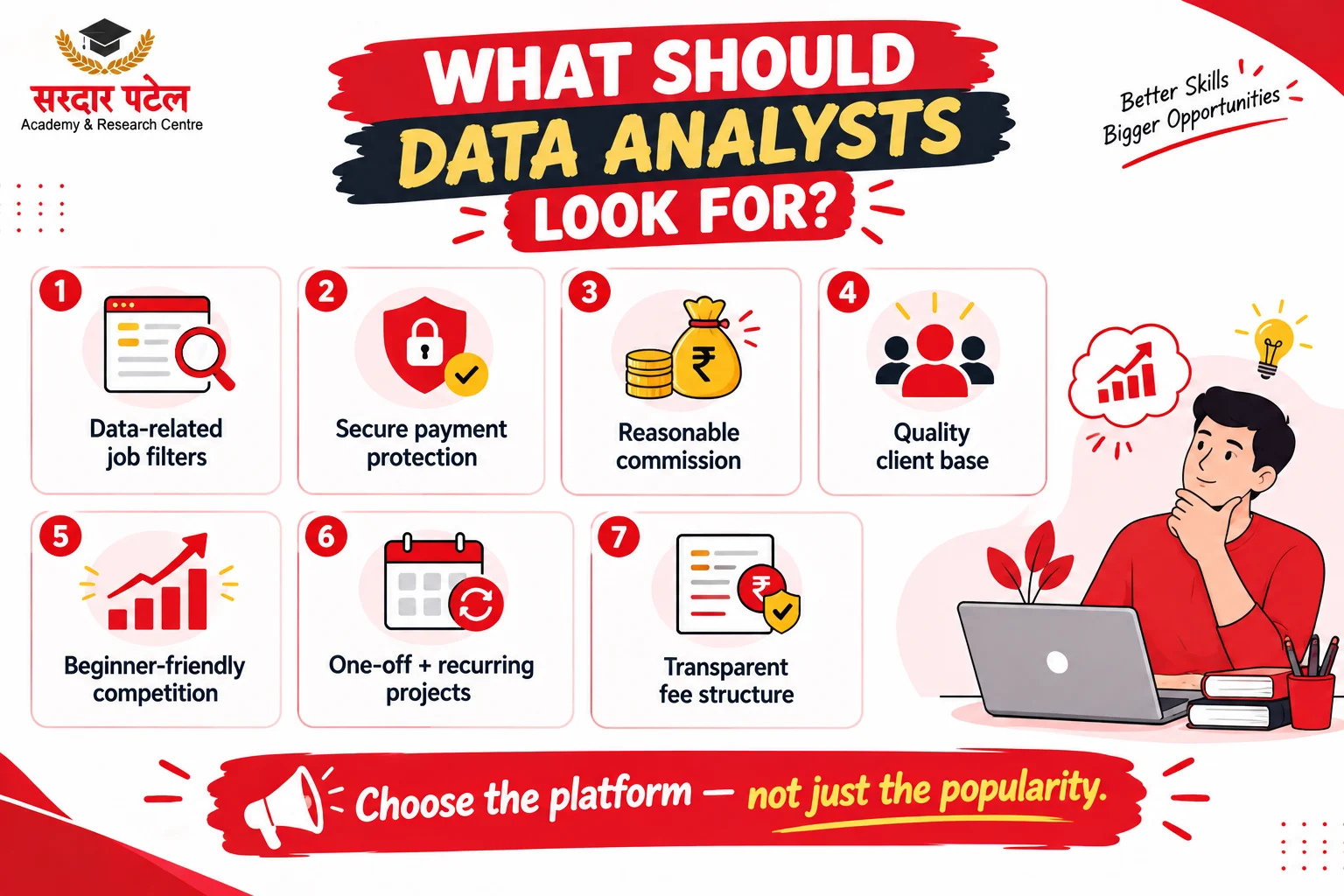
A platform that works well for analytics freelancers usually offers: a way to filter for data-related skills specifically, secure payment protection, a reasonable commission structure, and a client base that actually understands what a data analyst does.
Before picking one, it helps to weigh three things: how much competition you'll face for beginner-level work, how transparent the fee structure is, and whether the platform suits one-off projects, ongoing retainers, or both. If you're still deciding which tools to lead with on your profile, SPARC's Advanced Excel course page is worth a look before you start applying anywhere — Excel is usually the first skill clients check for.
Top Freelance Platforms for Data Analysts, Compared
1. Upwork
Upwork is probably the platform most people picture when they think of freelance work, and it's a solid starting point for data analysts because of how much analytics work gets posted there — from one-off dashboard builds to ongoing reporting retainers.
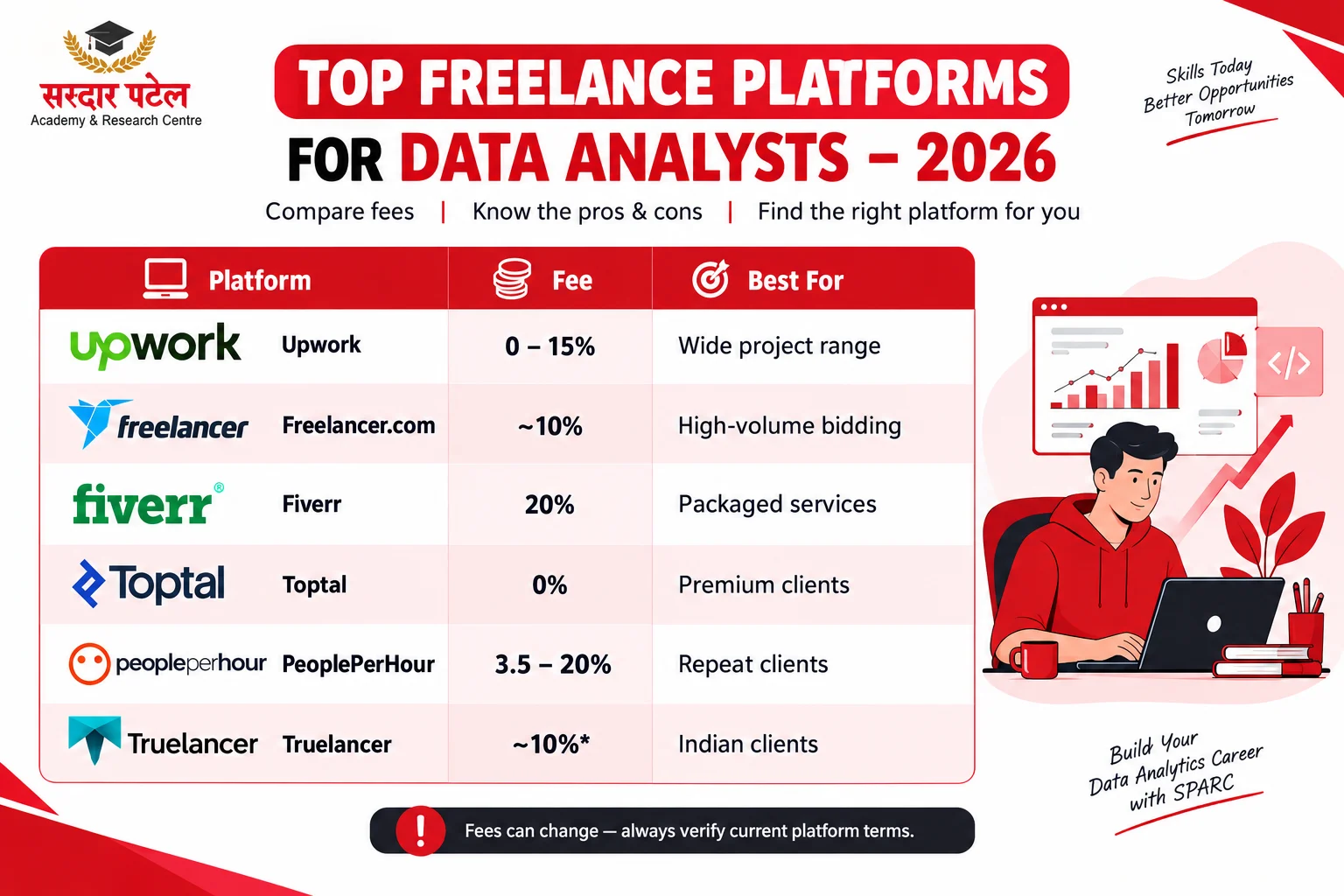
Upwork moved to a variable service fee in 2025, generally ranging from 0% to 15% depending on the client relationship and contract type, rather than the older flat percentage model. (See Upwork's own freelancer service fees article for the current breakdown.)
Good for: Beginners and experienced freelancers alike, since project sizes range widely.
Watch out for: High competition on entry-level listings, so a sharp, specific profile matters.
2. Freelancer.com
Freelancer.com is one of the largest general freelance marketplaces, covering data analytics, data entry, and reporting work. It runs on a bidding system, where freelancers submit proposals against a client's posted budget, and charges a standard 10% service fee with milestone-based escrow protection.
Good for: Freelancers who want a large volume of listings to bid on.
Watch out for: Bidding wars can push prices down quickly, so be selective rather than bidding on everything.
3. Fiverr
Fiverr works differently from Upwork or Freelancer.com. Instead of bidding on client-posted jobs, you create "Gigs" — pre-packaged service listings like "I will clean and analyse your Excel sales data" — and clients purchase directly. Fiverr's commission is a flat 20%, the highest among the major marketplaces, worth factoring into your pricing. (Confirm current terms on Fiverr's official Help Centre.)
Good for: Analysts who want to package specific, repeatable services rather than bidding project by project.
Watch out for: The flat 20% fee means you need to price gigs with that cut already built in.
4. Toptal
Toptal sits at the opposite end of the spectrum. It positions itself as a network for top-tier freelance talent, with a multi-stage vetting process that includes skills assessments and live evaluations — only a small percentage of applicants get accepted.
Freelancers pay no commission at all here — Toptal earns through a markup charged to clients — and accepted analysts typically work with well-funded clients at premium hourly rates. (See Toptal's own "How it works" page for details on its model.)
Good for: Experienced analysts with a strong portfolio ready for a rigorous application in exchange for higher-paying clients.
Watch out for: Not realistic as a first platform for complete beginners.
5. PeoplePerHour
PeoplePerHour is a UK-based marketplace particularly strong for freelancers targeting European clients, supporting both hourly and fixed-price projects. Analytics-related listings show up under its "Tech & Programming" and "Admin & Data Entry" categories.
Fees are tiered, roughly 3.5% to 20% depending on how much you've billed a particular client over time — more repeat work with one client means a lower fee on that relationship.
Good for: Freelancers building a small number of longer-term client relationships.
Watch out for: The tiered structure takes some getting used to, since it changes per client.
6. Truelancer
Truelancer is a Delhi-based freelance marketplace built specifically for Indian freelancers and clients, covering IT, data entry, content, and analytics-adjacent work. For someone freelancing from Delhi NCR, it's worth having on your radar alongside the bigger international platforms, mainly for its local client focus and rupee-based payments. As with most marketplaces, read current user reviews before committing to a paid membership tier, since support and payment experiences can vary.
Good for: Freelancers who want to prioritise Indian clients and simpler local payment processing.
Watch out for: A smaller client base than global platforms, so it works best alongside one or two others rather than alone.
Platform Comparison at a Glance
| Platform |
Typical Fee |
Best For |
Vetting Level |
| Upwork |
0–15% (variable) |
Wide range of project sizes |
Self-declared profile |
| Freelancer.com |
~10% |
High volume of bidding opportunities |
Self-declared profile |
| Fiverr |
20% (flat) |
Packaged, repeatable services |
Self-declared profile |
| Toptal |
0% to freelancer |
Premium clients, experienced analysts |
Rigorous (top ~3%) |
| PeoplePerHour |
3.5–20% (tiered) |
Repeat clients, especially in Europe |
Self-declared profile |
| Truelancer |
~10%* |
Indian clients, local payments |
Self-declared profile |
*Truelancer's commission is based on user-reported figures rather than a clearly published rate card at the time of writing — confirm the exact current percentage on the platform before committing. Fee structures across all these platforms change periodically, so always verify directly on each platform's official pricing page before starting a project.
Choosing the Right Platform for Your Stage
If you're just starting, Upwork or Freelancer.com tend to be the most realistic entry points, given the volume of beginner-friendly listings. Fiverr is worth trying once you have a specific, well-defined service you can package and repeat.
If you've already completed a handful of paid or portfolio projects, Toptal's vetting process becomes worth attempting. If your priority is local, India-based clients, Truelancer alongside direct outreach can work better than the bigger global platforms alone.
It's also worth reading about how non-technical backgrounds fit into analytics careers — our piece on data analytics careers without coding covers how a non-technical background can still lead to solid analytics work, freelance or otherwise. And if you're weighing whether to build your foundation first, our data analytics jobs for commerce students page lays out what a structured program covers before you start pitching clients.
Common Mistakes When Starting on Freelance Platforms
A few patterns show up again and again among beginners on these platforms:
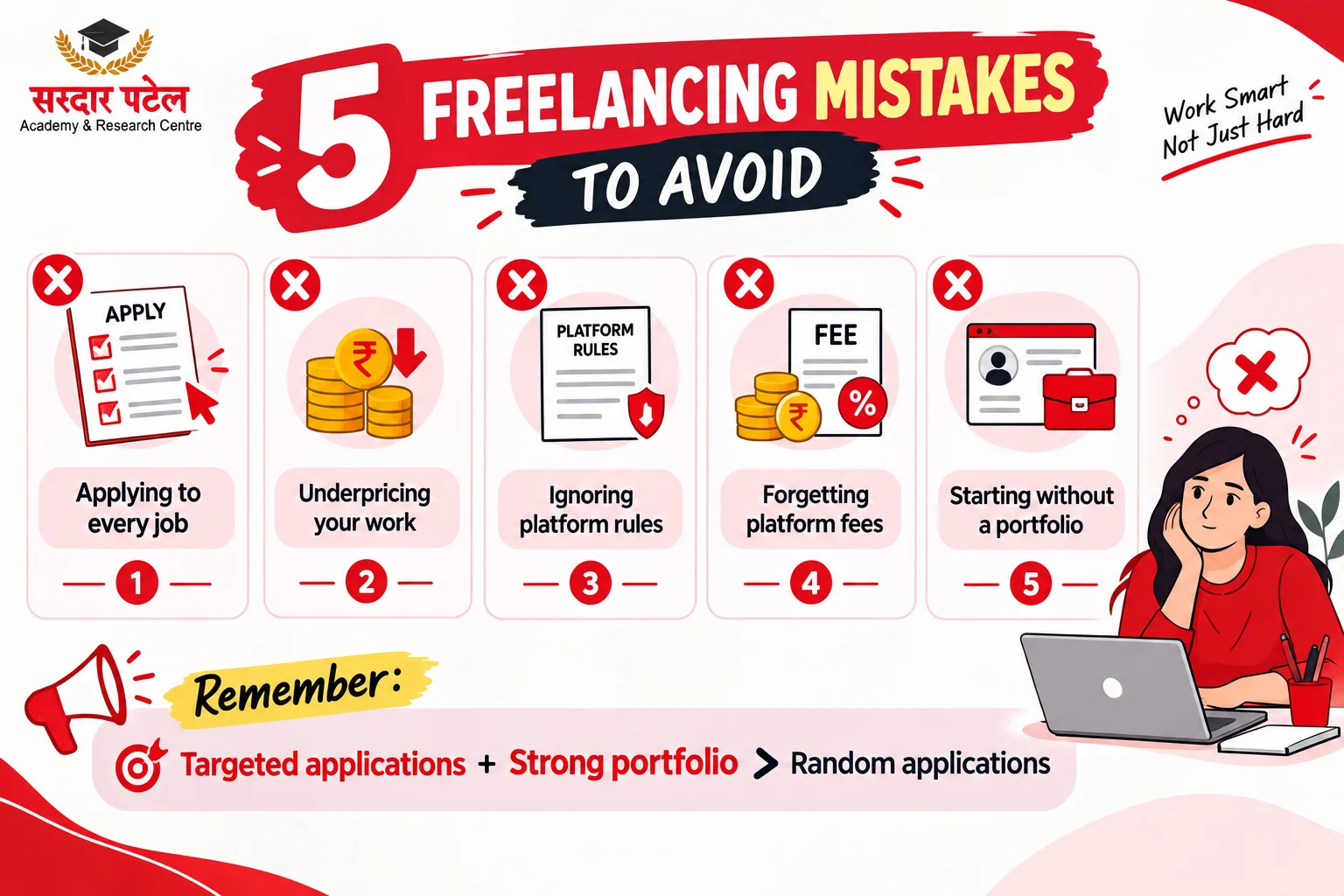
- Applying to every listing instead of targeted ones. A generic proposal sent to 30 jobs performs worse than five well-written, specific ones.
- Underpricing to win the first project. Pricing too low early makes it harder to raise your rate with the same client later.
- Ignoring the platform's own norms. Each platform has its own expectations around response times and proposal length — worth reading before diving in.
- Not reading fee structures carefully. A 20% commission versus a 10% one changes your effective hourly rate significantly, so factor it into pricing.
- Skipping a proper portfolio. Two or three well-documented sample projects matter more than a long list of claimed skills.
Tips for Getting Your First Project
- Pick two platforms to start with, not five — a strong profile on two beats a weak one on five.
- Write a proposal that references the client's actual problem, not a copy-pasted template.
- Price your first project fairly, factoring in the platform fee, so you're not disappointed by your actual take-home.
- Ask for a short testimonial after every completed project, even a small one.
- Keep your profile updated with your most recent and most relevant work.
Final Thoughts
There isn't a single "best" freelance platform for data analysts — the right one depends on your experience level, the kind of clients you want, and how much competition you're willing to work through early on. Starting with one broad platform and one more specific option, rather than spreading yourself thin across five at once, tends to get better results faster.
If you're still building the core skills — Excel, SQL, Power BI, or basic statistics — before you start pitching clients, it's worth strengthening that foundation first. You can read what past learners have shared in our parents' feedback on data analytics training ( or hear directly from faculty in this interview with our analytics faculty for a sense of what structured training actually looks like. Or get a sense of where the analytics job market is headed and why AI + analytics professionals are in demand.
Ready to start your freelancing journey with stronger analytics fundamentals? Explore SPARC's Data Analytics Course with AI — practical, project-based training built for this kind of transition, from learning the tools to freelancing with them.
FAQs
Upwork and Freelancer.com tend to be the most realistic starting points because of the volume of entry-level listings, though both require a specific, well-targeted profile to stand out.
No. Many freelancers use two platforms at a time — one broader marketplace and one that suits a specific niche or client base, like Truelancer for Indian clients.
Generally no — most platforms set a fixed or tiered commission structure that applies to all freelancers. What you can control is how you price your work to account for that fee.
Not usually. Toptal's vetting process is built for experienced freelancers with a strong track record, so it makes more sense once you already have a solid portfolio.
This varies too widely by project complexity, client type, and experience level to state a single reliable figure. It's worth researching current listings and rates directly on the platform you're considering.
Yes, many people take on online analytics freelance work as students or working professionals in their spare time, though it's worth checking your college or employer's policies on outside work first.
Yes, though it's worth combining a global platform like Upwork with a locally focused one like Truelancer if you want a mix of international and Indian clients.