+91 9312966129
 sparc.enquiry01@gmail.com


Why Live Projects Matter in Data Analytics Training
Why live projects in data analytics course training matter, plus how practical analytics training in Delhi builds job-ready skills and stronger portfolios.
Table of Contents
- What Are Live Projects in Data Analytics Training?
- Why Theory Alone Isn't Enough
- Key Benefits of Live Projects
- Real-World Problem Solving
- A Portfolio That Actually Demonstrates Skill
- Confidence With the Full Toolset
- Stronger Interview Performance
- Exposure to Real, Messy Data
- Skills You Build Through Live Projects
- Live Projects vs Classroom Theory
- Types of Live Projects in a Data Analytics Course
- How Live Projects Improve Placement Outcomes
- What to Look for in a Course's Live Project Component
- Why SPARC Emphasises Live Projects
- Conclusion
Anyone can learn what a pivot table does or memorise the syntax for a SQL join. Data Analytics Basics for Beginners: Far fewer people can sit down with a messy, real-world dataset and turn it into something a business can actually use. That gap is exactly what live projects in data analytics course training are built to close.
Employers today aren't just screening for who knows the tools — they're screening for who can apply them under real conditions: incomplete data, unclear requirements, tight deadlines, and stakeholders who want answers in plain language, not jargon. That's a different skill from passing a quiz, and it's one that only gets built through practice on real, messy, project-style work.
This is why practical analytics training in Delhi increasingly centres on live projects rather than lecture-only formats. This article looks at what live projects actually involve, why they matter more than theory alone, and what to look for when evaluating a course on this basis
What Are Live Projects in Data Analytics Training?
A live project is a hands-on assignment modelled on a real business scenario — not a textbook exercise with a single correct answer, but an open-ended problem that mirrors what an analyst would actually face on the job.
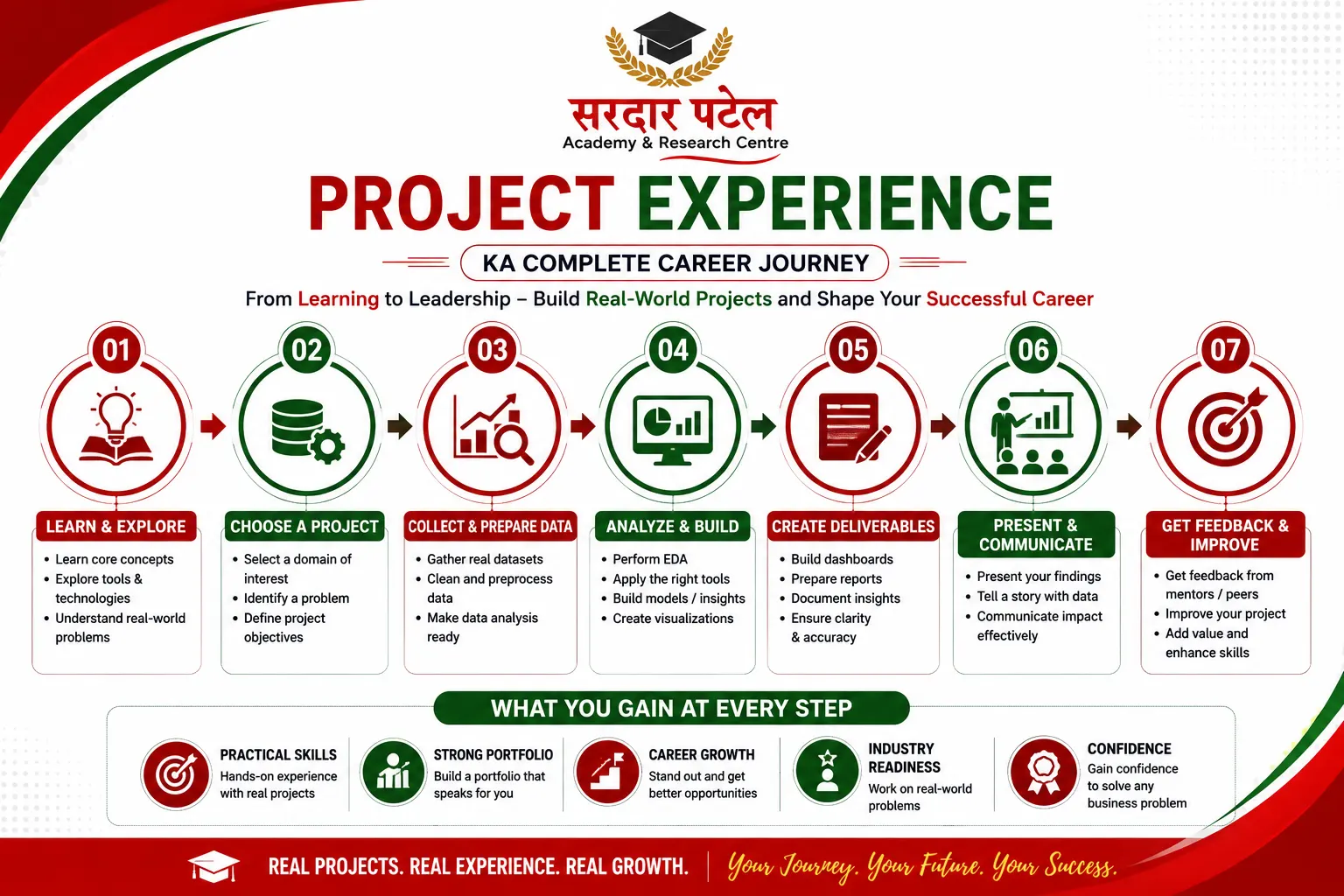
Instead of following a scripted tutorial, learners typically
- Work with a real or realistic dataset, often messy or incomplete
- Define the business question before touching the data
- Clean, structure, and analyse the data using tools like Excel, SQL, Python, or Power BI
- Build a dashboard, report, or presentation around their findings
- Present and defend their conclusions, the way they would to a manager or client
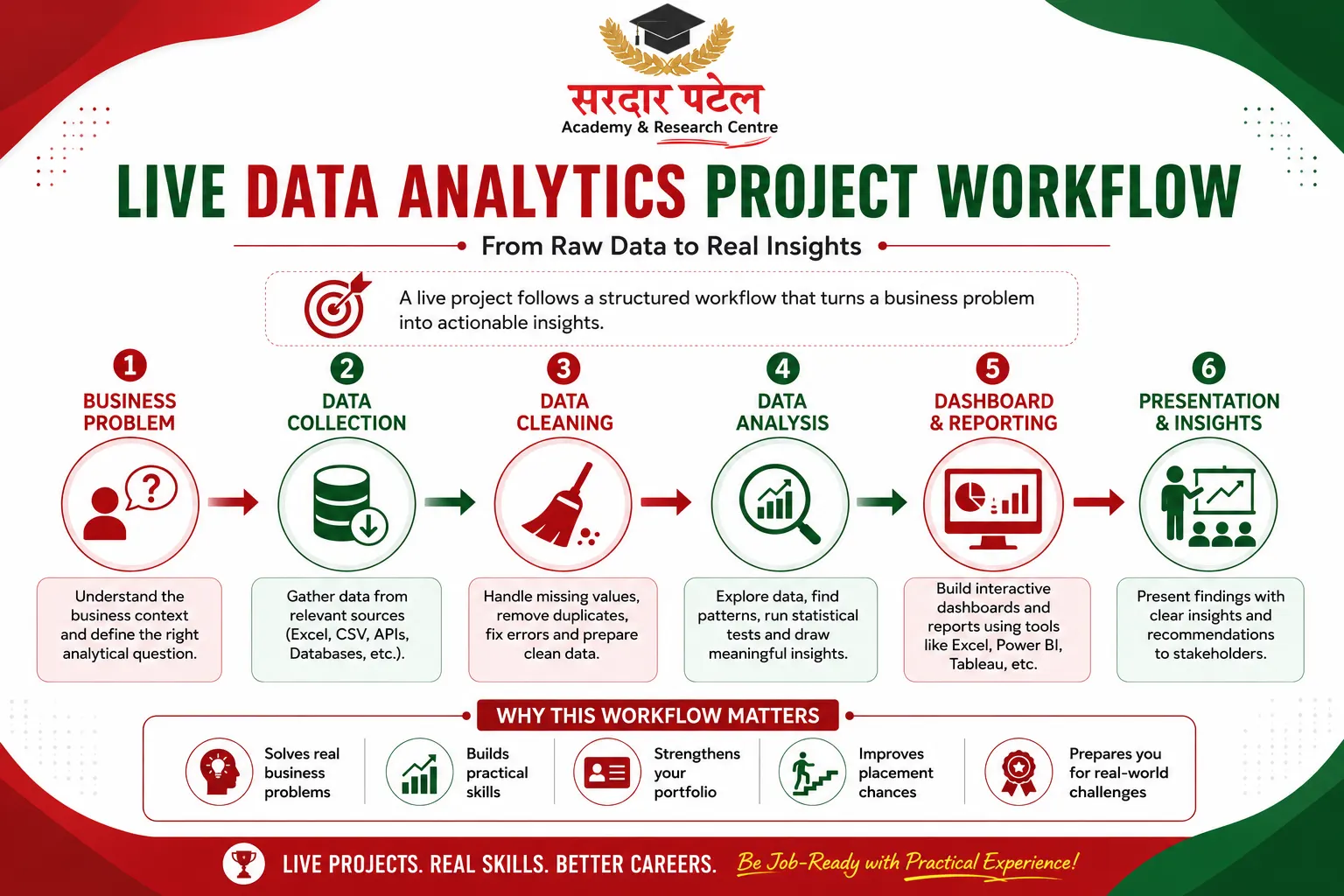
The point isn't just to produce a correct output — it's to practice the entire workflow an analyst goes through in a real job, from ambiguous question to clear recommendation.
Why Theory Alone Isn't Enough
Classroom theory is necessary — you need to understand what a JOIN does before you can use one well. But theory alone leaves a predictable gap: learners who can answer questions about SQL syntax often freeze the first time they're handed a real dataset with duplicate records, missing values, and no clear structure.
A few reasons theory-only training tends to fall short:
- Real data is rarely clean — textbooks skip the cleanup work that eats up most of an analyst's actual time
- Business questions are rarely well-defined — knowing what to ask is as important as knowing how to answer it
- Tools behave differently outside a controlled classroom exercise, especially at scale
- Communicating findings to a non-technical audience is a skill in its own right, and it's hard to practice without a real audience
Live projects force learners through exactly these friction points — while there's still a mentor around to help them work through it, rather than for the first time on the job.
Key Benefits of Live Projects
The case for live projects in data analytics course training comes down to a handful of concrete advantages over theory-only learning:
Real-World Problem Solving
Learners practice framing a vague business problem into a solvable analytical question — a skill that rarely shows up in tutorial-style learning.
A Portfolio That Actually Demonstrates Skill
A finished live project — a dashboard, a report, a case study — becomes something a learner can show a recruiter, instead of just listing tools on a resume. Want to see what practical analytics work can look like? Explore our Student Portfolio Showcase to see examples of projects and dashboards created by learners.
Confidence With the Full Toolset
Working across Excel, SQL, Python, and Power BI within a single project builds fluency in moving between the data analytics tools you must know for real-world work. Not just competence in each one separately.
Stronger Interview Performance
Candidates who've solved a real project can talk through their thinking in detail — what they tried, what didn't work, and why they made the choices they did. That depth is hard to fake and easy for interviewers to spot.
Exposure to Real, Messy Data
Cleaning inconsistent, incomplete data is unglamorous but it's most of the job. Learners who've done it once under guidance handle it far more calmly the second time, on their own.
Skills You Build Through Live Projects
Beyond the specific tools, live projects build a set of transferable skills employers consistently look for:
- Data cleaning and preparation
- Structuring an open-ended problem
- Exploratory data analysis
- Dashboard and report building
- Data storytelling and presentation
- Time management under a real deadline
- Giving and receiving feedback on analytical work
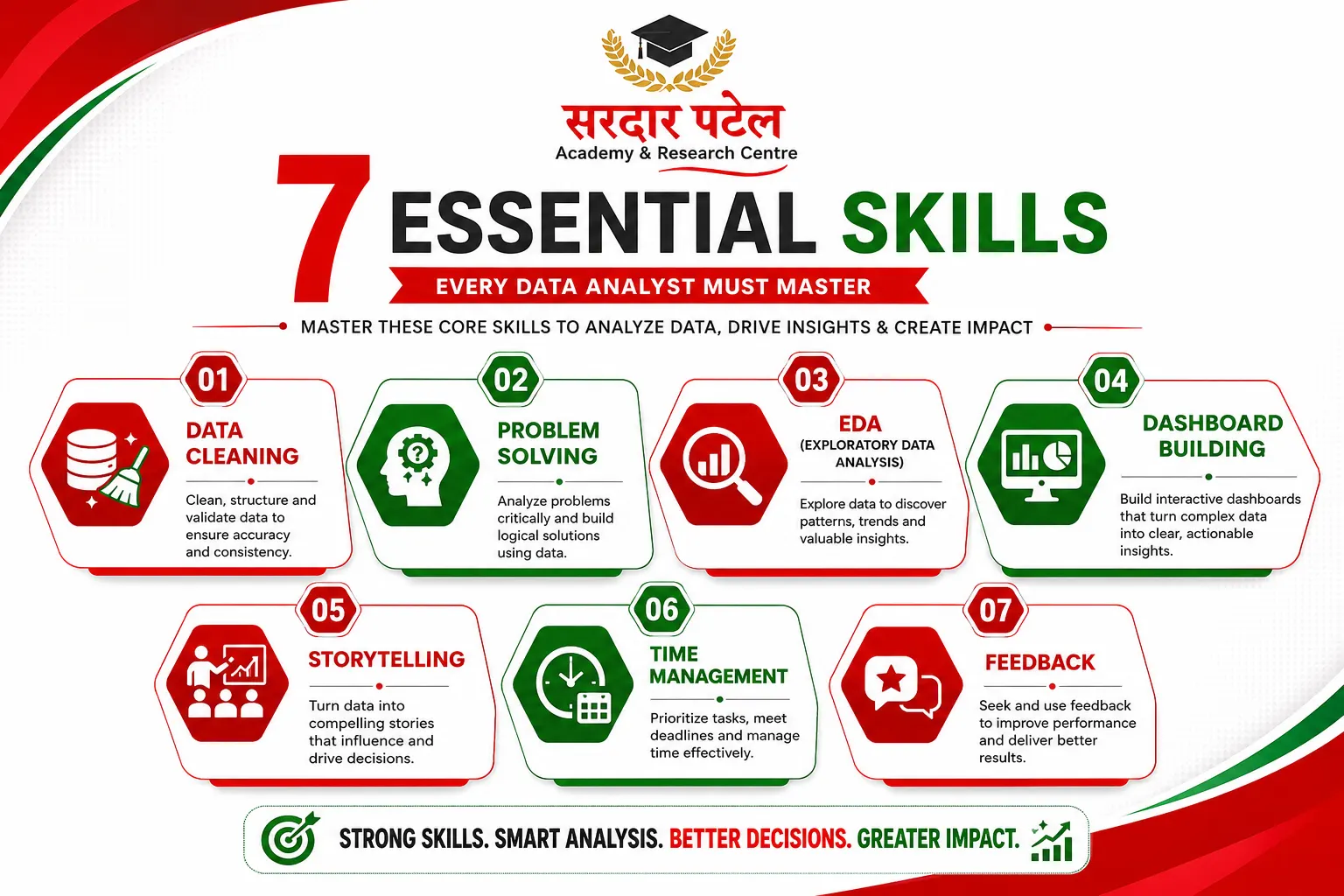
These are the same skills that separate a candidate who "knows Power BI" from one who can actually be handed a business problem and trusted to deliver.
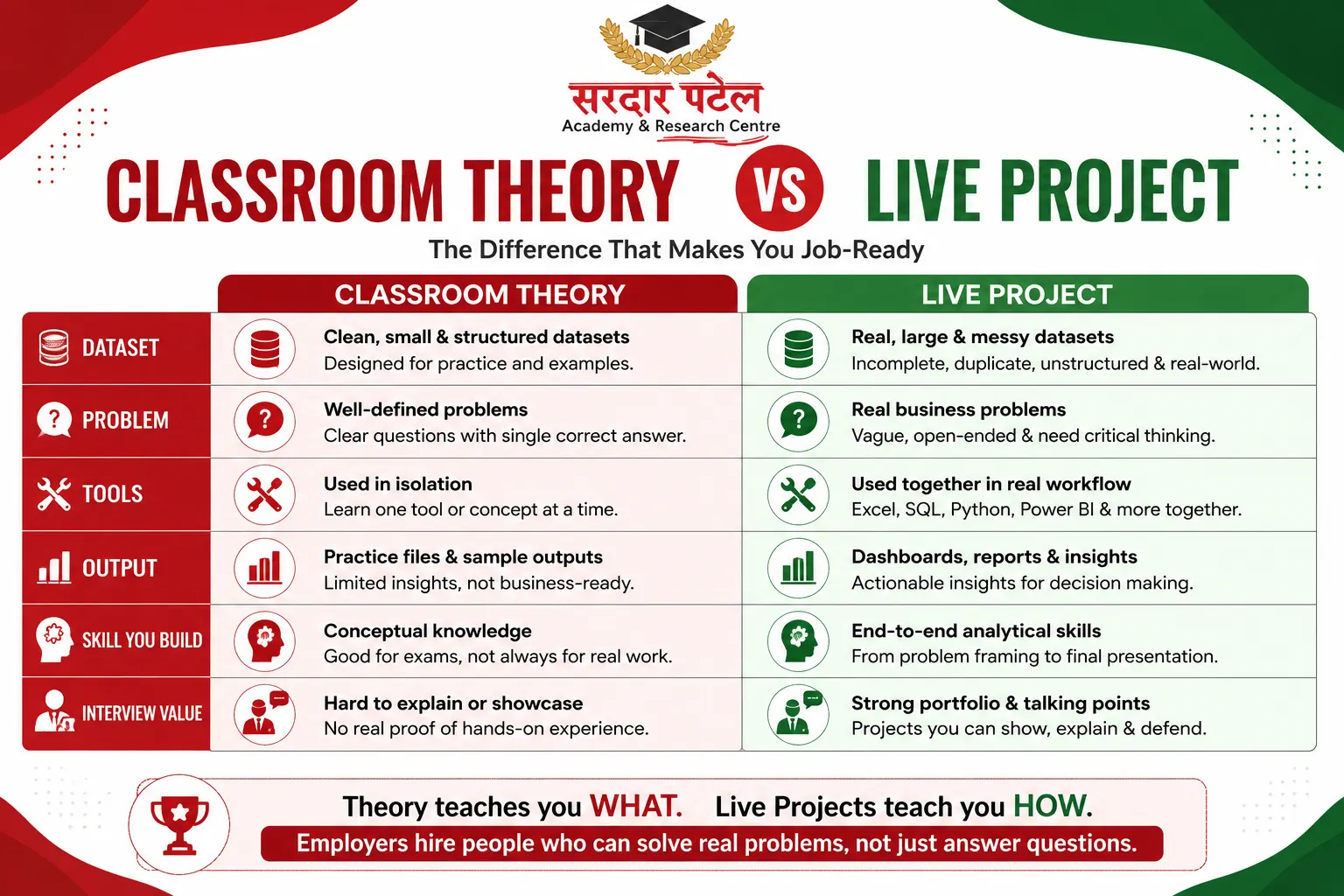
Live Projects vs Classroom Theory
Neither approach replaces the other — theory builds the foundation, and live projects are what turn that foundation into a usable, job-ready skill.
Types of Live Projects in a Data Analytics Course
A well-rounded course typically includes live projects across several business functions, so learners graduate with breadth as well as depth:
- Sales and revenue dashboards
- Customer segmentation analysis
- HR and workforce analytics
- Marketing campaign performance analysis
- Financial reporting and budget tracking
- Supply chain and inventory analytics
- Website or app usage analysis
Working across different domains also helps learners figure out which industry or function they actually want to specialise in after the course. These projects also show learners the importance of data analytics in business, as different departments use data to improve decisions, performance, and efficiency.
How Live Projects Improve Placement Outcomes
Recruiters hiring for analytics roles are increasingly project-literate — they know the difference between a candidate who's completed a guided tutorial and one who's solved an open-ended problem end-to-end. That shows up in placement outcomes in a few concrete ways: For students planning a career in this field, understanding data analytics course eligibility and career opportunities can also help them identify the skills and project experience employers expect.
- A visible portfolio gives recruiters something concrete to evaluate, rather than a list of self-rated skills
- Mock interviews built around a candidate's own projects tend to go better than generic Q&A prep
- Candidates can speak to real trade-offs and decisions, which signals genuine understanding rather than memorisation
- Project experience translates directly into first-90-days confidence on the job
For freshers especially, a strong project portfolio often does more to open interview doors than a certificate alone. While live projects can strengthen your portfolio and interview readiness, they don't automatically guarantee a job. For a realistic perspective, read Is Placement Guaranteed After an Analytics Course?
Learners can also explore the data analytics career scope, skills and salaries to understand how practical project experience can support their long-term career growth.
What to Look for in a Course's Live Project Component
Not all "live projects" are equal — some are little more than guided tutorials with a different label. Before enrolling in any program that promises practical analytics training, check for:
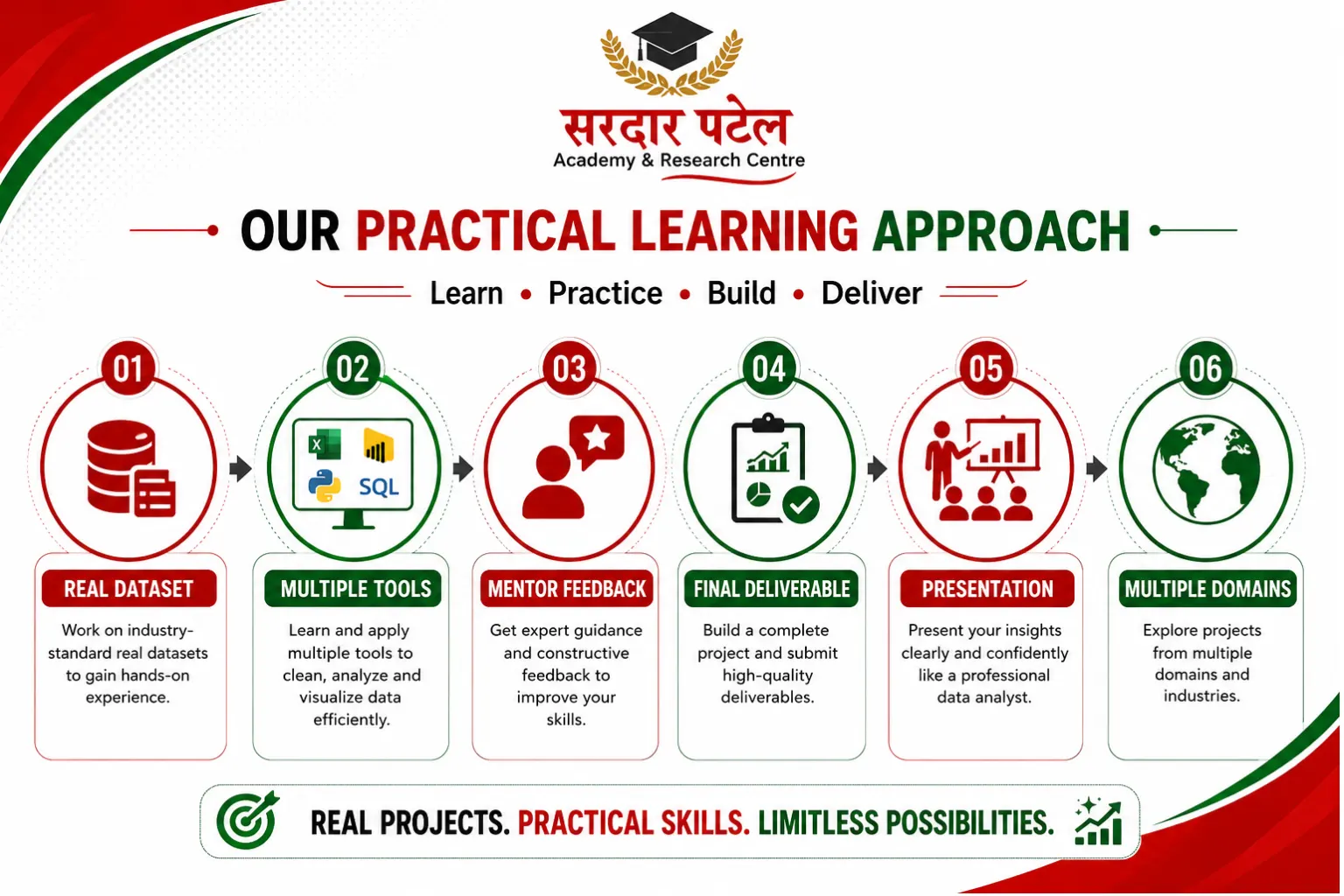
- Real or realistic datasets, not pre-cleaned sample files
- Projects spanning multiple tools (Excel, SQL, Python, Power BI/Tableau), not just one
- Mentor feedback during the project, not just a grade at the end
- A final deliverable you can actually show — a dashboard, report, or case study
- Presentation or defence of findings, mirroring a real stakeholder review
- Projects across more than one business domain
If a course can't point to specific, completed project examples from past learners, that's usually a sign the "live project" component is thinner than it sounds.
Why SPARC Emphasises Live Projects
At Sardar Patel Academy & Research Centre (SPARC), live projects sit at the centre of the Data Analytics curriculum rather than as an add-on at the end. Learners work through real business-style scenarios across Excel, SQL, Python, and Power BI, with mentors reviewing their work at each stage rather than only at submission.
If you're comparing training providers, you can also explore our guide on which institute offers practical data analytics training in Delhi and what to look for in a hands-on program.
This is deliberate. For learners looking for practical analytics training in Delhi, the goal isn't just covering the syllabus — it's leaving the course with a portfolio that can stand up in a real interview, and the hands-on confidence that comes from having actually done the work, not just watched someone else do it.
- Real business-style datasets and problems, not scripted exercises
- Mentor guidance throughout the project, not just at the end
- Multi-tool projects across Excel, SQL, Python, and Power BI
- A portfolio-ready deliverable for every project completed
- Presentation practice built into the process
Conclusion
Live projects in data analytics training aren't a bonus feature — they're what turn classroom knowledge into a skill you can actually use and a portfolio you can actually show. Theory teaches you what the tools do; live projects teach you how to think like an analyst when nobody's handed you a clean answer.
If you're evaluating training options, don't just ask what tools a course covers — ask how many real projects you'll complete, how messy the data will be, and what you'll walk away with at the end. That answer tells you more about your future job-readiness than any syllabus line item.
Ready to Learn by Doing?
FAQs
Live projects are hands-on assignments based on real or realistic business problems. Students work with datasets, define business questions, clean and analyze data, and create dashboards, reports, or presentations.
Live projects help students apply theoretical knowledge to practical situations. They develop problem-solving, data cleaning, analysis, reporting, and data presentation skills needed in real analytics roles.
Yes. Completed live projects can be added to your portfolio as dashboards, reports, case studies, and analytical presentations. This gives recruiters practical evidence of your skills.
Depending on the project and course curriculum, students may work with tools such as Excel, SQL, Python, and Power BI. Multi-tool projects help learners understand how these tools are used together in real workflows.
Theory and practical projects serve different purposes. Theory builds the foundation, while live projects help students apply concepts to open-ended business problems and real or realistic datasets.
Students can develop skills in data cleaning, exploratory data analysis, problem-solving, dashboard building, reporting, data storytelling, presentation, time management, and receiving feedback.
Projects may focus on areas such as sales analysis, customer segmentation, HR analytics, marketing campaign analysis, financial reporting, supply chain analytics, inventory analysis, and website or app usage analysis.
Yes. Live projects can give candidates practical examples to discuss during interviews, including the business problem, approach, challenges, tools used, findings, and final recommendations.