+91 9312966129
 sparc.enquiry01@gmail.com



Does Traditional SEO Still Matter in the Age of AI Search?
Does SEO still matter? See how SEO in the AI era works, what traditional SEO still does, and how to prepare for the future of SEO with practical steps.
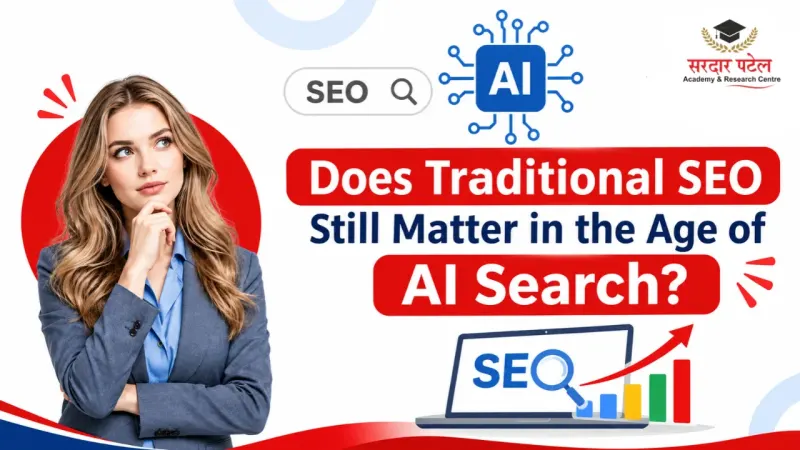
Table of Contents
- What Has Actually Changed in Search
- From a list of links to a generated answer
- What stayed the same
- What Google Says About SEO in the AI Era
- Where Traditional SEO Still Does the Heavy Lifting
- What Is Genuinely New in the Future of SEO
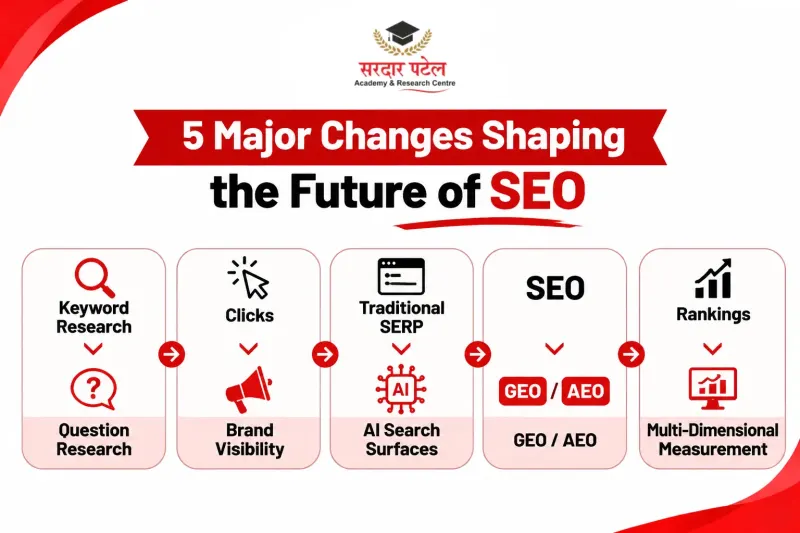
- Keyword research becomes question research
- Visibility is no longer only a click
- Multiple surfaces to think about
- Terms you will keep hearing
- Measurement gets more important
- A Practical Framework for SEO in the AI Era
- Common Mistakes to Avoid
- Career Scope for Learners
- Conclusion
Every few months, someone announces that search optimisation is finished. The latest trigger is AI-generated answers sitting at the top of the results page, and the panic is familiar: if a chatbot summarises everything, why would anyone still optimise a website? The better question is how SEO in the AI era changes the work, and which parts stay the same.
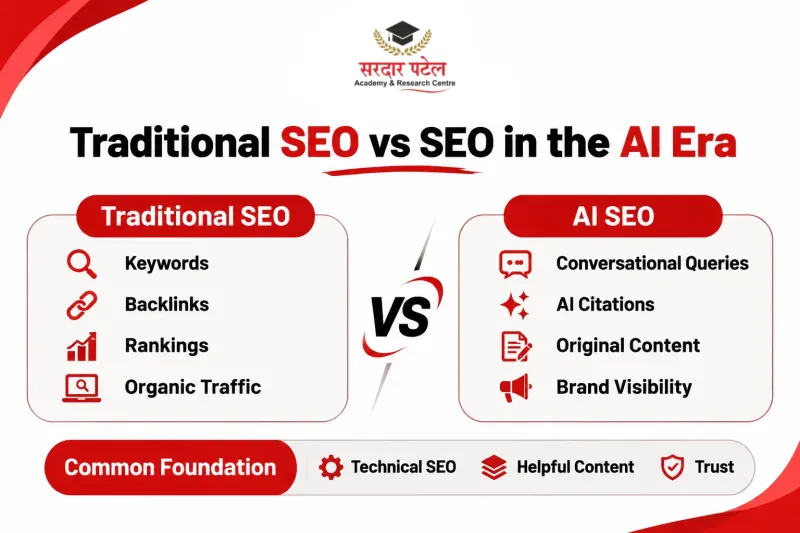
This is an expert-opinion piece, not a hype piece. We look at what Google itself has said, what still earns visibility, what is genuinely new, and what students and site owners should do next. If you have only seen the dramatic version of this debate, we cover the claim that SEO is dead in a separate article.
What Has Actually Changed in Search
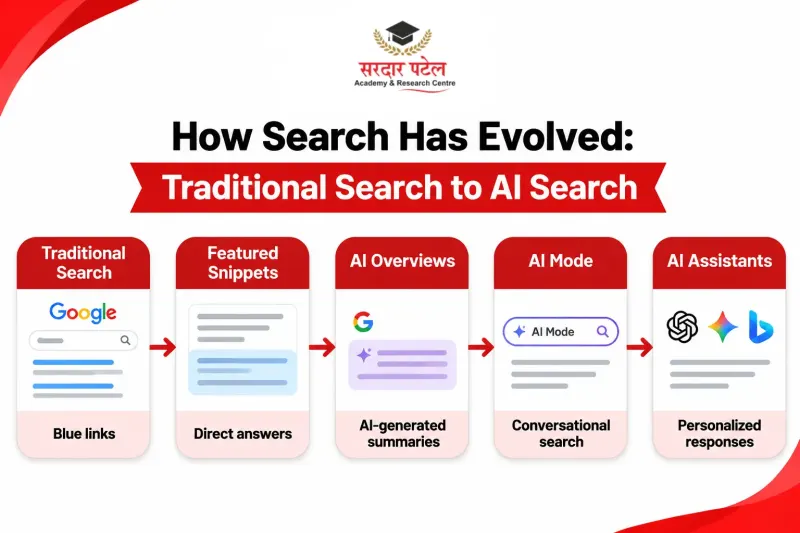
From a list of links to a generated answer
For two decades, a search meant a ranked list. Today, many queries also trigger an AI-written summary, a conversational follow-up mode, or an answer from a standalone assistant. The reader may get what they need without opening a single page.
That is a real shift in behaviour, and pretending otherwise would be dishonest. Some informational queries will send fewer visits than before, and AI tools are reshaping SEO jobs too.
What stayed the same
Underneath the new interface, the machinery still depends on the open web. AI answers need pages to read, understand and reference, and those pages must be discoverable, crawlable, trustworthy and useful. In other words, the foundations of traditional SEO are the supply chain that feeds the new experience.
What Google Says About SEO in the AI Era
It helps to start with the source rather than with opinions on social media. Google’s own documentation, AI features and your website explain that AI Overviews and AI Mode are part of Search from a site owner’s point of view, and that the usual SEO best practices remain relevant to them. Its list of basics is short: allow crawling in robots.txt and by any CDN or hosting infrastructure, make important content findable through internal links, give users a good page experience, and keep key information available as text.
In May 2026, Google went further with a dedicated resource on optimising for generative AI features in Search. It stresses valuable, unique, non-commodity content, and says SEO best practices remain foundational for these features. Read that carefully: Google is not saying “forget SEO”. The old fundamentals are the entry ticket, and originality is what separates pages that merely exist from pages worth citing. For a closer look at how this plays out in Google’s conversational mode, read our guide to SEO for Google AI Mode.
Where Traditional SEO Still Does the Heavy Lifting
If you are new to all this, start with our beginner’s guide to SEO for Delhi students. Now think of your website as a shop. AI systems are new customers walking through the door, but the shop still needs an address, working lights and honest staff. That is why anyone practising SEO in the AI era still starts with the familiar tasks below.
| Traditional SEO task |
Why it still matters in AI search |
| Crawl and index management |
Pages blocked from crawling cannot be used in Search features, AI-driven or not |
| Clean site architecture and internal links |
Helps systems find and understand how your pages relate |
| Search intent research |
Shows what questions people actually ask |
| On-page structure (titles, headings, text) |
Makes content easy to parse and quote accurately |
| Page experience and mobile usability |
Affects how visitors treat the page after they arrive |
| Authority and trust signals |
Separates reliable sources from thin copies |
Base: crawlable, indexable, fast pages (traditional SEO)
Middle: helpful, original, trustworthy content
Top: AI answers, citations, visibility
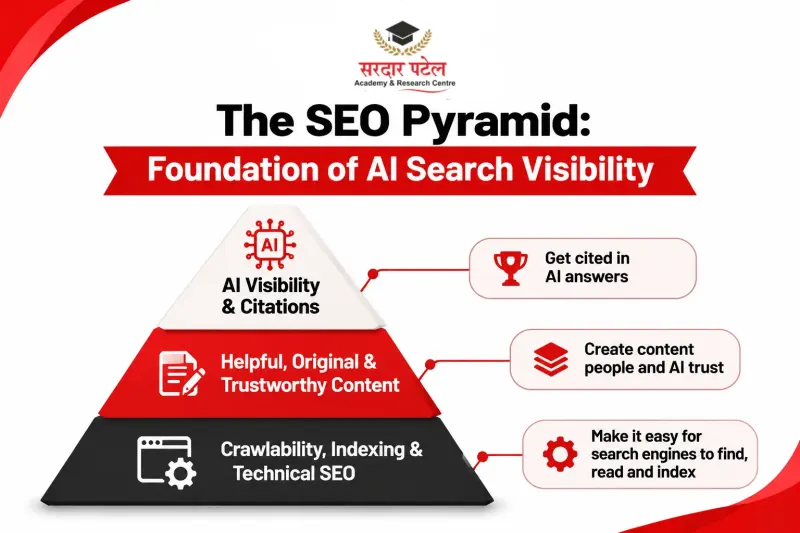
Crawlability comes first, because a page that cannot be crawled cannot be considered. This is classic technical SEO, and it quietly decides whether any of your content reaches an AI summary at all.
Content quality comes next. Google’s guidance on helpful, reliable, people-first content says SEO is a useful activity when it is applied to content made for people, rather than content made only to chase rankings. The problem was never SEO itself. It was shallow, search-engine-first writing. That guidance also leans on E-E-A-T: experience, expertise, authoritativeness and trust. In practice, it means showing who wrote a page, why they are qualified to write it, and where the facts come from.
What Is Genuinely New in the Future of SEO
Saying the basics survive does not mean nothing has changed. The future of SEO has some new layers, and SEO in the AI era asks you to handle them with honest attention.
Keyword research becomes question research
People now type longer, more conversational prompts. That pushes research away from isolated phrases and toward clusters of related questions. We explain the shift in our piece on how AI is changing keyword research, but the short version is this: map the whole journey, not one phrase.
Visibility is no longer only a click
In SEO in the AI era, an appearance in an AI answer can build brand recognition even if the visit never happens. Treat that as a branding gain you cannot always measure directly, which is why the measurement point below matters.
Multiple surfaces to think about
Besides Google’s classic results, people use AI Overviews, AI Mode, standalone assistants and voice interfaces. A good starting point for Google’s surface is optimising content for AI Overviews, and the same habits of clear answers and credible sources carry over to the others.
Terms you will keep hearing
| Term |
Plain-language meaning |
| Zero-click search |
A search where the user gets the answer on the results page and does not visit a website |
| E-E-A-T |
Experience, expertise, authoritativeness and trust, the quality signals Google discusses in its content guidance |
| Entity |
A clearly identified person, organisation, place or concept that systems can recognise consistently |
| GEO / AEO |
Industry labels for optimising to be cited in generative or answer-style results; Google’s own guidance frames this as SEO best practices applied to generative AI features |
Measurement gets more important
When clicks decline and impressions rise, dashboards need careful reading. In SEO in the AI era, students who can handle search data, segment it and explain what changed will have a real advantage, because a number without an explanation does not help a client or an employer. Google has also started adding tools for site owners: its announcement on new controls and insights for website owners describes a Search Console control for generative AI features and new performance insights, beginning with a limited rollout. Availability may differ by region, so check your own account before assuming you have it.
A Practical Framework for SEO in the AI Era
Here is the step-by-step approach to SEO in the AI era that we would give a student building a first site, or a small business refreshing an older one. It follows the spirit of Google’s May 2026 guide to generative AI features: original value first, technical hygiene underneath.
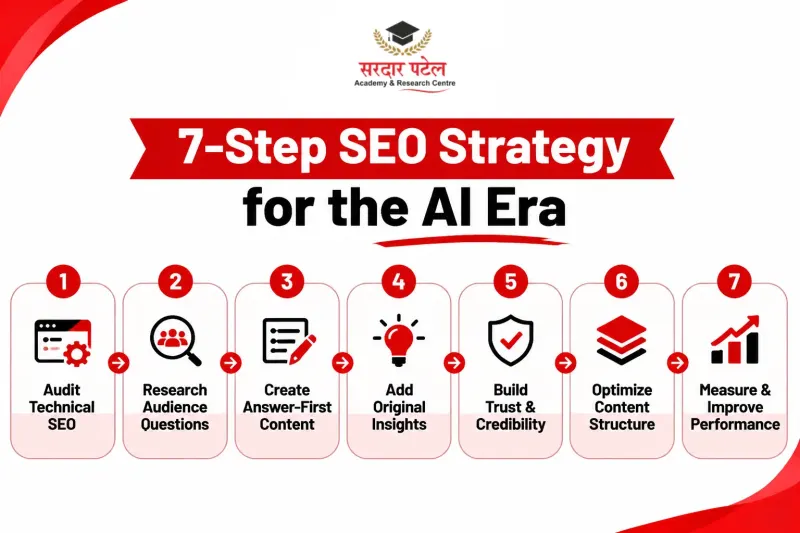
- Audit the basics. Confirm that important pages are crawlable, indexed and free of technical errors.
- Map real questions. List the questions your audience asks before, during and after a decision.
- Answer first, expand second. Open each section with a clear answer, then add depth, examples and nuance. Our guide on writing content that AI search engines can understand shows how.
- Add something only you can add. Original data, local context, a worked example or first-hand experience. Generic summaries are easy for any system to reproduce, so they are easy to ignore.
- Make facts easy to verify. Name your sources, update dates honestly, and show who wrote the page.
- Check text availability and structured data. Make sure key details are in readable text, not hidden inside images. Our checklist for making your website visible in AI search results covers this in more detail.
- Measure and adjust. Watch impressions, clicks, engaged visits and branded searches together.
Illustrative example. Take a page about career options after Class 12. The table shows how an interchangeable page differs from a distinctive one.
| Element |
Interchangeable page |
Distinctive page |
| Opening |
A generic definition |
A direct answer and who it is for |
| Evidence |
No sources |
Named sources and honest dates |
| Experience |
Copied lists |
Real student questions and timelines |
| Next step |
None |
A clear action for the reader |
Google’s note on succeeding in AI search keeps the focus on unique, valuable content made for people, which is a useful test to run on every page before you publish it.
Common Mistakes to Avoid
These are the slips we see most often when people adapt to SEO in the AI era.
- Abandoning the fundamentals. Chasing new acronyms while ignoring crawl errors is the fastest way to disappear.
- Mass-producing thin pages. Google’s guidance puts weight on non-commodity content, and volume without original value works against you, in classic results and AI features alike.
- Over-formatting for machines. Writing in awkward fragments to please AI harms readability. Write for humans first.
- Ignoring measurement. If you never review reports, you cannot tell whether visibility or visits changed.
- Copying competitors. Close paraphrasing adds nothing new, and nothing new is rarely cited.
- Overlooking how Indian users search. Many people speak their queries or mix Hindi and English, which is why voice search SEO in India deserves attention.
Career Scope for Learners
None of this reduces the need for trained people. SEO in the AI era raises the bar: search professionals now need technical literacy, content judgement and analytical thinking in one profile. Employers rarely want someone who only knows tool menus; they want people who can explain why a page should rank, how an answer should be written and what a report really says.
- Learn how crawling, indexing and ranking work.
- Practise writing answer-first content, the core skill of SEO in the AI era, with honest sources.
- Get comfortable reading Search Console reports.
- Build a small practice site and document what you change.
For structured, hands-on practice, Sardar Patel Academy & Research Centre in GTB Nagar, Delhi teaches SEO, social media marketing, Google Ads, AI tools, content marketing and analytics in a 7-month digital marketing programme with project work, as listed on its course page.
We would avoid quoting salary numbers here, since pay depends on city, employer and skill depth, and any figure without a clear source would be guesswork.
Conclusion
Guidance will keep shifting, so make a habit of following the latest Google Search updates. Search is changing shape, but it has not abandoned its principles. The healthiest way to see SEO in the AI era is as an extension of what already worked: be accessible, be accurate, be genuinely useful, and prove it with evidence. Traditional SEO is not the whole answer anymore, and the future of SEO will keep adding layers, but it remains the base every new tactic stands on.
| Want to learn this hands-on? Join the Digital Marketing Course with AI at Sardar Patel Academy & Research Centre, which has run skill-based courses in Delhi since 2003. Call +91 93129-66129 or visit us at 2514, Hudson Lane, Kingsway Camp, near GTB Nagar Metro Gate 4, Delhi 110009. Have a question first? Reach out through our contact page. |
FAQs
Yes. SEO in the AI era is still a working discipline: Google’s documentation says SEO best practices remain relevant to its AI features, and pages still need to be crawlable, indexable and useful to appear in them.
Traditional SEO covers crawlability, content, links and rankings. Optimising for AI search builds on the same foundations and adds attention to clear answers, original value, entity clarity and newer measurement habits.
It can for some informational queries, because users may get answers directly in the results and never click. The effect varies by topic and audience, so watch your own Search Console data instead of relying on general predictions.
Google’s guidance says there are no extra requirements beyond the usual technical eligibility and quality practices. Focus on accessible, original, helpful pages.
Both. Technical health makes content eligible, and original thinking makes it worth citing. The strongest practitioners combine the two.
Yes. Basic HTML awareness helps, but understanding user intent, content quality, site structure and analytics matters more at the start.
Update when facts, products or advice actually change. Do not change dates just to look fresh, because Google’s content guidance warns against that practice.